
Nursing practice questions with comprehensive rationales
NurseDive Free Nursing Practice Question
A nurse is performing a skin assessment on a client who has dark skin.
Which of the following locations on the client’s body should the nurse observe to assess for cyanosis?
A. Area of trauma.
is wrong because an area of trauma may have bruising or inflammation that can mask cyanosis.
B. Sacrum.
B is wrong because the sacrum is not a good site to assess for cyanosis in any skin tone, as it is prone to pressure ulcers and poor circulation.
C. Shoulders.
is wrong because the shoulders are not a mucous membrane and may have more melanin than other areas of the body.
D. Palms of the hands.
Cyanosis is a bluish discoloration of the skin and mucous membranes due to inadequate oxygenation of the blood. It is more difficult to detect in people who have dark skin, so the nurse should look for cyanosis in areas where the skin is thinner and the blood supply is richer, such as the palms of the hands, the lips, the gums, and around the eyes. These areas are less affected by melanin, the pigment that gives skin its color.
This question is an excerpt from Nurse Dive's nursing test bank - ATI Comprehensive Predictor 2023 Exit Proctored Exam A. Take the full exam now
Full Explanation
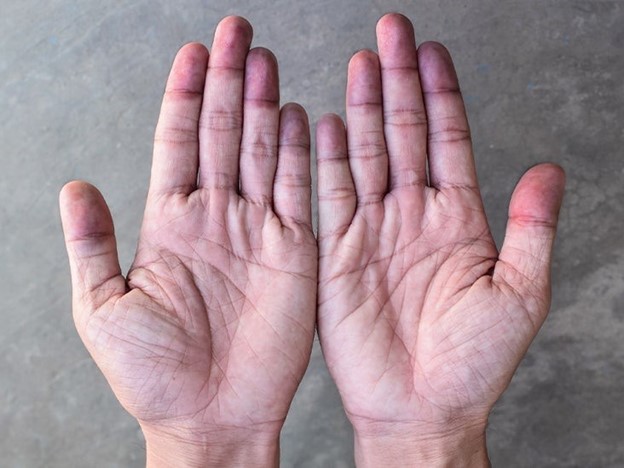
Cyanosis is a bluish discoloration of the skin and mucous membranes due to inadequate oxygenation of the blood. It is more difficult to detect in people who have dark skin, so the nurse should look for cyanosis in areas where the skin is thinner and the blood supply is richer, such as the palms of the hands, the lips, the gums, and around the eyes.
These areas are less affected by melanin, the pigment that gives skin its color.
Choice A is wrong because an area of trauma may have bruising or inflammation that can mask cyanosis.
Choice B is wrong because the sacrum is not a good site to assess for cyanosis in any skin tone, as it is prone to pressure ulcers and poor circulation.
Choice C is wrong because the shoulders are not a mucous membrane and may have more melanin than other areas of the body.
Similar Questions
A nurse is caring for a client whose partner recently died.
The nurse sits with the client to provide comfort.
Which of the following ethical principles is the nurse demonstrating?
A. Beneficence.
Beneficence. Beneficence is the ethical principle of doing good for the patient and promoting their well-being. The nurse is demonstrating beneficence by sitting with the client to provide comfort and support during a difficult time.
B. Fidelity.
because fidelity is the ethical principle of keeping promises to the patient and being loyal and faithful. The nurse is not making or keeping any promises to the client in this scenario.
C. Autonomy.
because autonomy is the ethical principle of respecting the patient’s right to make their own decisions and choices. The nurse is not interfering with the client’s autonomy in this scenario.
D. Veracity.
wrong because veracity is the ethical principle of telling the truth to the patient and being honest and trustworthy. The nurse is not lying or withholding information from the client in this scenario.
Full Explanation
The correct answer is A. Beneficence. Beneficence is the ethical principle of doing good for the patient and promoting their well-being.
The nurse is demonstrating beneficence by sitting with the client to provide comfort and support during a difficult time.
Choice B is wrong because fidelity is the ethical principle of keeping promises to the patient and being loyal and faithful.
The nurse is not making or keeping any promises to the client in this scenario.
Choice C is wrong because autonomy is the ethical principle of respecting the patient’s right to make their own decisions and choices.
The nurse is not interfering with the client’s autonomy in this scenario.
Choice D is wrong because veracity is the ethical principle of telling the truth to the patient and being honest and trustworthy.
The nurse is not lying or withholding information from the client in this scenario.
A nurse is caring for a client in the medical-surgical unit.
Which of the following actions should the nurse take to decrease the risks for urinary tract infection for this client?
Select all that apply.
A. Review the need for the indwelling urinary catheter daily.
Review the need for the indwelling urinary catheter daily. This is correct because indwelling catheters should be removed as soon as possible to reduce the risk of urinary tract infection (UTI).
B. Place the drainage bag on the bed when transporting the client.
Place the drainage bag on the bed when transporting the client. This is incorrect because the drainage bag should be kept below the level of the bladder and should not touch the floor to prevent backflow of urine and contamination of the catheter.
C. Use soap and water to provide perineal care.
Use soap and water to provide perineal care. This is correct because soap and water can help to remove bacteria and debris from the meatus and prevent infection.
D. Encourage the client to drink 3000 mL of fluid daily.
Encourage the client to drink 3000 mL of fluid daily. This is incorrect because the client has a fluid restriction of 1000 mL daily due to heart failure. Excessive fluid intake can worsen the client’s condition and increase the workload of the heart.
E. Change the indwelling urinary catheter tubing every 3 days.
Change the indwelling urinary catheter tubing every 3 days. This is incorrect because changing the catheter tubing can increase the risk of infection by breaking the closed drainage system. The catheter tubing should only be changed when it is visibly soiled or malfunctioning.
F. Empty the drainage bag when it is half-full.
Empty the drainage bag when it is half-full. This is incorrect because the drainage bag should be emptied at least every 8 hours or when it is one-third full to prevent back pressure and infection.
Full Explanation
A: Review the need for the indwelling urinary catheter daily.
This is correct because indwelling catheters should be removed as soon as possible to reduce the risk of urinary tract infection (UTI).
B: Place the drainage bag on the bed when transporting the client.
This is incorrect because the drainage bag should be kept below the level of the bladder and should not touch the floor to prevent the backflow of urine and contamination of the catheter.
C: Use soap and water to provide perineal care.
This is correct because soap and water can help to remove bacteria and debris from the meatus and prevent infection.
D: Encourage the client to drink 3000 mL of fluid daily.
This is incorrect because the client has a fluid restriction of 1000 mL daily due to heart failure. Excessive fluid intake can worsen the client’s condition and increase the workload of the heart.
E: Change the indwelling urinary catheter tubing every 3 days.
This is incorrect because changing the catheter tubing can increase the risk of infection by breaking the closed drainage system. The catheter tubing should only be changed when it is visibly soiled or malfunctioning.
F: Empty the drainage bag when it is half full.
This is incorrect because the drainage bag should be emptied at least every 8 hours or when it is one-third full to prevent back pressure and infection.
A nurse is caring for a client who reports xerostomia following radiation therapy to the mandible.
Which of the following is an appropriate action by the nurse?
A. Suggest rinsing his mouth with an alcohol-based mouth wash.
because rinsing the mouth with an alcohol-based mouth wash can irritate the oral tissues and worsen xerostomia. Alcohol can also dehydrate the mouth and reduce saliva production.
B. Instruct the client on the use of esophageal speech.
because esophageal speech is a method of voice restoration after laryngectomy, not a treatment for xerostomia. Esophageal speech involves swallowing air into the esophagus and releasing it to create sound. It has nothing to do with saliva flow or dry mouth.
C. Offer the client saltine crackers between meals.
because saltine crackers are dry and hard to swallow without adequate saliva. They can also scratch the oral mucosa and cause pain or bleeding. Offering the client saltine crackers between meals can aggravate xerostomia and increase the risk of choking.
D. Provide humidification of the room air.
Provide humidification of the room air. This is because humidification can help moisten the oral mucosa and reduce the discomfort of xerostomia. Xerostomia is a condition of dry mouth caused by reduced or absent saliva flow, which can occur after radiation therapy to the head and neck area.
Full Explanation
Provide humidification of the room air. This is because humidification can help moisten the oral mucosa and reduce the discomfort of xerostomia. Xerostomia is a condition of dry mouth caused by reduced or absent saliva flow, which can occur after radiation therapy to the head and neck area.
Choice A is wrong because rinsing the mouth with an alcohol-based mouth wash can irritate the oral tissues and worsen xerostomia. Alcohol can also dehydrate the mouth and reduce saliva production.
Choice B is wrong because esophageal speech is a method of voice restoration after laryngectomy, not a treatment for xerostomia.
Esophageal speech involves swallowing air into the esophagus and releasing it to create sound.
It has nothing to do with saliva flow or dry mouth.
Choice C is wrong because saltine crackers are dry and hard to swallow without adequate saliva.
They can also scratch the oral mucosa and cause pain or bleeding. Offering the client saltine crackers between meals can aggravate xerostomia and increase the risk of choking.
Normal ranges for saliva flow vary depending on the method of measurement, but generally, a stimulated saliva flow rate of less than 0.7 mL/min or an unstimulated saliva flow rate of less than 0.1 mL/min is considered indicative of xerostomia.