
Nursing practice questions with comprehensive rationales
NurseDive Free Nursing Practice Question
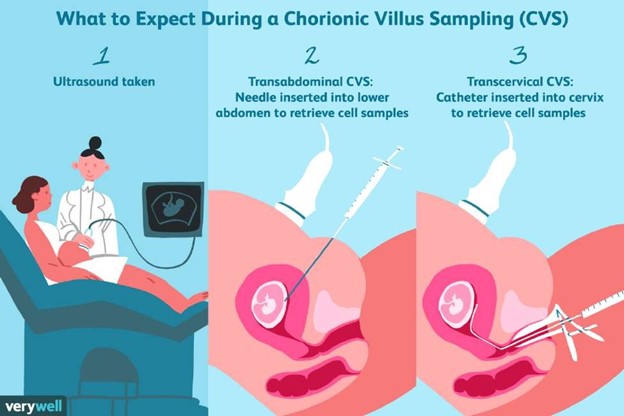
A nurse is planning care for a client following a chorionic villus sampling.
The nurse should recognize that the client is at risk for developing which of the following complications?
A. Anemia
Choice A is incorrect because anemia is not a known complication of CVS.
B. Infection
Chorionic villus sampling (CVS) is a prenatal test that involves taking a sample of tissue from the placenta to test for chromosomal abnormalities and certain other genetic problems. As with all types of surgical procedures, infections can happen during or after CVS.
C. Late decelerations
Choice C is incorrect because late decelerations are a type of fetal heart rate patern that can occur during labor and are not related to CVS.
D. Placental insufficiency.
Choice D is incorrect because placental insufficiency is a condition where the placenta is unable to provide enough oxygen and nutrients to the fetus and is not a known complication of CVS.
This question is an excerpt from Nurse Dive's nursing test bank - ATI RN Maternal Newborn 2019 with NGN Proctored Exam. Take the full exam now
Full Explanation
Chorionic villus sampling (CVS) is a prenatal test that involves taking a sample of tissue from the placenta to test for chromosomal abnormalities and certain other genetic problems.
As with all types of surgical procedures, infections can happen during or after CVS2.
Choice A is incorrect because anemia is not a known complication of CVS.
Choice C is incorrect because late decelerations are a type of fetal heart rate patern that can occur during labor and are not related to CVS.
Choice D is incorrect because placental insufficiency is a condition where the placenta is unable to provide enough oxygen and nutrients to the fetus and is not a known complication of CVS.
Similar Questions
A nurse is reviewing the chart of a client who is 2 days postpartum following a vaginal delivery and reports constipation.
Which of the following findings should the nurse identify as a contraindication to the use of a suppository?
A. Abdominal distention
Choice A is incorrect because abdominal distention is not a contraindication to the use of a suppository.
B. Afterpains
Choice B is incorrect because afterpains are common postpartum uterine contractions and are not a contraindication to the use of a suppository.
C. Vaginal candidiasis
Choice C is incorrect because vaginal candidiasis is a fungal infection and is not a contraindication to the use of a suppository.
D. Third-degree perineal laceration.
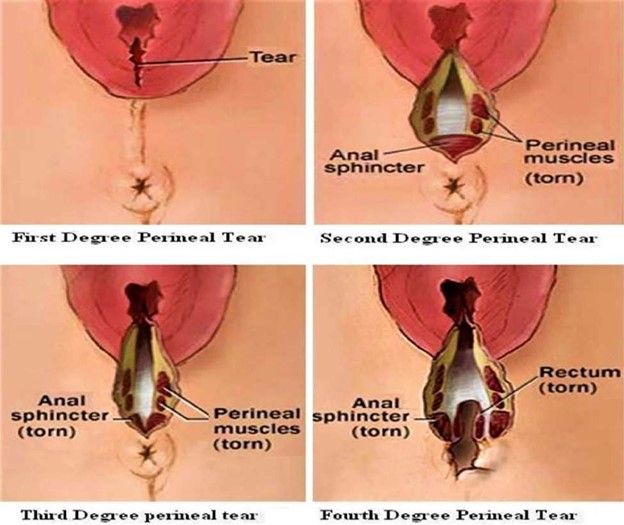
A third-degree perineal laceration is a tear that extends through the vaginal tissue, perineal skin, and perineal muscles and involves the anal sphincter. This type of laceration requires careful repair and management to prevent complications such as infection, fecal incontinence, and pain.
Full Explanation
A third-degree perineal laceration is a tear that extends through the vaginal tissue, perineal skin, and perineal muscles and involves the anal sphincter.
This type of laceration requires careful repair and management to prevent complications such as infection, fecal incontinence, and pain.
Choice A is incorrect because abdominal distention is not a contraindication to the use of a suppository.
Choice B is incorrect because afterpains are common postpartum uterine contractions and are not a contraindication to the use of a suppository.
Choice C is incorrect because vaginal candidiasis is a fungal infection and is not a contraindication to the use of a suppository.
A nurse is reviewing the laboratory results of a newborn.
Which of the following findings should the nurse report to the provider?
A. Platelets 100,000/mm
Thrombocytopenia is defined as a platelet count of less than 150,000/microL. Severe neonatal thrombocytopenia (platelet count <50,000/microL) can be associated with bleeding and potentially significant morbidity. As a result, it is important to identify at-risk neonates and report low platelet counts to the provider.
B. Hematocrit 48%
Choice B is incorrect because a hematocrit of 48% is within the normal range for a newborn.
C. Blood glucose 58 mg/dl.
Choice C is incorrect because a blood glucose level of 58 mg/dl is within the normal range for a newborn.
D. Hemoglobin 16 g/dL.
Choice D is incorrect because a hemoglobin level of 16 g/dL is within the normal range for a newborn.
Full Explanation
Thrombocytopenia is defined as a platelet count of less than 150,000/microL1.
Severe neonatal thrombocytopenia (platelet count <50,000/microL) can be associated with bleeding and potentially significant morbidity.
As a result, it is important to identify at-risk neonates and report low platelet counts to the provider.
Choice B is incorrect because a hematocrit of 48% is within the normal range for a newborn.
Choice C is incorrect because a blood glucose level of 58 mg/dl is within the normal range for a newborn.
Choice D is incorrect because a hemoglobin level of 16 g/dL is within the normal range for a newborn.
A nurse is caring for a client who is in the latent phase of the first stage of labor and is in pain.
Which of the following nursing interventions are appropriate to reduce pain? (Select all that apply.)
A. Perform Leopold maneuvers.
Choice A is incorrect because performing Leopold maneuvers is a technique used to assess fetal position and presentation and is not a pain management technique.
B. Apply counterpressure to the sacral area
Applying counterpressure to the sacral area can help alleviate back pain during labor.
C. Ambulate the client in the hallway
Ambulating the client in the hallway can help with pain management and facilitate labor progress.
D. Administer 70-90% nitrous oxide mixed with oxygen
Administering nitrous oxide mixed with oxygen can provide pain relief during labor.
Full Explanation
Applying counterpressure to the sacral area can help alleviate back pain during labor.
Ambulating the client in the hallway can help with pain management and facilitate labor progress.
Administering nitrous oxide mixed with oxygen can provide pain relief during labor.
Having the client sit upright can help with pain management and facilitate labor progress.
Choice A is incorrect because performing Leopold maneuvers is a technique used to assess fetal position and presentation and is not a pain management technique.