
Nursing practice questions with comprehensive rationales
NurseDive Free Nursing Practice Question
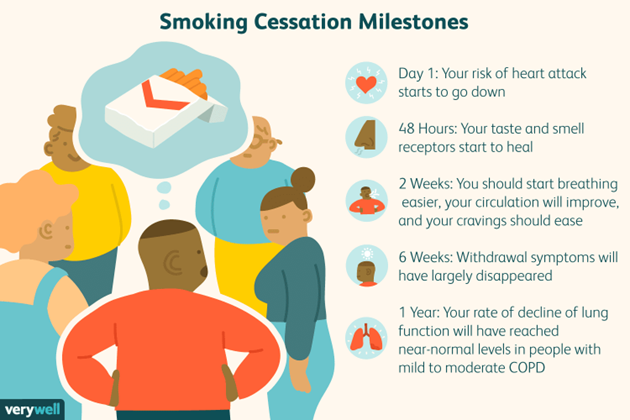
A nurse is planning care for a client who is concerned about her tobacco smoking habits and is in the contemplation stage of health behavior change.
Which of the following actions should the nurse plan to take during this stage?
A. Develop a plan for the client to integrate the change into her lifestyle.
Choice A is wrong because developing a plan for the client to integrate the change into her lifestyle is more appropriate for the preparation stage.
B. Recommend small changes for the client to make to change her behavior over time.
Choice B is wrong because recommending small changes for the client to make to change her behavior over time is more appropriate for the action stage.
C. Assist the client in setting goals to make the change.
Choice C is wrong because assisting the client in setting goals to make the change is more appropriate for the preparation stage.
D. Present information about the benefits of quitting smoking.
During the contemplation stage of health behavior change, the client is thinking about change and becoming motivated to get started. The nurse should present information about the benefits of quitting smoking to help the client assess the benefits of change.
This question is an excerpt from Nurse Dive's nursing test bank - ATI RN Fundamentals 2019 with NGN Proctored Exam. Take the full exam now
Full Explanation
During the contemplation stage of health behavior change, the client is thinking about change and becoming motivated to get started.
The nurse should present information about the benefits of quitting smoking to help the client assess the benefits of change.
Choice A is not correct because developing a plan for the client to integrate the change into her lifestyle is more appropriate for the preparation stage.
Choice B is not correct because recommending small changes for the client to make to change her behavior over time is more appropriate for the action stage.
Choice C is not correct because assisting the client in setting goals to make the change is more appropriate for the preparation stage.
Similar Questions
A charge nurse in a long-term care facility is preparing an educational program about delirium for newly hired nurses. Which of the following statements should the nurse plan to include?
A. "Delirium does not affect a client's perception of her environment.".
Choice A is wrong because delirium does affect a client’s perception of her environment.
B. "Delirium has a slow progression.".
Choice B is wrong because delirium does not have a slow progression, but rather an abrupt onset.
C. "Delirium does not affect a client's sleep cycle.".
Choice C is wrong because delirium can affect a client’s sleep cycle.
D. "Delirium has an abrupt onset.".
“Delirium has an abrupt onset.” Delirium is a serious change in mental abilities that results in confused thinking and a lack of awareness of someone’s surroundings. The disorder usually comes on fast — within hours or a few days.
Full Explanation
“Delirium has an abrupt onset.” Delirium is a serious change in mental abilities that results in confused thinking and a lack of awareness of someone’s surroundings.
The disorder usually comes on fast — within hours or a few days.

Choice A is wrong because delirium does affect a client’s perception of her environment.
Choice B is wrong because delirium does not have a slow progression, but rather an abrupt onset.
Choice C is wrong because delirium can affect a client’s sleep cycle.
A nurse is planning care for a client who has a new prescription for parenteral nutrition (PN) in 20% dextrose and fat emulsions.
Which of the following is an appropriate action to include in the plan of care?
A. Change the PN infusion bag every 48 hr.
Choice A is wrong because the PN infusion bag should be changed every 24 hours, not every 48 hours.
B. Prepare the client for a central venous line.
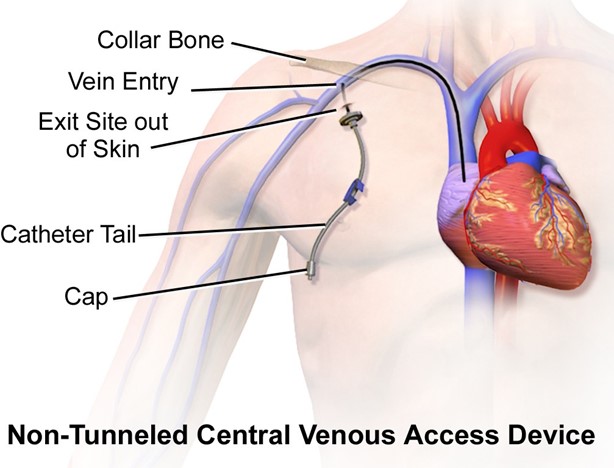
Parenteral nutrition (PN) with 20% dextrose and fat emulsions is a hypertonic solution that requires infusion through a central venous line to prevent damage to peripheral veins.
C. Obtain random blood glucose daily.
Choice Cis wrong because blood glucose should be monitored more frequently than once daily when initiating PN therapy.
D. Administer the PN and fat emulsion separately.
Choice Dis wrong because PN and fat emulsions can be administered together in a total nutrient admixture (TNA)1.
Full Explanation
Prepare the client for a central venous line.
Parenteral nutrition (PN) with 20% dextrose and fat emulsions is a hypertonic solution that requires infusion through a central venous line to prevent damage to peripheral veins.
Choice A is wrong because the PN infusion bag should be changed every 24 hours, not every 48 hours.
Choice C is wrong because blood glucose should be monitored more frequently than once daily when initiating PN therapy.
Choice D is wrong because PN and fat emulsions can be administered together in a total nutrient admixture (TNA)1.
A nurse receives a new prescription over the telephone from a client's provider. Which of the following actions should the nurse take first?
A. Write down the complete prescription.
When receiving a new prescription over the telephone from a client’s provider, the nurse should first write down the complete prescription to ensure that all the details are accurately recorded.
B. Read back the prescription to the provider.
Choice B is wrong because reading back the prescription to the provider should be done after writing down the complete prescription.
C. Document the prescription as a telephone prescription in the medical record.
Choice C is wrong because documenting the prescription as a telephone prescription in the medical record should be done after writing down the complete prescription and reading it back to the provider.
D. Ensure that the provider signs the prescription.
Choice D is wrong because ensuring that the provider signs the prescription should be done after writing down the complete prescription, reading it back to the provider, and documenting it in the medical record.
Full Explanation
When receiving a new prescription over the telephone from a client’s provider, the nurse should first write down the complete prescription to ensure that all the details are accurately recorded.
Choice B is wrong because reading back the prescription to the provider should be done after writing down the complete prescription.
Choice C is wrong because documenting the prescription as a telephone prescription in the medical record should be done after writing down the complete prescription and reading it back to the provider.
Choice D is wrong because ensuring that the provider signs the prescription should be done after writing down the complete prescription, reading it back to the provider, and documenting it in the medical record.