
Nursing practice questions with comprehensive rationales
NurseDive Free Nursing Practice Question
A nurse is planning to obtain a 12-lead ECG for a client who has a history of cardiac dysrhythmias. Which of the following actions should the nurse plan to take?
A. Assist the client to the orthopneic position.
It is important for the client to remain still during the recording of a 12-lead ECG to obtain accurate and clear readings of the heart's electrical activity.
B. Instruct the client to remain as still as possible during the recording.
The orthopneic position (sitting upright and leaning forward) is typically used to help relieve shortness of breath in clients with respiratory distress and is not directly related to obtaining a 12-lead ECG.
C. Attach a blood pressure cuff to the client's upper arm.
Attaching a blood pressure cuff is not necessary for obtaining a 12-lead ECG, as it measures blood pressure and not the electrical activity of the heart.
D. Tell the client to expect a mild stinging sensation during the test.
A mild stinging sensation is not expected during the test. The electrodes used to record the ECG are typically adhesive and do not cause discomfort to the client.
This question is an excerpt from Nurse Dive's nursing test bank - PN Comprehensive Predictor PN 2020 Proctored Exam. Take the full exam now
Full Explanation
It is important for the client to remain still during the recording of a 12-lead ECG to obtain accurate and clear readings of the heart's electrical activity.
The orthopneic position (sitting upright and leaning forward) is typically used to help relieve shortness of breath in clients with respiratory distress and is not directly related to obtaining a 12-lead ECG.
Attaching a blood pressure cuff is not necessary for obtaining a 12-lead ECG, as it measures blood pressure and not the electrical activity of the heart.
A mild stinging sensation is not expected during the test. The electrodes used to record the ECG are typically adhesive and do not cause discomfort to the client
Similar Questions
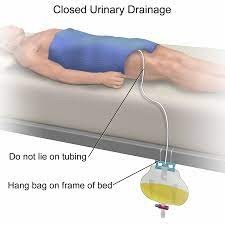
A nurse is caring for a client who has an indwelling catheter with a urinary drainage system. Which of the following actions should the nurse take?
A. Coil the tubing on the bed above the collection bag.
Coiling the tubing on the bed above the collection bag is incorrect because it can cause urine to flow back into the bladder, increasing the risk of infection and compromising the effectiveness of the drainage system. The tubing should be kept below the level of the bladder to ensure proper drainage.
B. Instruct the client to hold the drainage bag at waist height when ambulating.
Instructing the client to hold the drainage bag at waist height when ambulating is incorrect because the drainage bag should always be kept below the level of the bladder to prevent urine from flowing back into the bladder, which could lead to a urinary tract infection (UTI).
C. Collect a sterile specimen from the urinary drainage bag.
Collecting a sterile specimen from the urinary drainage bag is incorrect because urine in the drainage bag is not considered sterile. If a sterile specimen is needed, it should be obtained by cleaning the catheter's sampling port with an antiseptic solution and withdrawing urine directly from the port using a sterile syringe.
D. Secure the tubing with adhesive tape to the lower abdomen
Securing the tubing with adhesive tape to the lower abdomen is correct because it helps prevent accidental pulling or tugging on the catheter, which could cause discomfort or dislodgement. Properly securing the tubing also helps maintain a continuous flow of urine and reduces the risk of infection.
Full Explanation
A) Coiling the tubing on the bed above the collection bag is incorrect because it can cause urine to flow back into the bladder, increasing the risk of infection and compromising the effectiveness of the drainage system. The tubing should be kept below the level of the bladder to ensure proper drainage.
B) Instructing the client to hold the drainage bag at waist height when ambulating is incorrect because the drainage bag should always be kept below the level of the bladder to prevent urine from flowing back into the bladder, which could lead to a urinary tract infection (UTI).
C) Collecting a sterile specimen from the urinary drainage bag is incorrect because urine in the drainage bag is not considered sterile. If a sterile specimen is needed, it should be obtained by cleaning the catheter's sampling port with an antiseptic solution and withdrawing urine directly from the port using a sterile syringe.
D) Securing the tubing with adhesive tape to the lower abdomen is correct because it helps prevent accidental pulling or tugging on the catheter, which could cause discomfort or dislodgement. Properly securing the tubing also helps maintain a continuous flow of urine and reduces the risk of infection.
A nurse is reinforcing teaching with a client about collecting a stool specimen to check for occult blood. Which of the following statements by the client indicates an understanding of the teaching?
A. "Eating pasteurized dairy products will affect my test results."
By avoiding red meat for at least three days before the test, the client can help ensure more accurate results. pasteurized dairy products do not have a direct impact on stool occult blood test results. However, it is important to note that certain medications, such as bismuth subsalicylate (found in Pepto-Bismol), can affect the test results.
B. "Having urine mixed in with the stool will not affect the results."
The presence of urine in the stool sample can potentially dilute or mask the presence of blood, leading to false-negative results. It is important
C. "I should avoid eating red meat for 3 days before my test."
By avoiding red meat for at least three days before the test, the client can help ensure more accurate results. pasteurized dairy products do not have a direct impact on stool occult blood test results. However, it is important to note that certain medications, such as bismuth subsalicylate (found in Pepto-Bismol), can affect the test results.
D. "I should collect a specimen once each week for 4 weeks."
Occult blood testing is typically done as a one-time test unless otherwise specified by a healthcare provider. Collecting a specimen once each week for four weeks is unnecessary unless specifically instructed by the healthcare provider.
Full Explanation
When collecting a stool specimen to check for occult blood, it is important to avoid certain foods that can affect the test results, such as red meat. Red meat can cause false-positive results due to the presence of heme, which can mimic the appearance of blood in the stool.
By avoiding red meat for at least three days before the test, the client can help ensure more accurate results. pasteurized dairy products do not have a direct impact on stool occult blood test results. However, it is important to note that certain medications, such as bismuth subsalicylate (found in Pepto-Bismol), can affect the test results.
The presence of urine in the stool sample can potentially dilute or mask the presence of blood, leading to false-negative results. It is important
Occult blood testing is typically done as a one-time test unless otherwise specified by a healthcare provider. Collecting a specimen once each week for four weeks is unnecessary unless specifically instructed by the healthcare provider.
A nurse is contributing to an in-service for newly licensed nurses about situations requiring an incident report. Which of the following examples should the nurse include?
A. A nurse observes a client vomiting after receiving an oral pain medication.
A nurse discovers that a client's family member has administered a PCA dose. PCA (Patient-Controlled Analgesia) is a method of pain management that allows the client to self-administer pain medication within predetermined limits. If a family member administers the PCA dose without proper authorization or understanding, it is a safety concern that should be reported.
B. A nurse observes another nurse remove wrist restraints one at a time from a client who is currently calm.
A nurse observes another nurse remove wrist restraints one at a time from a client who is currently calm. This situation may raise concerns regarding proper restraint removal techniques or potential safety issues, but it does not inherently indicate an immediate need for an incident report. However, if the nurse's actions were contrary to policy or posed a risk to the client's safety, it should be reported.
C. A nurse discovers that an electronic IV pump.delivered twice the prescribed amount of fluid to a client.
This situation involves a medication error that could potentially harm the client, and it should be reported through an incident report.
D. A nurse discovers that a client's family member has administered a PCA dose.
A nurse discovers that a client's family member has administered a PCA dose. PCA (Patient-Controlled Analgesia) is a method of pain management that allows the client to self-administer pain medication within predetermined limits. If a family member administers the PCA dose without proper authorization or understanding, it is a safety concern that should be reported.
Full Explanation
This situation involves a medication error that could potentially harm the client, and it should be reported through an incident report.
The following examples may not require an incident report:
A nurse discovers that a client's family member has administered a PCA dose. PCA (Patient-Controlled Analgesia) is a method of pain management that allows the client to self-administer pain medication within predetermined limits. If a family member administers the PCA dose without proper authorization or understanding, it is a safety concern that should be reported.
A nurse observes a client vomiting after receiving an oral pain medication. While this situation should be assessed and managed appropriately, it does not necessarily warrant an incident report unless there are additional factors or complications involved.
A nurse observes another nurse remove wrist restraints one at a time from a client who is currently calm. This situation may raise concerns regarding proper restraint removal techniques or potential safety issues, but it does not inherently indicate an immediate need for an incident report. However, if the nurse's actions were contrary to policy or posed a risk to the client's safety, it should be reported.