
Nursing practice questions with comprehensive rationales
NurseDive Free Nursing Practice Question
A nurse is preparing to administer a client's daily dose of NPH insulin at 0730.
The nurse should expect this type of insulin to peak within which of the following timeframes after administration?
A. 30 minutes to 3 hours.
Choice A: 30 minutes to 3 hours is not the answer because NPH insulin usually starts to work about 1 to 3 hours after injection and peaks 4 to 12 hours later12.
B. 2 to 6 hours.
Choice B: 2 to 6 hours is not the answer because NPH insulin usually starts to work about 1 to 3 hours after injection and peaks 4 to 12 hours later12.
C. 4 to 5 hours.
Choice C: 4 to 5 hours is not the answer because NPH insulin usually starts to work about 1 to 3 hours after injection and peaks 4 to 12 hours later12.
D. 6 to 10 hours.
NPH insulin is an intermediate-acting insulin that usually starts to work about 1 to 3 hours after injection and peaks 4 to 12 hours later12. Peak time is when insulin has its strongest effect on lowering blood glucose1.
This question is an excerpt from Nurse Dive's nursing test bank - ATI Pharmacology Endocrine and Hematology Proctored Exam. Take the full exam now
Full Explanation
NPH insulin is an intermediate-acting insulin that usually starts to work about 1 to 3 hours after injection and peaks 4 to 12 hours later12.
Peak time is when insulin has its strongest effect on lowering blood glucose1.
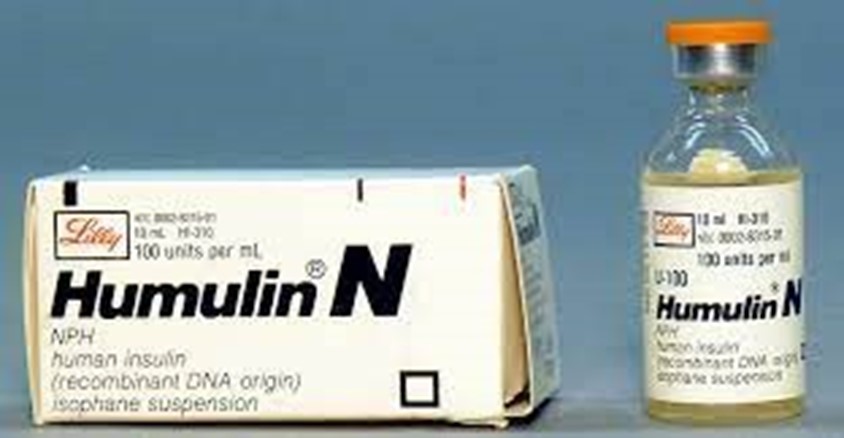
Choice A: 30 minutes to 3 hours is not the answer because NPH insulin usually starts to work about 1 to 3 hours after injection and peaks 4 to 12 hours later12.
Choice B: 2 to 6 hours is not the answer because NPH insulin usually starts to work about 1 to 3 hours after injection and peaks 4 to 12 hours later12.
Choice C: 4 to 5 hours is not the answer because NPH insulin usually starts to work about 1 to 3 hours after injection and peaks 4 to 12 hours later12.
Similar Questions
A nurse is preparing to administer 400 mL of 0.9% sodium chloride IV over 8 hours.
The drop factor of the manual IV tubing is 60 gtt/mL.
The nurse should set the manual IV infusion to deliver how many gtt/min? (Round the answer to the nearest whole number.
Use a leading zero if it applies. Do not use a trailing zero.).
Full Explanation
To calculate the flow rate in gtt/min, you need to divide the total volume of the IV fluid (400 mL) by the total infusion time in minutes (8 hours x 60 minutes/hour = 480 minutes) and then multiply by the drop factor of the manual IV tubing (60 gtt/mL).
This gives you a flow rate of (400 mL / 480 minutes) x 60 gtt/mL = 50 gtt/min.
The other choices are not answers because they are not provided in the question.
A nurse is caring for a client who has a prescription for digoxin 0.25 mg PO daily.
The amount available is digoxin 0.125 mg tablet.
How many tablets should the nurse administer per dose? (Round to the nearest whole number.
Use a leading zero if it applies. Do not use a trailing zero.).
A. 1.
Choice A: 1 is not the answer because 0.25 mg / 0.125 mg/tablet = 2 tablets.
B. 2.
To calculate the number of tablets the nurse should administer per dose, you need to divide the prescribed dose of digoxin (0.25 mg) by the amount of digoxin available in each tablet (0.125 mg/tablet). This gives you a result of 0.25 mg / 0.125 mg/tablet = 2 tablets.
C. 3.
Choice C: 3 is not the answer because 0.25 mg / 0.125 mg/tablet = 2 tablets.
D. 4.
Choice D: 4 is not the answer because 0.25 mg / 0.125 mg/tablet = 2 tablets.
Full Explanation
To calculate the number of tablets the nurse should administer per dose, you need to divide the prescribed dose of digoxin (0.25 mg) by the amount of digoxin available in each tablet (0.125 mg/tablet).
This gives you a result of 0.25 mg / 0.125 mg/tablet = 2 tablets.
Choice A: 1 is not the answer because 0.25 mg / 0.125 mg/tablet = 2 tablets.
Choice C: 3 is not the answer because 0.25 mg / 0.125 mg/tablet = 2 tablets.
Choice D: 4 is not the answer because 0.25 mg / 0.125 mg/tablet = 2 tablets.
A nurse is caring for a client who has asthma.
The client asks the nurse how albuterol helps his breathing.
Which of the following information should the nurse include in the response? (Select all that apply).
A. The medication will increase the amount of mucus.
The medication will increase the amount of mucus is not a correct answer because albuterol does not increase the amount of mucus.
B. The medication will prevent wheezing.
Albuterol is an inhaled medication that can quickly relieve the symptoms of asthma. Classified as a short-acting beta-agonist (SABA) and bronchodilator, albuterol relaxes the muscles in your airways that tighten during an asthma attack. This causes the airways in the lung to increase in size, which allows air to move more freely through them1. This can help prevent wheezing, open airways and decrease coughing.
C. The medication will open the airways.
Albuterol is an inhaled medication that can quickly relieve the symptoms of asthma. Classified as a short-acting beta-agonist (SABA) and bronchodilator, albuterol relaxes the muscles in your airways that tighten during an asthma attack. This causes the airways in the lung to increase in size, which allows air to move more freely through them1. This can help prevent wheezing, open airways and decrease coughing.
D. The medication will decrease coughing.
Albuterol is an inhaled medication that can quickly relieve the symptoms of asthma. Classified as a short-acting beta-agonist (SABA) and bronchodilator, albuterol relaxes the muscles in your airways that tighten during an asthma attack. This causes the airways in the lung to increase in size, which allows air to move more freely through them1. This can help prevent wheezing, open airways and decrease coughing.
Full Explanation
Albuterol is an inhaled medication that can quickly relieve the symptoms of asthma.
Classified as a short-acting beta-agonist (SABA) and bronchodilator, albuterol relaxes the muscles in your airways that tighten during an asthma attack.
This causes the airways in the lung to increase in size, which allows air to move more freely through them1.
This can help prevent wheezing, open airways and decrease coughing.
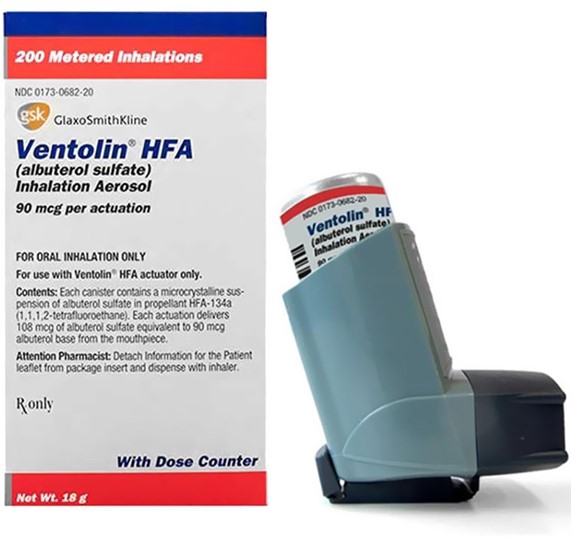
Choice A: The medication will increase the amount of mucus is not a correct answer because albuterol does not increase the amount of mucus.