
Nursing practice questions with comprehensive rationales
NurseDive Free Nursing Practice Question
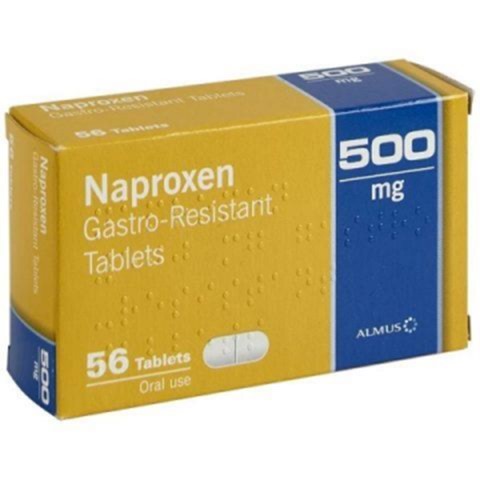
A nurse is preparing to administer naproxen 500 mg PO BID for a client who has osteoarthritis. The amount available is naproxen 125 mg/5 mL oral suspension. How many mL should the nurse administer per dose?
(Round the answer to the nearest whole number. Use a leading zero if it applies. Do not use a trailing zero.)
This question is an excerpt from Nurse Dive's nursing test bank - ATI Med Surg Proctored Exam 6. Take the full exam now
Full Explanation
- To calculate the dose of naproxen oral suspension, use the following formula: Dose (mL) = Desired dose (mg) / Available dose (mg/mL)
- In this case, the desired dose is 500 mg and the available dose is 125 mg/5 mL, which is equivalent to 25 mg/mL
- Plug in the values into the formula: Dose (mL) = 500 mg / 25 mg/mL - Simplify the expression: Dose (mL) = 20 mL
- Round the answer to the nearest whole number: Dose (mL) = 20 mL
- The nurse should administer 20 mL of naproxen oral suspension per dose
Similar Questions
A nurse is caring for a client who has an acute ankle sprain. Which of the following actions should the nurse take? (Select all that apply.)
A. Place a compression bandage on the ankle.
Place a compression bandage on the ankle. - This helps reduce swelling and provides support to the injured area.
B. Apply heat to the ankle.
Apply heat to the ankle - This action is not recommended for acute sprains as it can increase swelling. Cold packs or ice should be used initially to reduce inflammation.
C. Encourage rest.
Encourage rest. - Rest is important to allow the ankle to heal properly and prevent further injury.
D. Elevate the ankle.
Elevate the ankle. - Elevating the ankle helps reduce swelling by allowing fluid to drain away from the injured area.
E. Perform passive range-of-motion exercises to the ankle.
- Gentle range-of-motion exercises can help prevent stiffness in the ankle joint. However, it's important to perform these exercises within the limits of comfort and not force any movements.
Full Explanation
A. Place a compression bandage on the ankle.
- This helps reduce swelling and provides support to the injured area.
B. Apply heat to the ankle
- This action is not recommended for acute sprains as it can increase swelling. Cold packs or ice should be used initially to reduce inflammation.
C. Encourage rest.
- Rest is important to allow the ankle to heal properly and prevent further injury.
D. Elevate the ankle.
- Elevating the ankle helps reduce swelling by allowing fluid to drain away from the injured area.
E. Perform passive range-of-motion exercises to the ankle.
- Gentle range-of-motion exercises can help prevent stiffness in the ankle joint. However, it's important to perform these exercises within the limits of comfort and not force any movements.
A nurse is preparing to administer indomethacin 75 mg PO bid. Available is indomethacin 25 mg/5mL. How many mL should the nurse administer per dose?
(Round the answer to the nearest whole number. Use a leading zero if it applies. Do not use a trailing zero.)
Full Explanation
- To calculate the mL per dose, use the formula: mL = (mg x 5) / 25
- Plug in the given values: mL = (75 x 5) / 25
- Simplify the equation: mL = 15
- Round the answer to the nearest whole number: mL = 15
- The nurse should administer 15 mL of indomethacin per dose.
A nurse is caring for a client who has a cast in place for a fractured tibia. Which of the following nursing actions is the priority immediately after the provider has applied the cast?
A. Performing range of motion
Performing range of motion: This should not be done immediately after applying the cast, as it may compromise the integrity of the cast. Range of motion exercises should be initiated once the cast has fully set and as directed by the healthcare provider.
B. Checking capillary refill distal to the cast
Checking capillary refill distal to the cast: This is the priority after applying the cast. It assesses blood flow to the extremity below the cast. Impaired circulation could lead to serious complications, so it's crucial to monitor capillary refill promptly.
C. Teaching the client about cast care
Teaching the client about cast care: While providing education about cast care is important, it is not the immediate priority. Ensuring proper circulation is more critical in the initial moments after applying the cast.
D. Managing pain
Managing pain: While pain management is important, it is not the immediate priority after applying the cast. Ensuring proper circulation and assessing for any signs of impairment take precedence. Pain management can be addressed once circulation is confirmed to be adequate.
Full Explanation
A. Performing range of motion: This should not be done immediately after applying the cast, as it may compromise the integrity of the cast. Range of motion exercises should be initiated once the cast has fully set and as directed by the healthcare provider.
B. Checking capillary refill distal to the cast: This is the priority after applying the cast. It assesses blood flow to the extremity below the cast. Impaired circulation could lead to serious complications, so it's crucial to monitor capillary refill promptly.
C. Teaching the client about cast care: While providing education about cast care is important, it is not the immediate priority. Ensuring proper circulation is more critical in the initial moments after applying the cast.
D. Managing pain: While pain management is important, it is not the immediate priority after applying the cast. Ensuring proper circulation and assessing for any signs of impairment take precedence. Pain management can be addressed once circulation is confirmed to be adequate.