
Nursing practice questions with comprehensive rationales
NurseDive Free Nursing Practice Question
A nurse is preparing to administer the initial dose of penicillin G IM to a client. The nurse should monitor for which of the following as an indication of an allergic reaction following the injection?
A. Pallor.
Choice A is wrong because pallor is not a typical sign of an allergic reaction to penicillin. Pallor means pale skin and may be caused by other conditions such as anemia or shock.
B. Bradycardia.
Choice B is wrong because bradycardia is not a typical sign of an allergic reaction to penicillin. Bradycardia means slow heart rate and may be caused by other conditions such as heart block or medication side effects.
C. Urticaria.
Urticaria, also known as hives, is a common sign of an allergic reaction to penicillin. An allergic reaction is an abnormal response of the immune system to the drug. Other signs and symptoms of penicillin allergy may include skin rash, itching, fever, swelling, shortness of breath, wheezing, runny nose, itchy eyes, and anaphylaxis. Anaphylaxis is a rare but life-threatening condition that affects multiple body systems and requires immediate emergency treatment.
D. Dyspepsia.
Choice D is wrong because dyspepsia is not a typical sign of an allergic reaction to penicillin. Dyspepsia means indigestion and may be caused by other conditions such as gastritis or peptic ulcer.
This question is an excerpt from Nurse Dive's nursing test bank - ATI RN Pharmacology 2019 Proctored Exam. Take the full exam now
Full Explanation
Urticaria, also known as hives, is a common sign of an allergic reaction to penicillin. An allergic reaction is an abnormal response of the immune system to the drug. Other signs and symptoms of penicillin allergy may include skin rash, itching, fever, swelling, shortness of breath, wheezing, runny nose, itchy eyes, and anaphylaxis. Anaphylaxis is a rare but life-threatening condition that affects multiple body systems and requires immediate emergency treatment.
Choice A is wrong because pallor is not a typical sign of an allergic reaction to penicillin.
Pallor means pale skin and may be caused by other conditions such as anemia or shock.
Choice B is wrong because bradycardia is not a typical sign of an allergic reaction to penicillin.
Bradycardia means slow heart rate and may be caused by other conditions such as heart block or medication side effects.
Choice D is wrong because dyspepsia is not a typical sign of an allergic reaction to penicillin.
Dyspepsia means indigestion and may be caused by other conditions such as gastritis or peptic ulcer.
Similar Questions
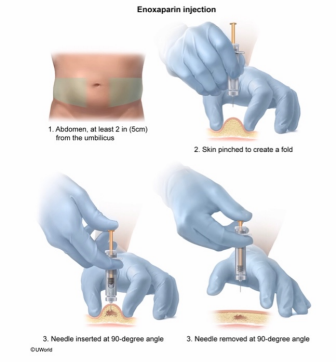
A nurse is preparing to administer subcutaneous heparin to a client. Which of the following actions should the nurse take?
A. Insert the needle at least 5 cm (2 in) from the umbilicus.
This is because the umbilicus is a potential site of infection and should be avoided when administering subcutaneous heparin.
B. Massage the site after administering the medication.
Choice B is wrong because massaging the site after administering the medication can cause bruising and hematoma formation.
C. Use a 21-gauge needle for the injection.
Choice C is wrong because a 21-gauge needle is too large for subcutaneous injection and can cause tissue trauma and bleeding. A smaller needle, such as 25- or 27-gauge, should be used.
D. Aspirate before injecting the medication.
Choice D is wrong because aspirating before injecting the medication can increase the risk of hematoma formation and is not recommended for subcutaneous heparin.
Full Explanation
This is because the umbilicus is a potential site of infection and should be avoided when administering subcutaneous heparin.
Choice B is wrong because massaging the site after administering the medication can cause bruising and hematoma formation.
Choice C is wrong because a 21-gauge needle is too large for subcutaneous injection and can cause tissue trauma and bleeding.
A smaller needle, such as 25- or 27-gauge, should be used.
Choice D is wrong because aspirating before injecting the medication can increase the risk of hematoma formation and is not recommended for subcutaneous heparin.
A nurse is assessing a client’s IV infusion site and notes that the site is cool and edematous.
Which of the following actions should the nurse take?
A. Initiate a new IV distal to the initial site.
This is not the first course of action. While starting a new IV might be necessary eventually, it's crucial to address the issue at the current site first.
B. Slow the IV solution rate.
Slowing the rate doesn't directly address the coolness and edema, which indicate potential infiltration or extravasation.
C. Maintain the extremity below the level of the heart.
This action would actually worsen the edema by promoting fluid accumulation at the site.
D. Apply a warm, moist compress.
Applying a warm, moist compress can help promote absorption of any leaked fluid and improve circulation at the site. However, it's important to remember that this is just one step in the process. The nurse should also: Stop the IV infusion. Assess the extent of the infiltration or extravasation. Document the findings. Elevate the affected extremity. Consult with a physician for further instructions and potential treatment.
Full Explanation
The most appropriate action for the nurse to take in this situation is:
d. Apply a warm, moist compress.
Here's why the other options are not recommended:
- a. Initiate a new IV distal to the initial site: This is not the first course of action. While starting a new IV might be necessary eventually, it's crucial to address the issue at the current site first.
- b. Slow the IV solution rate: Slowing the rate doesn't directly address the coolness and edema, which indicate potential infiltration or extravasation.
- c. Maintain the extremity below the level of the heart: This action would actually worsen the edema by promoting fluid accumulation at the site.
Applying a warm, moist compress can help promote absorption of any leaked fluid and improve circulation at the site. However, it's important to remember that this is just one step in the process. The nurse should also:
- Stop the IV infusion.
- Assess the extent of the infiltration or extravasation.
- Document the findings.
- Elevate the affected extremity.
- Consult with a physician for further instructions and potential treatment.
A nurse is caring for a client who is taking tamoxifen to treat breast cancer. The nurse should identify which of the following manifestations as an adverse effect of this medication?
A. Tinnitus.
Choice A is wrong because tinnitus (ringing in the ears) is not a known side effect of tamoxifen.
B. Hot flashes.
Hot flashes are a common side effect of tamoxifen, which is hormone therapy for breast cancer that blocks the action of estrogen. Tamoxifen can cause menopause-like symptoms in women, such as irregular or missing periods, vaginal discharge or bleeding, and mood changes.
C. Urinary frequency.
Choice C is wrong because urinary frequency (needing to urinate more often) is not a known side effect of tamoxifen.
D. Constipation.
Choice D is wrong because constipation (difficulty passing stools) is not a known side effect of tamoxifen.
Full Explanation
Hot flashes are a common side effect of tamoxifen, which is hormone therapy for breast cancer that blocks the action of estrogen.

Tamoxifen can cause menopause-like symptoms in women, such as irregular or missing periods, vaginal discharge or bleeding, and mood changes. Choice A is wrong because tinnitus (ringing in the ears) is not a known side effect of tamoxifen.
Choice C is wrong because urinary frequency (needing to urinate more often) is not a known side effect of tamoxifen.
Choice D is wrong because constipation (difficulty passing stools) is not a known side effect of tamoxifen.