
Nursing practice questions with comprehensive rationales
NurseDive Free Nursing Practice Question
A nurse is preparing to provide report on a client using the Situation-Background- Assessment-Recommendation (SBAR) Communication tool.
Identify the order in which the nurse should give report.
A. Provide a brief description of the client’s diagnosis.
Choice A is wrong because it is part of the Background section of the SBAR tool, which comes after the Situation section.
B. Discuss suggestions for continuing the client’s care.
The nurse should give report using the SBAR Communication tool in the following order: Situation, Background, Assessment, Recommendation. This tool provides a framework for communication between members of the health care team about a patient’s condition. It allows for an easy and focused way to set expectations for what will be communicated and how between members of the team.
C. State the client’s most recent vital signs.
Choice C is wrong because it is part of the Assessment section of the SBAR tool, which comes after the Background section.
D. Review the client’s pertinent medical history.
Choice D is wrong because it is also part of the Background section of the SBAR tool, which comes after the Situation section.
This question is an excerpt from Nurse Dive's nursing test bank - ATI PN Capstone Proctored Comprehensive Assessment 2020 B. Take the full exam now
Full Explanation
The nurse should give report using the SBAR Communication tool in the following order: Situation, Background, Assessment, Recommendation. This tool provides a framework for communication between members of the health care team about a patient’s condition. It allows for an easy and focused way to set expectations for what will be communicated and how between members of the team.
Choice A is wrong because it is part of the Background section of the SBAR tool, which comes after the Situation section.
Choice C is wrong because it is part of the Assessment section of the SBAR tool, which comes after the Background section.
Choice D is wrong because it is also part of the Background section of the SBAR tool, which comes after the Situation section.
Similar Questions
A nurse is selecting foods for a client who is in the manic phase of bipolar disorder.
Which of the following foods should the nurse offer the client?
A. Creamed corn.
Choice A is wrong because Creamed corn is wrong because it is a low-protein, high-carbohydrate food that can increase blood glucose levels and cause mood swings.
B. Mashed potatoes.
Choice B is wrong because Mashed potatoes is wrong because it is a low-protein, high-starch food that can also affect blood glucose levels and mood stability.
C. Spaghetti with meat sauce.
Choice C is wrong because Spaghetti with meat sauce is wrong because it is a complex food that requires utensils and attention to eat, which can be difficult for a client who is manic and distractible.
D. Milkshake.
The nurse should offer the client a milkshake because it is a high-calorie, high- protein, and easy-to-consume food that can meet the nutritional needs of a client who is in the manic phase of bipolar disorder. Clients who are manic often have increased activity, decreased appetite, and poor attention span, which can lead to weight loss and malnutrition.
Full Explanation
The nurse should offer the client a milkshake because it is a high-calorie, high- protein, and easy-to-consume food that can meet the nutritional needs of a client who is in the manic phase of bipolar disorder. Clients who are manic often have increased activity, decreased appetite, and poor attention span, which can lead to weight loss and malnutrition.
Choice A is wrong because Creamed corn is wrong because it is a low-protein, high-carbohydrate food that can increase blood glucose levels and cause mood swings.
Choice B is wrong because Mashed potatoes is wrong because it is a low-protein, high-starch food that can also affect blood glucose levels and mood stability.
Choice C is wrong because Spaghetti with meat sauce is wrong because it is a complex food that requires utensils and attention to eat, which can be difficult for a client who is manic and distractible.
Normal ranges for potassium are 3.5 to 5.0 mEq/L.
A nurse is caring for a client at a follow-up visit who has been taking lithium therapy for bipolar disorder.
Which of the following findings should indicate to the nurse that the client is experiencing lithium toxicity?
A. Hypoglycemia.
Choice A is wrong because hypoglycemia is not a symptom of lithium toxicity. Hypoglycemia is low blood sugar that can cause symptoms such as shakiness, sweating, hunger, and confusion.
B. Excess salivation.
Choice B is wrong because excess salivation is not a symptom of lithium toxicity. Excess salivation can be caused by various factors, such as infections, medications, or nerve damage.
C. Urinary retention.
Choice C is wrong because urinary retention is not a symptom of lithium toxicity. Urinary retention is the inability to empty the bladder completely, which can cause pain, discomfort, and infection. Lithium toxicity can actually cause increased urine output, not decreased.
D. Dysrhythmia.
Dysrhythmia is an abnormal heart rhythm that can be a sign of severe lithium toxicity. Lithium toxicity can occur when a person takes too much lithium, a mood- stabilizing medication used to treat bipolar disorder and major depressive disorder.
Full Explanation
Dysrhythmia is an abnormal heart rhythm that can be a sign of severe lithium toxicity.
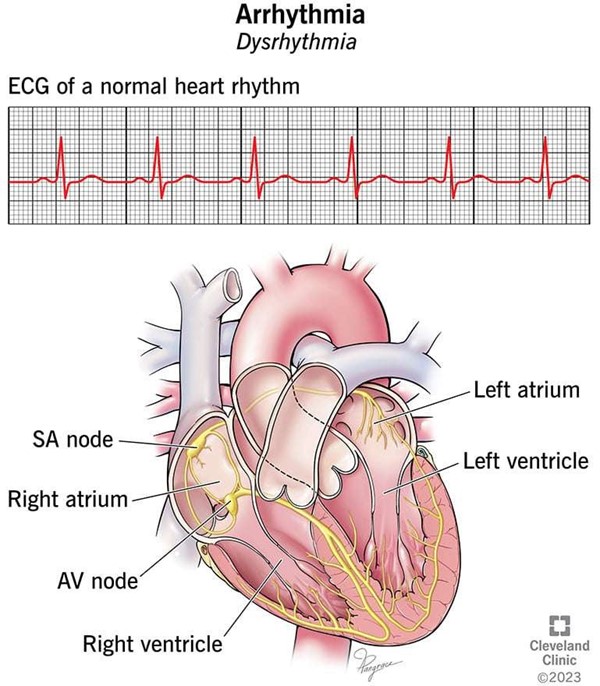
Lithium toxicity can occur when a person takes too much lithium, a mood- stabilizing medication used to treat bipolar disorder and major depressive disorder.
Choice A is wrong because hypoglycemia is not a symptom of lithium toxicity. Hypoglycemia is low blood sugar that can cause symptoms such as shakiness, sweating, hunger, and confusion.
Choice B is wrong because excess salivation is not a symptom of lithium toxicity. Excess salivation can be caused by various factors, such as infections, medications, or nerve damage.
Choice C is wrong because urinary retention is not a symptom of lithium toxicity. Urinary retention is the inability to empty the bladder completely, which can cause pain, discomfort, and infection. Lithium toxicity can actually cause increased urine output, not decreased.
Normal ranges for blood lithium levels are 0.6 to 1.2 mEq/L for maintenance therapy and 0.8 to 1.5 mEq/L for acute therapy. Levels above 1.5 mEq/L can cause mild to moderate toxicity, and levels above 2.0 mEq/L can cause severe toxicity. Levels above 3.0 mEq/L are considered a medical emergency.
A nurse is caring for a client who has a compound fracture of the femur.
Which of the following findings should the nurse report to the provider as a manifestation of a fat embolism?
A. Report of pain as 6 on a scale of 0 to 10.
Choice A is wrong because a report of pain as 6 on a scale of 0 to 10 is not specific to a fat embolism. Pain is a common symptom of many conditions and injuries.
B. Pulses 2+ distal to the client’s fracture.
Choice B is wrong because pulses 2+ distal to the client’s fracture are normal and indicate adequate blood flow to the extremity.
C. Petechiae over the client’s chest.
This is a manifestation of a fat embolism, which is a condition where particles of fat get into the bloodstream and block blood flow. A fat embolism can occur after trauma or surgery to the legs, when fat from the bone marrow escapes into the bloodstream.
D. Bruising around the fracture site.
Choice D is wrong because bruising around the fracture site is an expected finding after a compound fracture and does not indicate a fat embolism. Normal ranges for blood pressure are 90/60 mmHg to 120/80 mmHg and for heart rate are 60 to 100 beats per minute.
Full Explanation
This is a manifestation of a fat embolism, which is a condition where particles of fat get into the bloodstream and block blood flow. A fat embolism can occur after trauma or surgery to the legs, when fat from the bone marrow escapes into the bloodstream.
Choice A is wrong because a report of pain as 6 on a scale of 0 to 10 is not specific to a fat embolism.
Pain is a common symptom of many conditions and injuries.
Choice B is wrong because pulses 2+ distal to the client’s fracture are normal and indicate adequate blood flow to the extremity.
Choice D is wrong because bruising around the fracture site is an expected finding after a compound fracture and does not indicate a fat embolism.
Normal ranges for blood pressure are 90/60 mmHg to 120/80 mmHg and for heart rate are 60 to 100 beats per minute.
Petechiae are small red or purple spots on the skin caused by bleeding under the skin.
They can range in size from pinpoint to several millimeters. Fat embolism syndrome (FES) is a serious complication of a fat embolism that affects the lungs, skin or brain and can be fatal. FES usually occurs 12 to 72 hours after trauma.