
Nursing practice questions with comprehensive rationales
NurseDive Free Nursing Practice Question
A. Medical condition
Medical condition:Including the client's medical condition in the Situation component of the ISBARR communication tool is important because it provides an overview of the client's health status. This may include a brief description of the primary diagnosis, current symptoms, or any significant changes in the client's condition since the last shift. It helps the receiving nurse understand the context and urgency of the report.
B. Treatment
Treatment:While treatment information is crucial for providing comprehensive care to the client, it is typically included in the Background or Assessment components of the ISBARR communication tool. The Situation component focuses on summarizing the client's current status rather than detailing specific treatments or interventions.
C. Vital signs
Vital signs:Vital signs, such as heart rate, blood pressure, respiratory rate, temperature, and oxygen saturation, are essential clinical data. However, they are usually included in the Assessment component of the ISBARR communication tool, where the nurse provides a detailed assessment of the client's physiological parameters and trends.
D. List of medications
List of medications:Similar to treatment information, a list of medications is typically included in the Background or Assessment components of the ISBARR communication tool. It is important for the receiving nurse to know what medications the client is taking, including doses, frequencies, and any recent changes, but this information is more detailed and specific than what is typically included in the Situation component.
This question is an excerpt from Nurse Dive's nursing test bank - Ati Lpn Med Surg Test 1 jj Custom Proctored Exam. Take the full exam now
Full Explanation
Explanation:
A. Medical condition:
Including the client's medical condition in the Situation component of the ISBARR communication tool is important because it provides an overview of the client's health status. This may include a brief description of the primary diagnosis, current symptoms, or any significant changes in the client's condition since the last shift. It helps the receiving nurse understand the context and urgency of the report.
B. Treatment:
While treatment information is crucial for providing comprehensive care to the client, it is typically included in the Background or Assessment components of the ISBARR communication tool. The Situation component focuses on summarizing the client's current status rather than detailing specific treatments or interventions.
C. Vital signs:
Vital signs, such as heart rate, blood pressure, respiratory rate, temperature, and oxygen saturation, are essential clinical data. However, they are usually included in the Assessment component of the ISBARR communication tool, where the nurse provides a detailed assessment of the client's physiological parameters and trends.
D. List of medications:
Similar to treatment information, a list of medications is typically included in the Background or Assessment components of the ISBARR communication tool. It is important for the receiving nurse to know what medications the client is taking, including doses, frequencies, and any recent changes, but this information is more detailed and specific than what is typically included in the Situation component.
Similar Questions
A nurse is caring for a client who has hypertension and recently developed drooping facial features. When contacting the provider, which of the following statements should the nurse include as part of the background component of the SBAR communication tool?
A. "The client has developed drooping facial features."
"The client has developed drooping facial features."This statement provides specific information about a recent change in the client's condition, which is relevant background information. It helps the provider understand one of the key reasons for the communication.
B. "The client may benefit from a neurology consult."
"The client may benefit from a neurology consult."While suggesting a neurology consult is a potential recommendation (R) in the SBAR tool, it is not part of the Background (B) component. Background information typically focuses on factual data about the client's history, current condition, and pertinent details relevant to the situation.
C. "The client is disoriented and pupils are slow to respond to light."
"The client is disoriented and pupils are slow to respond to light."Similar to option B, this statement describes the client's assessment findings and current condition rather than providing background information. It would be more appropriate in the Assessment (A) component of the SBAR tool.
D. "The client has a history of hypertension."
"The client has a history of hypertension."This statement provides relevant background information about the client's medical history, specifically their history of hypertension. Including this information in the Background component helps the provider understand the client's baseline health status, which is important for evaluating the current situation.
Full Explanation
Explanation:
A. "The client has developed drooping facial features."
This statement provides specific information about a recent change in the client's condition, which is relevant background information. It helps the provider understand one of the key reasons for the communication.
B. "The client may benefit from a neurology consult."
While suggesting a neurology consult is a potential recommendation (R) in the SBAR tool, it is not part of the Background (B) component. Background information typically focuses on factual data about the client's history, current condition, and pertinent details relevant to the situation.
C. "The client is disoriented and pupils are slow to respond to light."
Similar to option B, this statement describes the client's assessment findings and current condition rather than providing background information. It would be more appropriate in the Assessment (A) component of the SBAR tool.
D. "The client has a history of hypertension."
This statement provides relevant background information about the client's medical history, specifically their history of hypertension. Including this information in the Background component helps the provider understand the client's baseline health status, which is important for evaluating the current situation.
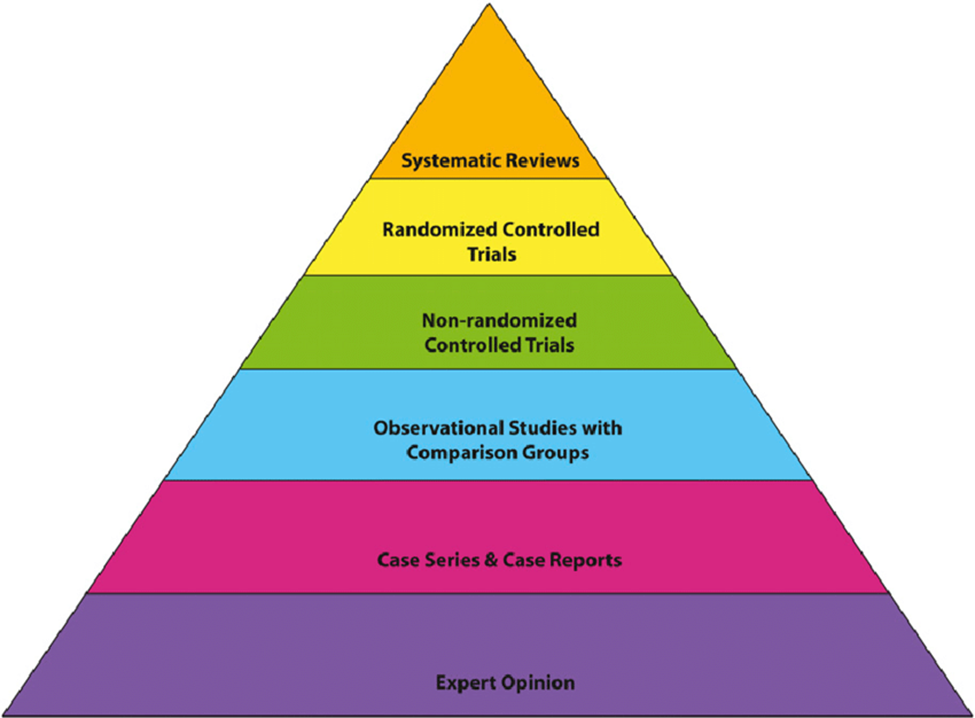
A charge nurse is discussing evidence-based practice (EBP) and the hierarchy of evidence with a newly licensed nurse. Which of the following examples should the nurse provide when discussing Level I evidence?
A. Expert opinions
Expert opinions:Expert opinions are valuable in clinical practice and decision-making, but they are considered a lower level of evidence compared to systematic reviews and meta-analyses. Expert opinions are often classified as Level V evidence in the hierarchy.
B. Systematic review
Systematic reviewA systematic review is a comprehensive and rigorous synthesis of multiple studies on a particular topic, and it often includes a meta-analysis that statistically combines the results of these studies to provide a high level of evidence. This type of evidence is considered Level I because it provides a strong foundation for making clinical decisions due to its methodological rigor and ability to summarize findings from multiple studies.
C. Credible websites
Credible websites:Credible websites can provide valuable information, but they are not classified as Level I evidence. The evidence hierarchy typically places systematic reviews and meta-analyses at the highest level due to their methodological rigor and synthesis of multiple studies.
D. Qualitative studies
Qualitative studies:Qualitative studies are valuable for exploring complex phenomena and understanding individuals' experiences, beliefs, and perspectives. However, they are generally considered lower in the hierarchy of evidence compared to systematic reviews and RCTs, which are categorized as Level I evidence.
Full Explanation
Explanation:
A. Expert opinions:
Expert opinions are valuable in clinical practice and decision-making, but they are considered a lower level of evidence compared to systematic reviews and meta-analyses. Expert opinions are often classified as Level V evidence in the hierarchy.
B. Systematic review
A systematic review is a comprehensive and rigorous synthesis of multiple studies on a particular topic, and it often includes a meta-analysis that statistically combines the results of these studies to provide a high level of evidence. This type of evidence is considered Level I because it provides a strong foundation for making clinical decisions due to its methodological rigor and ability to summarize findings from multiple studies.
C. Credible websites:
Credible websites can provide valuable information, but they are not classified as Level I evidence. The evidence hierarchy typically places systematic reviews and meta-analyses at the highest level due to their methodological rigor and synthesis of multiple studies.
D. Qualitative studies:
Qualitative studies are valuable for exploring complex phenomena and understanding individuals' experiences, beliefs, and perspectives. However, they are generally considered lower in the hierarchy of evidence compared to systematic reviews and RCTs, which are categorized as Level I evidence.
A nurse is contributing to the plan of care for a client who has had HIV for 10 years and is at the end of life. Which of the following interventions should the nurse recommend?
A. Encourage the client to increase participation in community social activities
Encourage the client to increase participation in community social activities:While social activities can be beneficial for overall well-being, including mental and emotional aspects, at the end of life for a client with HIV, the focus shifts towards palliative care and symptom management. Encouraging social activities may not directly address the client's immediate end-of-life needs.
B. Prepare the client to begin highly active antiretroviral therapy (HAART)
Prepare the client to begin highly active antiretroviral therapy (HAART):Starting or continuing highly active antiretroviral therapy (HAART) may not be appropriate at the end of life. HAART is typically used to manage HIV infection and prolong life expectancy by controlling viral replication. However, at the end of life, the focus shifts towards comfort care rather than aggressive treatment aimed at extending life.
C. Provide routine analgesia to minimize episodes of breakthrough pain
Provide routine analgesia to minimize episodes of breakthrough pain:This intervention is more aligned with the principles of end-of-life care. Providing routine analgesia helps manage pain effectively, which is crucial for improving the client's comfort and quality of life during this stage.
D. Promote client weight gain of one to two pounds per week
Promote client weight gain of one to two pounds per week:Weight gain may not be a priority at the end of life, especially if the client is experiencing advanced HIV disease or complications. Instead of focusing on weight gain, the emphasis should be on optimizing comfort, managing symptoms, and enhancing quality of life.
Full Explanation
Explanation:
A. Encourage the client to increase participation in community social activities:
While social activities can be beneficial for overall well-being, including mental and emotional aspects, at the end of life for a client with HIV, the focus shifts towards palliative care and symptom management. Encouraging social activities may not directly address the client's immediate end-of-life needs.
B. Prepare the client to begin highly active antiretroviral therapy (HAART):
Starting or continuing highly active antiretroviral therapy (HAART) may not be appropriate at the end of life. HAART is typically used to manage HIV infection and prolong life expectancy by controlling viral replication. However, at the end of life, the focus shifts towards comfort care rather than aggressive treatment aimed at extending life.
C. Provide routine analgesia to minimize episodes of breakthrough pain:
This intervention is more aligned with the principles of end-of-life care. Providing routine analgesia helps manage pain effectively, which is crucial for improving the client's comfort and quality of life during this stage.
D. Promote client weight gain of one to two pounds per week:
Weight gain may not be a priority at the end of life, especially if the client is experiencing advanced HIV disease or complications. Instead of focusing on weight gain, the emphasis should be on optimizing comfort, managing symptoms, and enhancing quality of life.