Nursing practice questions with comprehensive rationales
NurseDive Free Nursing Practice Question
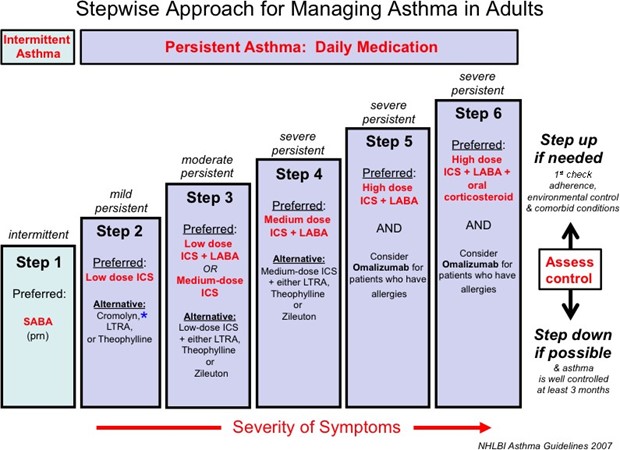
A nurse is providing discharge teaching to a client who has asthma and new prescriptions for beclomethasone and albuterol, both by inhaler. Which of the following statements by the client indicates an understanding of the teaching?
A. I will be sure to take the albuterol inhaler before taking the beclomethasone inhaler.
Albuterol is a bronchodilator that provides quick relief by relaxing the muscles around the airways, making it essential to use before a corticosteroid like beclomethasone, which reduces inflammation. Using albuterol first allows for better delivery of the beclomethasone to the airways.
B. I will use both medications immediately after exercising.
Albuterol may be used as a rescue inhaler before exercise to prevent exercise-induced bronchospasm, but beclomethasone is a maintenance medication and should not be used immediately after exercising unless prescribed.
C. "If my breathing begins to feel tight will use the beclomethasone inhaler immediately”
Beclomethasone is a long-term control medication, not a rescue inhaler. If breathing feels tight or there is an asthma attack, the client should use the albuterol inhaler for immediate relief.
D. I will administer the medications 10 minutes apart
While there is no strict rule about the timing between inhaler uses, the albuterol should be used first to open the airways, and while waiting a few minutes is acceptable, the emphasis should be on using albuterol before beclomethasone rather than a specific time frame.
This question is an excerpt from Nurse Dive's nursing test bank - ATI NUR 229 Pharmacology Test #1 OEK Proctored Exam. Take the full exam now
Full Explanation
A. Albuterol is a bronchodilator that provides quick relief by relaxing the muscles around the airways, making it essential to use before a corticosteroid like beclomethasone, which reduces inflammation. Using albuterol first allows for better delivery of the beclomethasone to the airways.
B. I will use both medications immediately after exercising. Albuterol may be used as a rescue inhaler before exercise to prevent exercise-induced bronchospasm, but beclomethasone is a maintenance medication and should not be used immediately after exercising unless prescribed.
C. "If my breathing begins to feel tight, I will use the beclomethasone inhaler immediately.” Beclomethasone is a long-term control medication, not a rescue inhaler. If breathing feels tight or there is an asthma attack, the client should use the albuterol inhaler for immediate relief.
D. I will administer the medications 10 minutes apart. While there is no strict rule about the timing between inhaler uses, the albuterol should be used first to open the airways, and while waiting a few minutes is acceptable, the emphasis should be on using albuterol before beclomethasone rather than a specific time frame.
Similar Questions
Acetylcysteine (Mucomyst) is a mucolytic that can also be used in the treatment of overdosage of which drug?
A. Ibuprofen
B. Diphenhydramine
C. Acetaminophen
Acetaminophen overdose can cause liver damage, and acetylcysteine is used as an antidote to prevent or minimize the liver injury caused by acetaminophen toxicity. Acetylcysteine works by replenishing glutathione, a substance that helps neutralize the toxic byproducts of acetaminophen metabolism in the liver. It is important to note that acetylcysteine is specifically indicated for acetaminophen overdose and may not be effective or appropriate for overdosage of other drugs, such as ibuprofen, diphenhydramine, or amoxicillin.
D. Amoxicillin
Full Explanation
Acetaminophen overdose can cause liver damage, and acetylcysteine is used as an antidote to prevent or minimize the liver injury caused by acetaminophen toxicity. Acetylcysteine works by replenishing glutathione, a substance that helps neutralize the toxic byproducts of acetaminophen metabolism in the liver.
It is important to note that acetylcysteine is specifically indicated for acetaminophen overdose and may not be effective or appropriate for overdosage of other drugs, such as ibuprofen, diphenhydramine, or amoxicillin.

A client with diabetes mellitus is being admitted to the hospital for surgery. The client has been taking Glucocorticoids (Prednisone) long-term for uncontrolled COPD. Which of the following must the nurse consider when she is obtaining a health history? (Select All that Apply.)
A. Due to the use of long-term glucocorticoids her medication must not be abruptly discontinued to avoid adrenal suppression
B. The client may develop low blood pressure
C. The use of long-term glucocorticoids places the client at risk for increased susceptibility to infection
D. The use of long-term glucocorticoids may have contributed to a spike in blood glucose levels
E. The client will most likely experience more pain
Full Explanation
The nurse must consider the following when obtaining a health history for a client with diabetes mellitus who has been taking glucocorticoids (prednisone) long-term for uncontrolled COPD:
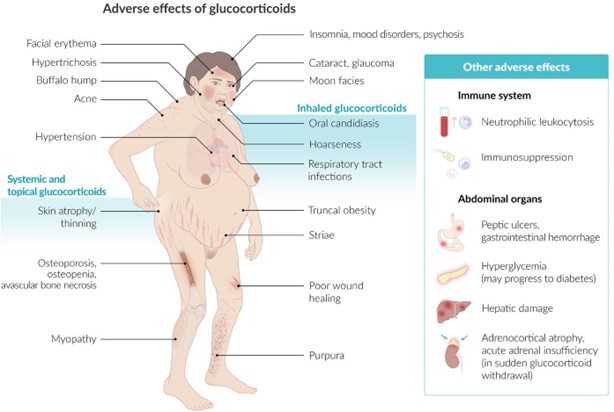
- Due to the use of long-term glucocorticoids, the medication must not be abruptly discontinued to avoid adrenal suppression. Abruptly stopping glucocorticoids can lead to adrenal insufficiency and a potentially life-threatening condition. Gradual tapering of the medication is necessary under medical supervision.
- The use of long-term glucocorticoids may contribute to a spike in blood glucose levels. Glucocorticoids can cause insulin resistance and increase blood sugar levels, which can be problematic for individuals with diabetes mellitus.
- The use of long-term glucocorticoids places the client at risk for increased susceptibility to infection. Glucocorticoids can suppress the immune system, making the client more susceptible to infections. This is important to consider, especially in a hospital setting where the risk of acquiring infections may be higher.
Regarding the other options:
The client may develop low blood pressure: While glucocorticoids can cause fluid retention and increased blood pressure, they are not typically associated with low blood pressure.
The client will most likely experience more pain: The use of glucocorticoids is not directly related to increased pain perception. Pain management may be influenced by various factors, but it is not specifically attributed to long-term glucocorticoid use.
A nurse is teaching a client about taking an expectorant to treat a cough. The nurse should explain that this type of medication has which of the following actions?
A. Reduces inflammation
B. Dries mucous membranes
C. Stimulates secretions
Expectorants are medications that help to loosen and thin mucus in the respiratory tract, making it easier to cough up and expel. They work by increasing the production of respiratory tract secretions, which helps to hydrate and thin the mucus, making it less sticky and easier to clear from the airways. By stimulating the production and secretion of mucus, expectorants promote coughing and facilitate the removal of excess mucus and phlegm from the respiratory system. It's important to note that expectorants are primarily used for productive coughs (coughs that produce phlegm or mucus). If the cough is dry and non-productive, other types of cough suppressants or remedies may be more appropriate.
D. Suppresses the urge to cough
Full Explanation
Expectorants are medications that help to loosen and thin mucus in the respiratory tract, making it easier to cough up and expel. They work by increasing the production of respiratory tract secretions, which helps to hydrate and thin the mucus, making it less sticky and easier to clear from the airways. By stimulating the production and secretion of mucus, expectorants promote coughing and facilitate the removal of excess mucus and phlegm from the respiratory system.
It's important to note that expectorants are primarily used for productive coughs (coughs that produce phlegm or mucus). If the cough is dry and non-productive, other types of cough suppressants or remedies may be more appropriate.
Regarding the other options:
Reduces inflammation: Expectorants do not have a direct effect on reducing inflammation in the respiratory tract. Anti-inflammatory medications such as glucocorticoids are typically used for reducing inflammation in conditions like asthma or chronic obstructive pulmonary disease (COPD).
Dries mucous membranes: Expectorants do not have a drying effect on mucous membranes. In fact, they work to increase the hydration and fluidity of respiratory secretions.
Suppresses the urge to cough: Expectorants do not suppress the urge to cough. They promote coughing by facilitating the clearance of mucus and phlegm from the airways. Cough suppressants, on the other hand, are medications used to relieve a dry, non-productive cough by suppressing the cough reflex.