Nursing practice questions with comprehensive rationales
NurseDive Free Nursing Practice Question
A nurse is providing discharge teaching to a client who has peripheral arterial disease (PAD). Which of the following instructions should the nurse include in the teaching?
A. Adjust the thermostat so that the environment is warm.
The nurse should instruct the client to adjust the thermostat so that the environment is warm because cold temperatures can cause vasoconstriction and worsen the symptoms of PAD, such as pain, numbness, and poor wound healing. The client should also avoid exposure to cold weather and wear warm clothing.
B. Apply a heating pad on a low setting to help relieve leg pain.
Applying a heating pad on a low setting to help relieve leg pain is wrong because it can cause burns, vasodilation, and increased blood flow to the legs, which can increase the risk of bleeding and edema in PAD.
C. Wear antiembolic stockings during the day.
Wearing anti-embolic stockings during the day is wrong because they can impair arterial circulation and cause ischemia and tissue damage in PAD. Antiembolic stockings are used to prevent venous thromboembolism, not arterial disease.
D. Rest with the legs above heart level.
Resting with the legs above heart level is wrong because it can decrease arterial blood flow to the legs and worsen ischemia and pain in PAD. The client should rest with the legs at or below heart level to promote arterial circulation.
This question is an excerpt from Nurse Dive's nursing test bank - College Proctored Exam 2 perfusion euro pm. Take the full exam now
Full Explanation
The nurse should instruct the client to adjust the thermostat so that the environment is warm because cold temperatures can cause vasoconstriction and worsen the symptoms of PAD, such as pain, numbness, and poor wound healing. The client should also avoid exposure to cold weather and wear warm clothing.
- Apply a heating pad on a low setting to help relieve leg pain is wrong because it can cause burns, vasodilation, and increased blood flow to the legs, which can increase the risk of bleeding and edema in PAD.
- Wear antiembolic stockings during the day is wrong because they can impair arterial circulation and cause ischemia and tissue damage in PAD. Antiembolic stockings are used to prevent venous thromboembolism, not arterial disease.
Rest with the legs above heart level is wrong because it can decrease arterial blood flow to the legs and worsen ischemia and pain in PAD. The client should rest with the legs at or below heart level to promote arterial circulation.
Similar Questions
A nurse in an outpatient clinic is assessing a middle adult client as part of a routine physical examination. The client's BP is 142/88 mm Hg, his body mass index (BMI) is 31, and he is a current smoker. The nurse should identify that this client has multiple risk factors for which of the following disorders?
A. Cardiovascular disease
The nurse should identify that this client has multiple risk factors for cardiovascular disease, such as hypertension, obesity, and smoking. These factors can increase the risk of atherosclerosis, coronary artery disease, stroke, and peripheral vascular disease.
B. Depression
Depression is wrong because it is not directly related to the client's physical examination findings. Depression may have other risk factors, such as genetics, stress, trauma, or substance abuse.
C. Thyroid disease
Thyroid disease is wrong because it is not directly related to the client's physical examination findings. Thyroid disease may have other risk factors, such as autoimmune disorders, iodine deficiency, or radiation exposure.
D. Testicular cancer
Testicular cancer is wrong because it is not directly related to the client's physical examination findings. Testicular cancer may have other risk factors, such as cryptorchidism, family history, or infertility.
Full Explanation
The nurse should identify that this client has multiple risk factors for cardiovascular disease, such as hypertension, obesity, and smoking. These factors can increase the risk of atherosclerosis, coronary artery disease, stroke, and peripheral vascular disease.
Depression is wrong because it is not directly related to the client's physical examination findings. Depression may have other risk factors, such as genetics, stress, trauma, or substance abuse.
Thyroid disease is wrong because it is not directly related to the client's physical examination findings. Thyroid disease may have other risk factors, such as autoimmune disorders, iodine deficiency, or radiation exposure.
Testicular cancer is wrong because it is not directly related to the client's physical examination findings. Testicular cancer may have other risk factors, such as cryptorchidism, family
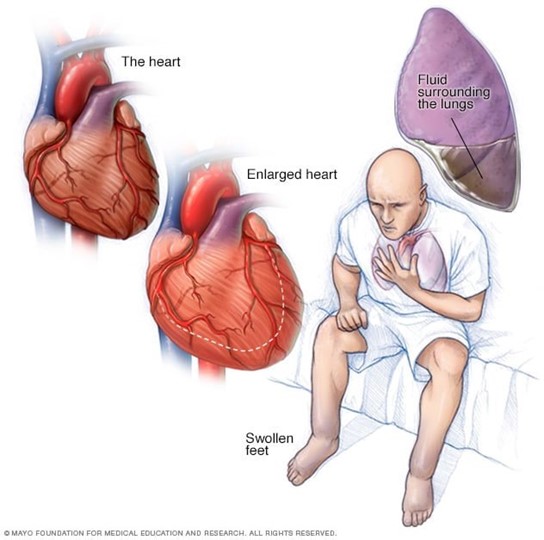
A nurse is providing discharge teaching to a client who has a new diagnosis of heart failure. Which of the following instructions should the nurse include in the teaching?
A. Exercise at least three times per week.
This is appropriate as regular, moderate exercise can help improve cardiovascular health and functional capacity in clients with heart failure. It is essential to discuss appropriate types and levels of exercise based on the individual’s condition.
B. Notify the provider of a weight gain of 0.5 kg (1 lb) in a week.
The nurse should instruct the client to notify the provider of a weight gain of 0.5 kg (1 lb) in a week because it may indicate fluid retention and worsening of heart failure. The client should also monitor daily intake and output, limit sodium and fluid intake, and weigh themselves daily at the same time.
C. Take diuretics early in the morning and before bedtime.
Take diuretics early in the morning and before bedtime is wrong because it may disrupt the client's sleep patern and cause nocturia. The nurse should advise the client to take diuretics early in the morning and avoid taking them in the evening or at night, unless prescribed otherwise.
D. Take naproxen for generalized discomfort.
Take naproxen for generalized discomfort is wrong because naproxen is a nonsteroidal anti-inflammatory drug (NSAID) that can worsen heart failure by causing sodium and water retention, increasing blood pressure, and reducing the effectiveness of diuretics and other heart failure medications. The nurse should advise the client to avoid NSAIDs and use acetaminophen or other alternatives for pain relief, as prescribed by the provider.
Full Explanation
a. This is appropriate as regular, moderate exercise can help improve cardiovascular health and functional capacity in clients with heart failure. It is essential to discuss appropriate types and levels of exercise based on the individual’s condition.
b. This is incorrect because clients should be instructed to notify the provider if they gain 1 kg (2.2 lbs) in one day or 2 kg (4.4 lbs) in one week. A weight gain of 0.5 kg is not typically a threshold for concern.
c. Take diuretics early in the morning and before bedtime is wrong because it may disrupt the client's sleep patern and cause nocturia. The nurse should advise the client to take diuretics early in the morning and avoid taking them in the evening or at night, unless prescribed otherwise.
d. Take naproxen for generalized discomfort is wrong because naproxen is a nonsteroidal anti-inflammatory drug (NSAID) that can worsen heart failure by causing sodium and water retention, increasing blood pressure, and reducing the effectiveness of diuretics and other heart failure medications. The nurse should advise the client to avoid NSAIDs and use acetaminophen or other alternatives for pain relief, as prescribed by the provider.
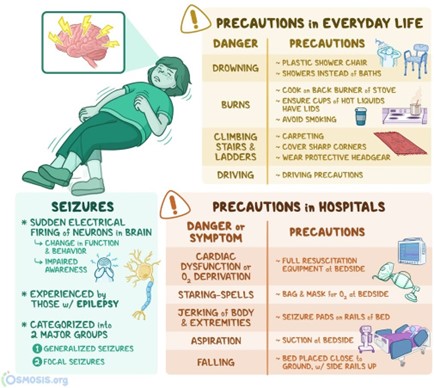
A nurse is caring for a client who is experiencing a seizure. Which of the following actions should the nurse take?
A. Place the client in the prone position.
B. Hold the client's arms and legs still.
Hold the client's arms and legs still is wrong because it can cause injury to the client or the nurse. The nurse should not restrain or interfere with the client's movements during the seizure, but rather ensure a safe environment and observe the seizure activity.
C. Leave the client to get help.
Leaving the client to get help is wrong because it can endanger the client's safety and well-being. The nurse should stay with the client during the seizure and call for assistance if needed, but not leave the client alone or unattended.
D. Place a towel under the client's head.
The nurse should place a towel under the client's head to protect it from injury during the seizure. The nurse should also loosen any tight clothing, remove any objects that could harm the client, and maintain a patent airway.
Full Explanation
The nurse should place a towel under the client's head to protect it from injury during the seizure. The nurse should also loosen any tight clothing, remove any objects that could harm the client, and maintain a patent airway.
Place the client in a prone position is wrong because it can compromise the client's breathing and increase the risk of aspiration. The nurse should place the client in a side-lying position after the seizure to facilitate drainage of oral secretions and prevent aspiration.
Holding the client's arms and legs still is wrong because it can cause injury to the client or the nurse. The nurse should not restrain or interfere with the client's movements during the seizure but rather ensure a safe environment and observe the seizure activity.
Leaving the client to get help is wrong because it can endanger the client's safety and well-being. The nurse should stay with the client during the seizure and call for assistance if needed, but not leave the client alone or unattended.