
Nursing practice questions with comprehensive rationales
NurseDive Free Nursing Practice Question
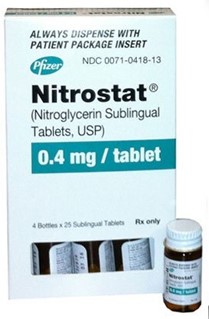
A nurse is providing instructions to a client who has a new prescription for sublingual nitroglycerin (Nitrostat) to treat angina pectoris. Which of the following instructions should the nurse include?
A. Avoid taking the medication prior to exercising.
Avoiding taking the medication prior to exercising is not correct, as sublingual nitroglycerin can be used prophylactically before activities that may trigger angina, such as exercise, stress, or cold exposure.
B. Stop taking the medication and notify your provider if you develop a headache.
Stopping taking the medication and notifying the provider if a headache develops is not necessary, as headache is a common and expected side effect of sublingual nitroglycerin, due to its vasodilating action. The client can take an over-the-counter analgesic to relieve the headache, unless contraindicated.
C. Place the tablet under your tongue, and then take a small sip of water.
Placing the tablet under the tongue and then taking a small sip of water is the correct way to use sublingual nitroglycerin, as it helps dissolve the tablet and enhance absorption.
D. The medication can take up to 15 minutes to take effect.
The medication can take up to 15 minutes to take effect is not accurate, as sublingual nitroglycerin is fast-acting and can relieve anginal symptoms within minutes. If the pain is not relieved after one dose, the client can repeat the dose every 5 minutes for up to three doses. If the pain persists after three doses, the client should seek emergency medical atention.
This question is an excerpt from Nurse Dive's nursing test bank - College Proctored Exam 2 perfusion euro pm. Take the full exam now
Full Explanation
Similar Questions
A nurse is providing discharge instructions to a client following a cardiac catheterization. Which of the following information should the nurse include?
A. "You will notice a small hematoma at the incision site."
A small hematoma at the catheter insertion site is common after cardiac catheterization due to the puncture of blood vessels. The nurse should inform the client that this may occur but reassure them that it typically resolves on its own.
B. "The dressing should be changed within 12 hours of the procedure."
Changing the dressing within 12 hours of the procedure is an important instruction for the client following a cardiac catheterization, as it helps prevent infection and monitor bleeding at the incision site.
C. "You can resume regular exercise as soon as tomorrow."
"You can resume regular exercise as soon as tomorrow." is not appropriate, as the client should avoid strenuous activity and heavy lifting for at least 24 hours after the procedure, or as directed by the provider.
D. "Pain medication will not be necessary."
"Pain medication will not be necessary." is not accurate, as the client may experience some mild discomfort or soreness at the incision site, which can be relieved by taking over-the-counter analgesics, unless contraindicated.
E. None
None
F. None
None
Full Explanation
Rationale for A:
A small hematoma at the catheter insertion site is common after cardiac catheterization due to the puncture of blood vessels. The nurse should inform the client that this may occur but reassure them that it typically resolves on its own.
Rationale for B:
The dressing usually remains intact for 24 to 48 hours post-procedure to prevent infection and promote healing. The client should be instructed to keep the dressing clean and dry until the healthcare provider gives specific instructions.
Rationale for C: Clients are usually advised to avoid strenuous activities and exercise for several days after the procedure, not to resume regular exercise the next day.
Rationale for D: Pain medication may be necessary to manage discomfort post-procedure, and the nurse should encourage the client to take pain relief as needed.
A nurse is providing discharge instructions for a client who has congestive heart failure. Which of the following client statements indicates to the nurse that the teaching was effective?
A. "I should use naproxen to manage discomfort."
"I should use naproxen to manage discomfort." is not correct, as naproxen is a nonsteroidal anti-inflammatory drug (NSAID) that can cause fluid retention, increase blood pressure, and worsen heart failure. The client should avoid NSAIDs and use other analgesics, such as acetaminophen, unless contraindicated.
B. "I plan to slow down if I am tired the day after exercising."
Planning to slow down if tired the day after exercising is a statement that indicates the client understands the importance of pacing activities and avoiding overexertion, which can worsen heart failure symptoms.
C. "I will read food labels and limit my sodium to 4 grams per day."
"I will read food labels and limit my sodium to 4 grams per day." is not appropriate, as 4 grams of sodium per day is too high for a client who has congestive heart failure. The client should limit sodium intake to 2 grams or less per day, as sodium can cause fluid retention and increase the workload of the heart.
D. "I will take my diuretic before sleep and drink fluids during the day."
"I will take my diuretic before sleep and drink fluids during the day." is not advisable, as taking a diuretic before sleep can cause nocturia and disrupt the sleep cycle, which can affect the quality of life and cardiac function. The
Full Explanation
Planning to slow down if tired the day after exercising is a statement that indicates the client understands the importance of pacing activities and avoiding overexertion, which can worsen heart failure symptoms.
a. "I should use naproxen to manage discomfort." is not correct, as naproxen is a nonsteroidal anti-inflammatory drug (NSAID) that can cause fluid retention, increase blood pressure, and worsen heart failure. The client should avoid NSAIDs and use other analgesics, such as acetaminophen, unless contraindicated.
c. "I will read food labels and limit my sodium to 4 grams per day." is not appropriate, as 4 grams of sodium per day is too high for a client who has congestive heart failure. The client should limit sodium intake to 2 grams or less per day, as sodium can cause fluid retention and increase the workload of the heart.
d. "I will take my diuretic before sleep and drink fluids during the day." is not advisable, as taking a diuretic before sleep can cause nocturia and disrupt the sleep cycle, which can affect the quality of life and cardiac function. The
A nurse is caring for an older adult client who has left-sided heart failure. Which of the following assessment findings should the nurse expect?
A. Dependent edema
Dependent edema is more likely to be seen in clients who have right-sided heart failure, due to the increased venous pressure and fluid retention. The edema is usually symmetrical and affects the lower extremities, abdomen, and sometimes the face.
B. Frothy sputum
Frothy sputum is a sign of left-sided heart failure, due to the pulmonary congestion and impaired gas exchange. The sputum may be pink-tinged or blood-streaked, indicating pulmonary edema.
C. Nocturnal polyuria
Nocturnal polyuria is not a specific finding of left-sided heart failure, but it may occur in clients who have renal impairment, diabetes mellitus, or diuretic therapy.
D. Jugular distention
Jugular distention is another sign of right-sided heart failure, due to the increased central venous pressure and backward flow of blood into the superior vena cava. It is visible as a bulging of the neck veins, especially when the client is in a semi-Fowler's position.
Full Explanation
Frothy sputum is a sign of left-sided heart failure, due to the pulmonary congestion and impaired gas exchange. The sputum may be pink-tinged or blood-streaked, indicating pulmonary edema.
a. Dependent edema is more likely to be seen in clients who have right-sided heart failure, due to the increased venous pressure and fluid retention. The edema is usually symmetrical and affects the lower extremities, abdomen, and sometimes the face.
c. Nocturnal polyuria is not a specific finding of left-sided heart failure, but it may occur in clients who have renal impairment, diabetes mellitus, or diuretic therapy.
d. Jugular distention is another sign of right-sided heart failure, due to the increased central venous pressure and backward flow of blood into the superior vena cava. It is visible as a bulging of the neck veins, especially when the client is in a semi-Fowler's position.