Nursing practice questions with comprehensive rationales
NurseDive Free Nursing Practice Question
A nurse is providing nutritional guidance to a client who is pregnant and follows a vegan diet. The client asks the nurse which foods she should eat to ensure adequate calcium intake.
The nurse should instruct the client that which of the following foods has the highest amount of calcium?
A. 1 cup cooked broccoli.
Broccoli is a good source of calcium for vegans.
B. 1 large banana.
Choice B is incorrect because bananas are not mentioned as a good source of calcium for vegans.
C. 1/2 cup cubed avocado.
Choice C is incorrect because avocados are not mentioned as a good source of calcium for vegans.
D. 1 medium potato.
Choice D is incorrect because potatoes are not mentioned as a good source of calcium for vegans.
This question is an excerpt from Nurse Dive's nursing test bank - ATI RN Maternal Newborn 2019 with NGN Proctored Exam. Take the full exam now
Full Explanation
Broccoli is a good source of calcium for vegans.
Choice B is incorrect because bananas are not mentioned as a good source of calcium for vegans.
Choice C is incorrect because avocados are not mentioned as a good source of calcium for vegans.
Choice D is incorrect because potatoes are not mentioned as a good source of calcium for vegans.
Similar Questions
A nurse is preparing to perform a fundal massage for a postpartum client who is experiencing uterine atony. In which order should the nurse plan to perform the following actions?
A. Ask the client to lie on her back and with her knees flexed.
B. Position one hand around the top of the client's fundus and one hand just above the client's symphysis pubis.
C. Rotate the upper hand to massage the client's uterus while using slight downward pressure to compress the fundus.
D. Observe the client's perineum for the passage of clots and the amount of bleeding.
Full Explanation
The correct answer is A, B, C, D.
The nurse should plan to perform the following actions in this order:
A. Ask the client to lie on her back and with her knees flexed.
B. Position one hand around the top of the client’s fundus and one hand just above the client’s symphysis pubis.
C. Rotate the upper hand to massage the client’s uterus while using slight downward pressure to compress the fundus.
D. Observe the client’s perineum for the passage of clots and the amount of
bleeding.
Fundal massage is performed to stimulate uterine contractions and prevent
postpartum hemorrhage.

Family History: breast cancer, heart disease. Allergy: Penicillin.
Multiple sexual partners.
A nurse in a prenatal clinic is reviewing the laboratory results for a client who is at 12 weeks of gestation.
Which of the following actions should the nurse take?
A. Administer rubella vaccine.
Administering rubella vaccine (A) is contraindicated during pregnancy as it is a live vaccine and can cause fetal harm.
B. Administer ceftriaxone IM.
Administering ceftriaxone IM (B) and obtaining a blood culture (C) are not indicated based on the information provided about the client.
C. Obtain a blood culture.
Administering ceftriaxone IM (B) and obtaining a blood culture (C) are not indicated based on the information provided about the client.
D. Obtain a maternal serum alpha-fetoprotein specimen.
The nurse should obtain a maternal serum alpha-fetoprotein (MSAFP) specimen for a client at 12 weeks of gestation. MSAFP is a screening tool used to identify fetal neural tube defects (NTDs) such as spina bifida and anencephaly. Elevated levels of MSAFP indicate an increased risk for NTDs, while low levels indicate an increased risk for chromosomal abnormalities such as Down syndrome.
Full Explanation
The nurse should obtain a maternal serum alpha-fetoprotein (MSAFP) specimen for a client at 12 weeks of gestation.
MSAFP is a screening tool used to identify fetal neural tube defects (NTDs) such as spina bifida and anencephaly.
Elevated levels of MSAFP indicate an increased risk for NTDs, while low levels indicate an increased risk for chromosomal abnormalities such as Down syndrome.
Administering rubella vaccine (A) is contraindicated during pregnancy as it is a live vaccine and can cause fetal harm.
Administering ceftriaxone IM (B) and obtaining a blood culture (C) are not indicated based on the information provided about the client.
The client's allergy to penicillin is not relevant to the nurse's immediate action.

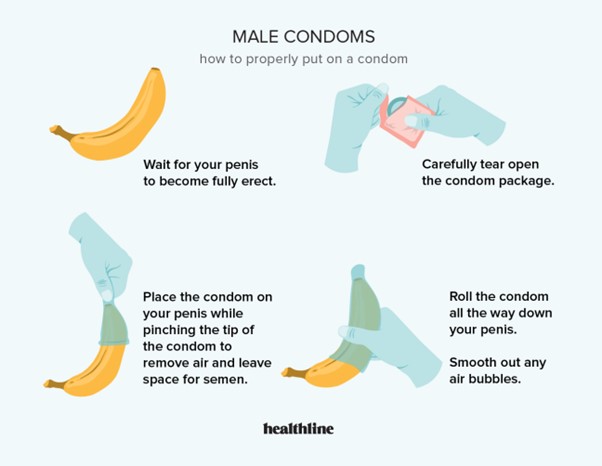
A nurse is teaching a client about condom use. Which of the following client statements should the nurse identify as an understanding of the teaching?
A. "I can use natural-skin condoms to prevent sexually transmitted infections."
I can use natural-skin condoms to prevent sexually transmitted infections." This statement is incorrect. Natural-skin or lambskin condoms are not recommended for preventing sexually transmitted infections (STIs). They may provide some protection against pregnancy but do not effectively protect against STIs. Clients should use latex or polyurethane condoms to reduce the risk of STIs.
B. "I can use petroleum jelly as a lubricant with the condom."
"I can use petroleum jelly as a lubricant with the condom." This statement is also incorrect. Petroleum jelly (Vaseline) and other oil-based lubricants can damage latex condoms, leading to a higher risk of breakage or failure. Clients should use water-based or silicone-based lubricants with latex or polyurethane condoms.
C. "I can re-use the condom one time after initial use."
"I can re-use the condom one time after initial use." This statement is incorrect. Condoms are designed for single-use only. Reusing a condom increases the risk of breakage, failure, and the transmission of STIs or unwanted pregnancy. Clients should always use a new condom for each sexual act.
D. "I can store the condoms in the drawer of my nightstand."
"I can store the condoms in the drawer of my nightstand." This statement is correct because it indicates that the client understands the proper storage of condoms. Storing condoms in a cool, dry place, such as a drawer or a condom case, helps protect them from damage or deterioration, ensuring they remain effective when needed.
Full Explanation
Choice A reason
"I can use natural-skin condoms to prevent sexually transmitted infections." This statement is incorrect. Natural-skin or lambskin condoms are not recommended for preventing sexually transmitted infections (STIs). They may provide some protection against pregnancy but do not effectively protect against STIs. Clients should use latex or polyurethane condoms to reduce the risk of STIs.
Choice B reason
"I can use petroleum jelly as a lubricant with the condom." This statement is also incorrect. Petroleum jelly (Vaseline) and other oil-based lubricants can damage latex condoms, leading to a higher risk of breakage or failure. Clients should use water-based or silicone-based lubricants with latex or polyurethane condoms.
Choice C reason:
"I can re-use the condom one time after initial use." This statement is incorrect. Condoms are designed for single-use only. Reusing a condom increases the risk of breakage, failure, and the transmission of STIs or unwanted pregnancy. Clients should always use a new condom for each sexual act.
Choice D reason:
"I can store the condoms in the drawer of my nightstand." This statement is correct because it indicates that the client understands the proper storage of condoms. Storing condoms in a cool, dry place, such as a drawer or a condom case, helps protect them from damage or deterioration, ensuring they remain effective when needed.