
Nursing practice questions with comprehensive rationales
NurseDive Free Nursing Practice Question
A nurse is providing phone advice for a client who is pregnant.
Complete the following sentence by using the copy pasting from the list of options.
The client is at risk for experiencingelectrolyte imbalancedue to the
This question is an excerpt from Nurse Dive's nursing test bank - RN Comprehensive Online Practice 2019 B with NGN Proctored Exam. Take the full exam now
Full Explanation
Electrolyte imbalance in pregnant clients is often associated with conditions that lead to dehydration and nutritional deficiencies. In this scenario, the key indicators are persistent nausea and significant weight loss.
- Persistent nausea can lead to reduced food and fluid intake. This condition, especially if prolonged, can cause dehydration and electrolyte imbalances due to the loss of essential minerals and nutrients that are not being replenished due to inadequate dietary intake.
- Significant weight loss, particularly the amount described in the scenario (6.8 kg or 15 lb), is a clear sign of inadequate nutritional intake and can further exacerbate the risk of electrolyte imbalance. It indicates that the body is not receiving enough nutrients, which is crucial for maintaining electrolyte balance.
The other options, while related to diet and fluid intake, are more specific to the client's eating habits and do not directly point to the primary cause of potential electrolyte imbalance in the context of this scenario. Therefore, the most comprehensive and medically relevant choice is (A) Persistent nausea and significant weight loss.
Similar Questions
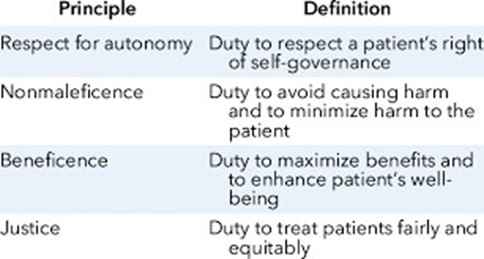
A nurse manager is reviewing clients' rights with the nurses on the unit. The nurse manager should tell the nurses that informed consent promotes which of the following ethical principles?
A. Autonomy
Autonomy is the ethical principle that respects the right of clients to make their own decisions and choices regarding their health care. Informed consent is a process that ensures that clients are fully informed of the benefits, risks, alternatives, and consequences of a proposed treatment or procedure, and that they voluntarily agree to it.
B. Nonmaleficence
Nonmaleficence is the ethical principle that obliges health care providers to do no harm to clients, either intentionally or unintentionally. Informed consent does not directly promote this principle, although it may help to prevent harm by disclosing potential risks and complications.
C. Justice
Justice is the ethical principle that requires fair and equal treatment of all clients, regardless of their personal characteristics, preferences, or values. Informed consent does not directly promote this principle, although it may help to ensure that clients are not coerced or manipulated into accepting a treatment or procedure that they do not want or need.
D. Fidelity
Fidelity is the ethical principle that requires health care providers to be faithful and loyal to their clients, and to honor their commitments and promises. Informed consent does not directly promote this principle, although it may help to establish trust and rapport between clients and providers.
Full Explanation
- A. Autonomy is the ethical principle that respects the right of clients to make their own decisions and choices regarding their health care. Informed consent is a process that ensures that clients are fully informed of the benefits, risks, alternatives, and consequences of a proposed treatment or procedure, and that they voluntarily agree to it.
- B. Nonmaleficence is the ethical principle that obliges health care providers to do no harm to clients, either intentionally or unintentionally. Informed consent does not directly promote this principle, although it may help to prevent harm by disclosing potential risks and complications.
- C. Justice is the ethical principle that requires fair and equal treatment of all clients, regardless of their personal characteristics, preferences, or values. Informed consent does not directly promote this principle, although it may help to ensure that clients are not coerced or manipulated into accepting a treatment or procedure that they do not want or need.
- D. Fidelity is the ethical principle that requires health care providers to be faithful and loyal to their clients, and to honor their commitments and promises. Informed consent does not directly promote this principle, although it may help to establish trust and rapport between clients and providers.
A nurse is providing discharge teaching about disease management for a client who has a new diagnosis of type 1 diabetes mellitus. Which of the following activities is the nurse's priority?
A. Instruct the client about the importance of regular medical appointments.
Instructing the client about the importance of regular medical appointments is important but not the priority because it is a secondary prevention strategy that aims to detect and treat any complications or changes in the client's condition early. The client should have regular follow-up visits with an endocrinologist, a diabetes educator, an ophthalmologist, a podiatrist, a dentist, and other health care providers as needed.
B. Encourage the client to participate in daily exercise.
Encouraging the client to participate in daily exercise is important but not the priority because it is a tertiary prevention strategy that aims to reduce disability and improve quality of life for clients with chronic conditions. Exercise can help lower blood glucose levels, improve insulin sensitivity, reduce cardiovascular risk factors, enhance mood, and promote weight management for clients with type 1 diabetes mellitus. The client should consult with their health care provider before starting an exercise program and follow safety guidelines such as checking blood glucose levels before and after exercise, wearing appropriate footwear and clothing, carrying a source of fast-acting carbohydrate, and staying hydrated.
C. Explain proper foot care techniques to the client.
Explaining proper foot care techniques to the client is important but not the priority because it is a tertiary prevention strategy that aims to prevent or minimize complications such as foot ulcers, infections, and amputations for clients with type 1 diabetes mellitus. Foot care includes inspecting feet daily for any injuries or abnormalities, washing feet with mild soap and warm water, drying feet thoroughly especially between toes, applying moisturizer to prevent dryness and cracking, trimming toenails straight across and filing edges smooth, wearing clean cotton socks and well-fitting shoes, avoiding walking barefoot or exposing feet to extreme temperatures or pressure, and seeking medical attention for any foot problems.
D. Ensure that the client understands the medication regimen.
Ensuring that the client understands the medication regimen is the nurse's priority because type 1 diabetes mellitus requires lifelong insulin therapy to maintain blood glucose levels within normal range and prevent complications such as ketoacidosis, hypoglycemia, and organ damage. The client needs to know how to administer insulin injections, monitor blood glucose levels, adjust insulin doses according to carbohydrate intake and physical activity, recognize and treat signs and symptoms of hypo- and hyperglycemia, and store insulin properly.
Full Explanation
- A. Instructing the client about the importance of regular medical appointments is important but not the priority because it is a secondary prevention strategy that aims to detect and treat any complications or changes in the client's condition early. The client should have regular follow-up visits with an endocrinologist, a diabetes educator, an ophthalmologist, a podiatrist, a dentist, and other health care providers as needed.
- B. Encouraging the client to participate in daily exercise is important but not the priority because it is a tertiary prevention strategy that aims to reduce disability and improve quality of life for clients with chronic conditions. Exercise can help lower blood glucose levels, improve insulin sensitivity, reduce cardiovascular risk factors, enhance mood, and promote weight management for clients with type 1 diabetes mellitus. The client should consult with their health care provider before starting an exercise program and follow safety guidelines such as checking blood glucose levels before and after exercise, wearing appropriate footwear and clothing, carrying a source of fast-acting carbohydrate, and staying hydrated.
- C. Explaining proper foot care techniques to the client is important but not the priority because it is a tertiary prevention strategy that aims to prevent or minimize complications such as foot ulcers, infections, and amputations for clients with type 1 diabetes mellitus. Foot care includes inspecting feet daily for any injuries or abnormalities, washing feet with mild soap and warm water, drying feet thoroughly especially between toes, applying moisturizer to prevent dryness and cracking, trimming toenails straight across and filing edges smooth, wearing clean cotton socks and well-fitting shoes, avoiding walking barefoot or exposing feet to extreme temperatures or pressure, and seeking medical attention for any foot problems.
- D. Ensuring that the client understands the medication regimen is the nurse's priority because type 1 diabetes mellitus requires lifelong insulin therapy to maintain blood glucose levels within normal range and prevent complications such as ketoacidosis, hypoglycemia, and organ damage. The client needs to know how to administer insulin injections, monitor blood glucose levels, adjust insulin doses according to carbohydrate intake and physical activity, recognize and treat signs and symptoms of hypo- and hyperglycemia, and store insulin properly.
A nurse is caring for a group of clients. Which of the following clients should the nurse attend to first?
A. An older adult client who is anxious and attempting to pull out an IV line
This client is at risk of harming themselves by removing the IV line, which could cause bleeding, infection, or loss of medication. This is a priority issue that requires immediate intervention by the nurse
B. A middle adult client who is reporting nausea after receiving pain medication
This client is experiencing a common side effect of pain medication, which can be managed by administering antiemetics, fluids, or changing the medication. This is not a life-threatening issue and can be addressed after attending to the client in choice A.
C. An older adult client who has kidney failure and returned from dialysis 4 hr ago
This client has a chronic condition that requires regular dialysis, but they are not in acute distress at this time. They should be monitored for signs of fluid overload, electrolyte imbalance, or infection, but they are not a priority over the client in choice A.
D. A middle adult client who has a terminal illness and is requesting a visit from the chaplain
This client has a psychosocial need that should be respected and supported by the nurse, but it is not an urgent issue that requires immediate attention. The nurse can arrange for a visit from the chaplain after attending to the client in choice A.
Full Explanation
- A. This client is at risk of harming themselves by removing the IV line, which could cause bleeding, infection, or loss of medication. This is a priority issue that requires immediate intervention by the nurse.
- B. This client is experiencing a common side effect of pain medication, which can be managed by administering antiemetics, fluids, or changing the medication. This is not a life-threatening issue and can be addressed after attending to the client in choice A.
- C. This client has a chronic condition that requires regular dialysis, but they are not in acute distress at this time. They should be monitored for signs of fluid overload, electrolyte imbalance, or infection, but they are not a priority over the client in choice A.
- D. This client has a psychosocial need that should be respected and supported by the nurse, but it is not an urgent issue that requires immediate attention. The nurse can arrange for a visit from the chaplain after attending to the client in choice A.