
Nursing practice questions with comprehensive rationales
NurseDive Free Nursing Practice Question
A nurse is providing preoperative teaching to a client about promoting circulation during the postoperative period.
Which of the following instructions should the nurse include?
A. Participate in range-of-motion exercises
This instruction will help the client to prevent venous stasis and thrombosis, which are common postoperative complications. Range-of-motion exercises promote blood circulation and prevent muscle atrophy and contractures.
B. Use an incentive spirometer every 4 hours
Use an incentive spirometer every 4 hours.” is wrong because it is not related to promoting circulation, but rather to improving lung expansion and preventing atelectasis and pneumonia. Using an incentive spirometer is also important for postoperative clients, but it does not address the question.
C. Remain on bed rest for 24 hours following the procedure
Remain on bed rest for 24 hours following the procedure.” is wrong because it is the opposite of promoting circulation. Bed rest increases the risk of venous stasis, thrombosis, and pulmonary embolism. Postoperative clients should be encouraged to ambulate as soon as possible, unless contraindicated.
D. Place a pillow under your knees while in bed
Place a pillow under your knees while in bed.” is wrong because it also impairs circulation and increases the risk of thrombosis. Placing a pillow under the knees can cause pressure on the popliteal veins and reduce blood flow. Postoperative clients should avoid this position and keep their legs in a neutral or slightly elevated position
This question is an excerpt from Nurse Dive's nursing test bank - ATI Comprehensive Predictor 2023 Exit Proctored Exam A. Take the full exam now
Full Explanation

This instruction will help the client to prevent venous stasis and thrombosis, which are common postoperative complications. Range-of-motion exercises promote blood circulation and prevent muscle atrophy and contractures.
Choice B. “Use an incentive spirometer every 4 hours.” is wrong because it is not related to promoting circulation, but rather to improving lung expansion and preventing atelectasis and pneumonia. Using an incentive spirometer is also important for postoperative clients, but it does not address the question.
Choice C. “Remain on bed rest for 24 hours following the procedure.” is wrong because it is the opposite of promoting circulation.
Bed rest increases the risk of venous stasis, thrombosis, and pulmonary embolism. Postoperative clients should be encouraged to ambulate as soon as possible, unless contraindicated.
Choice D. “Place a pillow under your knees while in bed.” is wrong because it also impairs circulation and increases the risk of thrombosis.
Placing a pillow under the knees can cause pressure on the popliteal veins and reduce blood flow. Postoperative clients should avoid this position and keep their legs in a neutral or slightly elevated position.
Similar Questions
A nurse is caring for a client who requires seclusion to prevent harm to others on the unit.
Which of the following is an appropriate action for the nurse to take?
A. Discuss with the client his inappropriate behavior prior to seclusion
While discussing the client's behavior may be helpful in some situations, it is not the most appropriate action to take immediately before seclusion. This is because: Escalation:Attempting to discuss behavior in the moments leading up to seclusion can potentially escalate the situation and further jeopardize the safety of the client,staff,and other patients. Impaired Insight:Clients requiring seclusion may have limited ability to engage in rational discussion due to heightened emotional states,cognitive impairment,or acute mental illness. Limited Receptiveness:The client may not be receptive to feedback or discussion while in a state of crisis,potentially leading to frustration and further agitation.
B. Offer fluids every 2 hr.
Offering fluids is a basic nursing intervention, but it is not the priority action in this scenario. The primary focus at this time is ensuring safety and managing the acute behavioral crisis. Addressing hydration needs can be attended to after the client is safely placed in seclusion.
C. Document the client’s behavior prior to being placed in seclusion.
Document the client’s behavior prior to being placed in seclusion.: This is the most appropriate action for the nurse to take for the following reasons: Legal and Ethical Requirements:Accurate documentation of the client's behavior prior to seclusion is essential for legal and ethical reasons.It serves as a record of the rationale for seclusion,supporting the decision-making process and ensuring adherence to best practices and patient rights. Assessment and Intervention Planning:Detailed documentation provides valuable information for ongoing assessment and intervention planning.It allows healthcare professionals to track the client's progress,identify patterns in behavior,and make informed decisions about the continuation or discontinuation of seclusion. Communication and Collaboration:Comprehensive documentation facilitates effective communication and collaboration among the healthcare team members,ensuring continuity of care and promoting a holistic approach to the client's treatment. Evaluation and Quality Improvement:Accurate documentation enables evaluation of the effectiveness of seclusion interventions and contributes to quality improvement initiatives within the healthcare setting.
D. Assess the client’s behavior once every hour.
Assess the client’s behavior once every hour.: Regular assessment is crucial, but hourly assessment is not frequent enough in this situation. Clients in seclusion require close monitoring and assessment at more frequent intervals to ensure their safety and well-being, as well as to evaluate the effectiveness of the seclusion intervention.
Full Explanation
The correct answer is c. Document the client's behavior prior to being placed in seclusion.
Rationale for Choice a. Discuss with the client his inappropriate behavior prior to seclusion:
While discussing the client's behavior may be helpful in some situations, it is not the most appropriate action to take immediately before seclusion. This is because:
- Escalation: Attempting to discuss behavior in the moments leading up to seclusion can potentially escalate the situation and further jeopardize the safety of the client, staff, and other patients.
- Impaired Insight: Clients requiring seclusion may have limited ability to engage in rational discussion due to heightened emotional states, cognitive impairment, or acute mental illness.
- Limited Receptiveness: The client may not be receptive to feedback or discussion while in a state of crisis, potentially leading to frustration and further agitation.
Rationale for Choice b. Offer fluids every 2 hr.:
Offering fluids is a basic nursing intervention, but it is not the priority action in this scenario. The primary focus at this time is ensuring safety and managing the acute behavioral crisis. Addressing hydration needs can be attended to after the client is safely placed in seclusion.
Rationale for Choice d. Assess the client’s behavior once every hour.:
Regular assessment is crucial, but hourly assessment is not frequent enough in this situation. Clients in seclusion require close monitoring and assessment at more frequent intervals to ensure their safety and well-being, as well as to evaluate the effectiveness of the seclusion intervention.
Rationale for Choice c. Document the client’s behavior prior to being placed in seclusion.:
This is the most appropriate action for the nurse to take for the following reasons:
- Legal and Ethical Requirements: Accurate documentation of the client's behavior prior to seclusion is essential for legal and ethical reasons. It serves as a record of the rationale for seclusion, supporting the decision-making process and ensuring adherence to best practices and patient rights.
- Assessment and Intervention Planning: Detailed documentation provides valuable information for ongoing assessment and intervention planning. It allows healthcare professionals to track the client's progress, identify patterns in behavior, and make informed decisions about the continuation or discontinuation of seclusion.
- Communication and Collaboration: Comprehensive documentation facilitates effective communication and collaboration among the healthcare team members, ensuring continuity of care and promoting a holistic approach to the client's treatment.
- Evaluation and Quality Improvement: Accurate documentation enables evaluation of the effectiveness of seclusion interventions and contributes to quality improvement initiatives within the healthcare setting.
A nurse is caring for a client who has a prescription for a peripheral IV catheter.
After puncturing the skin with the vascular access device and noting a blood return in the flashback chamber, which of the following actions should the nurse perform next?
A. Flush the catheter with saline
Choice A is wrong because flushing the catheter with saline should be done after securing the catheter to the skin with a transparent dressing and attaching a primed piece of extension tubing to the catheter.
B. Retract the stylet
Choice B is wrong because retracting the stylet should be done after advancing the catheter into the vein and releasing the tourniquet from the client’s arm.
C. Release the tourniquet
Choice C is wrong because releasing the tourniquet should be done after advancing the catheter into the vein and before retracting the stylet.
D. Advance the catheter into the vein
This is because after puncturing the skin and the vein, the nurse needs to advance the catheter into the vein with the finger hub to ensure proper placement and prevent complications such as infiltration or phlebitis.
Full Explanation
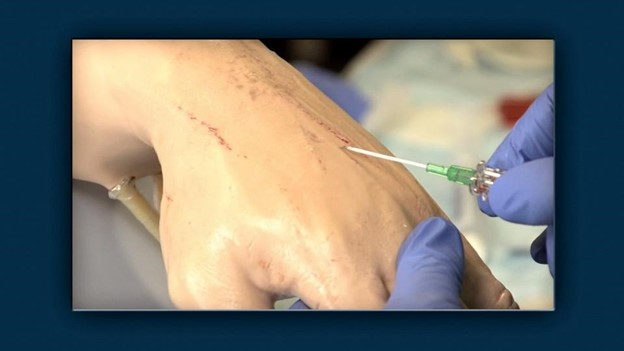
This is because after puncturing the skin and the vein, the nurse needs to advance the catheter into the vein with the finger hub to ensure proper placement and prevent complications such as infiltration or phlebitis.
Choice A is wrong because flushing the catheter with saline should be done after securing the catheter to the skin with a transparent dressing and attaching a primed piece of extension tubing to the catheter.
Choice B is wrong because retracting the stylet should be done after advancing the catheter into the vein and releasing the tourniquet from the client’s arm.
Choice C is wrong because releasing the tourniquet should be done after advancing the catheter into the vein and before retracting the stylet.
A nurse is caring for a child who has cystic fibrosis and requires postural drainage.
Which of the following actions should the nurse take?
A. Hold hand flat to perform percussions on the child.
because the nurse should not hold the hand flat to perform percussions on the child. Percussions are rhythmic clapping on the chest wall to loosen the mucus. The nurse should use a cupped hand to create a small air pocket that enhances the vibrations and prevents bruising.
B. Perform the procedure twice each d
wrong because the nurse should not perform the procedure twice a day. The recommended frequency of postural drainage is 3 to 4 times a day, or more if needed, depending on the child’s condition and tolerance.
C. Perform the procedure prior to meals.
This is because postural drainage involves positioning the child in different ways to help drain the mucus from the lungs. If the child has a full stomach, this can cause nausea, vomiting, or aspiration. Therefore, the nurse should perform the procedure before meals or at least 1 hour after meals.
D. Administer a bronchodilator after the procedure
because the nurse should not administer a bronchodilator after the procedure. A bronchodilator is a medication that relaxes and widens the airways, making it easier to breathe. The nurse should administer a bronchodilator before the procedure to enhance the effectiveness of postural drainage.
Full Explanation
The correct answer is choice C. Perform the procedure prior to meals.
This is because postural drainage involves positioning the child in different ways to help drain the mucus from the lungs.
If the child has a full stomach, this can cause nausea, vomiting, or aspiration. Therefore, the nurse should perform the procedure before meals or at least 1 hour after meals.
Choice A is wrong because the nurse should not hold the hand flat to perform percussions on the child.
Percussions are rhythmic clapping on the chest wall to loosen the mucus. The nurse should use a cupped hand to create a small air pocket that enhances the vibrations and prevents bruising.
Choice B is wrong because the nurse should not perform the procedure twice a day. The recommended frequency of postural drainage is 3 to 4 times a day, or more if needed, depending on the child’s condition and tolerance.
Choice D is wrong because the nurse should not administer a bronchodilator after the procedure.
A bronchodilator is a medication that relaxes and widens the airways, making it easier to breathe. The nurse should administer a bronchodilator before the procedure to enhance the effectiveness of postural drainage.