
Nursing practice questions with comprehensive rationales
NurseDive Free Nursing Practice Question
A nurse is providing teaching to a client who has a new diagnosis of type 1 diabetes mellitus. The nurse should instruct the client to monitor for which of the following findings as a manifestation of hypoglycemia?
A. Irritability
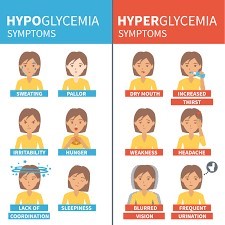
Irritability is one of the signs of hypoglycemia, which occurs when blood glucose levels fall below 70 mg/dL (3.9 mmol/L). Other signs include shakiness, sweating, hunger, headache, confusion, and blurred vision.
B. Increased urination
Increased urination is one of the signs of hyperglycemia, which occurs when blood glucose levels rise above 180 mg/dL (10 mmol/L). Other signs include thirst, dry mouth, fatigue, nausea, and fruity breath odor.
C. Vomiting
Vomiting is not a specific sign of hypoglycemia or hyperglycemia, but it can occur as a complication of either condition if left untreated or poorly managed.
D. Facial flushing
Facial flushing is not a sign of hypoglycemia or hyperglycemia, but it can occur as a side effect of some medications used to treat diabetes, such as niacin or rosiglitazone.
This question is an excerpt from Nurse Dive's nursing test bank - RN Comprehensive Online Practice 2019 B with NGN Proctored Exam. Take the full exam now
Full Explanation
Irritability.
The rationale for each choice is as follows:
- A. Irritability: Correct. Irritability is one of the signs of hypoglycemia, which occurs when blood glucose levels fall below 70 mg/dL (3.9 mmol/L). Other signs include shakiness, sweating, hunger, headache, confusion, and blurred vision.
- B. Increased urination: Incorrect. Increased urination is one of the signs of hyperglycemia, which occurs when blood glucose levels rise above 180 mg/dL (10 mmol/L). Other signs include thirst, dry mouth, fatigue, nausea, and fruity breath odor.
- C. Vomiting: Incorrect. Vomiting is not a specific sign of hypoglycemia or hyperglycemia, but it can occur as a complication of either condition if left untreated or poorly managed.
- D.Facial flushing: Incorrect. Facial flushing is not a sign of hypoglycemia or hyperglycemia, but it can occur as a side effect of some medications used to treat diabetes, such as niacin or rosiglitazone.
Similar Questions
A nurse is planning to delegate client care tasks to an assistive personnel (AP). Which of the following tasks should the nurse plan to delegate to the AP?
A. Perform gastrostomy feedings through a client's established gastrostomy tube
Performing gastrostomy feedings through an established gastrostomy tube is within the scope of practice for an AP, as it is a routine, non-complex task.
B. Determine if the PRN pain medication administered 30 min ago has helped
Evaluating the effectiveness of pain medication requires assessment skills, which fall under the nurse’s scope of practice.
C. Provide instructions about client care to a family member over the telephone
Providing client care instructions requires nursing judgment and should be done by the nurse.
D. Teach a client how to measure their own blood pressure
Teaching a client how to measure their blood pressure involves client education, which is the nurse’s responsibility.
E. None
None
F. None
None
Full Explanation
A. Performing gastrostomy feedings through an established gastrostomy tube is within the scope of practice for an AP, as it is a routine, non-complex task.
B. Evaluating the effectiveness of pain medication requires assessment skills, which fall under the nurse’s scope of practice.
C. Providing client care instructions requires nursing judgment and should be done by the nurse.
D. Teaching a client how to measure their blood pressure involves client education, which is the nurse’s responsibility.
A nurse is preparing to administer mannitol 0.2 g/kg IV bolus over 5 min as a test dose to a client who has severe oliguria. The client weighs 198 lb. What is the amount in grams the nurse should administer? (Round the answer to the nearest whole number. Use a leading zero if it applies. Do not use a trailing zero.)
Full Explanation
The client weighs 198 lb, which is equivalent to (198 ÷ 2.2 = 90kg.
Therefore, the amount of mannitol for the test dose is 0.2 g/kg x 90 kg = 18 g. The nurse should administer 18 g of mannitol IV bolus over 5 min as a test dose to the client who has severe oliguria.
A nurse is preparing to replace a client's transdermal fentanyl patch after 72 hr of use. After the nurse opens the packet containing the new pouch, the client declines to accept it. Which of the following actions should the nurse take?
A. Withhold pain medications for 24 hr after the old patch is removed
Withholding pain medications for 24 hr after the old patch is removed is a harmful action that could cause severe withdrawal symptoms and uncontrolled pain for the client. The nurse should respect the client's right to refuse treatment and explore the reasons for their decision.
B. Ask another nurse to witness the disposal of the new patch
Asking another nurse to witness the disposal of the new patch is a safe and legal action that follows the policies and procedures for handling controlled substances. The nurse should document the disposal of the new patch and report it to the appropriate authority.
C. Seal the patches in a plastic bag and place in the client's trash basket
Sealing the patches in a plastic bag and placing them in the client's trash basket is an unsafe and illegal action that could lead to diversion, misuse, or accidental exposure of fentanyl to others. The nurse should dispose of the patches in a secure and designated container that prevents access by unauthorized persons.
D. Stick the two patches to each other and place them in the sharps bin
Sticking the two patches to each other and placing them in the sharps bin is an unsafe and improper action that could cause contamination, injury, or infection to others who handle or dispose of sharps waste. The nurse should dispose of the patches separately and carefully, avoiding contact with their adhesive surfaces.
Full Explanation
- A. Incorrect. Withholding pain medications for 24 hr after the old patch is removed is a harmful action that could cause severe withdrawal symptoms and uncontrolled pain for the client. The nurse should respect the client's right to refuse treatment and explore the reasons for their decision.
- B. Correct. Asking another nurse to witness the disposal of the new patch is a safe and legal action that follows the policies and procedures for handling controlled substances. The nurse should document the disposal of the new patch and report it to the appropriate authority.
- C. Incorrect. Sealing the patches in a plastic bag and placing them in the client's trash basket is an unsafe and illegal action that could lead to diversion, misuse, or accidental exposure of fentanyl to others. The nurse should dispose of the patches in a secure and designated container that prevents access by unauthorized persons.
- D. Incorrect. Sticking the two patches to each other and placing them in the sharps bin is an unsafe and improper action that could cause contamination, injury, or infection to others who handle or dispose of sharps waste. The nurse should dispose of the patches separately and carefully, avoiding contact with their adhesive surfaces.