
Nursing practice questions with comprehensive rationales
NurseDive Free Nursing Practice Question
A nurse is providing teaching to a client who has a new diagnosis of type 2 diabetes mellitus. The nurse should recognize that the client understands the teaching when he identifies which of the following as manifestations of hypoglycemia? (Select all that apply.)
A. Tachycardia
Tachycardia - This is an increased heart rate, which can occur in response to low blood sugar levels.
B. Moist clammy skin
Moist clammy skin - Sweating and clamminess are common symptoms of hypoglycemia.
C. Polydipsia
Polydipsia - This is excessive thirst, which is not typically a manifestation of hypoglycemia. It is more commonly associated with hyperglycemia (high blood sugar levels).
D. Blurred vision
Blurred vision - This can occur when the eyes are not receiving enough glucose due to low blood sugar levels.
E. Polyuria
Polyuria - This is excessive urination, which is not typically a manifestation of hypoglycemia. It is more commonly associated with hyperglycemia.
This question is an excerpt from Nurse Dive's nursing test bank - RN ATI Medsurg Proctored Exam. Take the full exam now
Full Explanation
A. Tachycardia - This is an increased heart rate, which can occur in response to low blood sugar levels.
B. Moist clammy skin - Sweating and clamminess are common symptoms of hypoglycemia.
C. Polydipsia - This is excessive thirst, which is not typically a manifestation of hypoglycemia. It is more commonly associated with hyperglycemia (high blood sugar levels).
D. Blurred vision - This can occur when the eyes are not receiving enough glucose due to low blood sugar levels.
E. Polyuria - This is excessive urination, which is not typically a manifestation of hypoglycemia. It is more commonly associated with hyperglycemia.
Similar Questions
A nurse is caring for a client who is 8 hr postoperative following a subtotal thyroidectomy. In which of the following positions should the nurse keep the client?
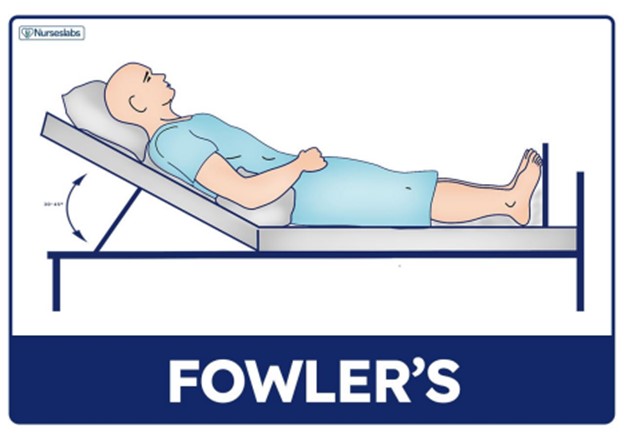
A. Semi-Fowler's with neck extended
Semi-Fowler's with neck extended: Keeping the neck extended can put strain on the surgical incision site, increasing the risk of complications. It's important to avoid excessive neck movement.
B. semi-fowler's with neck in a neutral position
Semi-Fowler's with neck in a neutral position: This position is optimal for clients post thyroidectomy. It helps reduce swelling and pressure on the surgical site while maintaining the neck in a neutral and supported position.
C. High Fowler's with neck extended
High Fowler's with neck extended: A high Fowler's position with the neck extended may increase the risk of strain on the surgical incision and should be avoided.
D. High Fowler's withzed in a neutral position
High Fowler's with neck in a neutral position: While a high Fowler's position can be comfortable for the client, it's important to ensure that the neck is in a neutral position to minimize strain on the surgical incision.
Full Explanation
A. Semi-Fowler's with neck extended: Keeping the neck extended can put strain on the surgical incision site, increasing the risk of complications. It's important to avoid excessive neck movement.
B. Semi-Fowler's with neck in a neutral position: This position is optimal for clients post-thyroidectomy. It helps reduce swelling and pressure on the surgical site while maintaining the neck in a neutral and supported position.
C. High Fowler's with neck extended: A high Fowler's position with the neck extended may increase the risk of strain on the surgical incision and should be avoided.
D. High Fowler's with the neck in a neutral position: While a high Fowler's position can be comfortable for the client, it's important to ensure that the neck is in a neutral position to minimize strain on the surgical incision.
The nurse is assessing an older patient with type 2 diabetes mellitus. What age-related endocrine change should the nurse expect in this patient?
A. More rapid insulin release
Incorrect. Aging is associated with a decrease in insulin production and a reduction in the speed of insulin release, not an increase.
B. intolerance of fatty foods
Incorrect. Intolerance of fatty foods is not typically an age-related endocrine change. It may be related to other factors such as digestive issues.
C. Decreased sensitivity to insulin
Correct. Decreased sensitivity to insulin is a common age-related endocrine change, particularly in individuals with type 2 diabetes mellitus.
D. Lower and prolonged blood glucose levels
Incorrect. Lower and prolonged blood glucose levels are not an expected age-related endocrine change. Instead, insulin resistance tends to result in elevated blood glucose levels.
Full Explanation
A. Incorrect. Aging is associated with a decrease in insulin production and a reduction in the speed of insulin release, not an increase.
B. Incorrect. Intolerance of fatty foods is not typically an age-related endocrine change. It may be related to other factors such as digestive issues.
C. Correct. Decreased sensitivity to insulin is a common age-related endocrine change, particularly in individuals with type 2 diabetes mellitus.
D. Incorrect. Lower and prolonged blood glucose levels are not an expected age-related endocrine change. Instead, insulin resistance tends to result in elevated blood glucose levels.
A nurse is caring for a client who is being evaluated for acromegaly. Which of the following manifestations should the nurse expect to find during assessment? (Select all that apply.)
A. Hepatomegaly
Hepatomegaly is a common manifestation of acromegaly, as excess growth hormone can cause organ enlargement.
B. Moon face
Moon face - This is a characteristic manifestation of acromegaly. The face becomes enlarged and rounded in appearance.
C. Coarse facia features
Coarse facial features - Excessive growth hormone leads to changes in facial structure, resulting in a coarser appearance.
D. Enlarged distal extreme
Enlarged distal extremities - Growth hormone excess causes overgrowth of bones and tissues, particularly in the hands and feet.
E. Loss of color discrimination
This can occur due to optic nerve involvement, which is associated with pituitary tumors that can cause acromegaly. Vision changes, including loss of color discrimination, may be noted as a result of pressure on the optic chiasm.
Full Explanation
A: Hepatomegaly is a common manifestation of acromegaly, as excess growth hormone can cause organ enlargement.
B: Moon face is associated with Cushing's syndrome, not acromegaly. In acromegaly, facial changes are characterized by bony enlargement and coarsening of features, not the rounded face seen in Cushing's syndrome.
C: Coarse facial features are a classic sign of acromegaly due to the overgrowth of facial bones and soft tissue, leading to prominent brows, a larger nose, and a protruding jaw.
D: Enlarged distal extremities, such as hands and feet, are typical in acromegaly because of excessive growth hormone, which affects the growth plates in the bones and causes an increase in size and thickness.
E: This can occur due to optic nerve involvement, which is associated with pituitary tumors that can cause acromegaly. Vision changes, including loss of color discrimination, may be noted as a result of pressure on the optic chiasm.