
Nursing practice questions with comprehensive rationales
NurseDive Free Nursing Practice Question
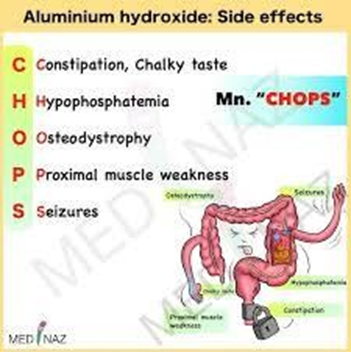
A nurse is providing teaching to a client who has renal failure and an elevated phosphorous level. The provider instructed the client to take aluminum hydroxide 300 mg PO three times daily. For which of the following adverse effects should the nurse inform the client?
A. Constipation
Constipation is a common adverse effect of aluminum hydroxide, an antacid often used to bind phosphate in patients with renal failure to prevent hyperphosphatemia.
B. Muscle spasms
Muscle spasms are not typically associated with aluminum hydroxide.
C. Metallic taste
Metallic taste is not a common adverse effect of aluminum hydroxide.
D. Headache
Headache is not a common adverse effect of aluminum hydroxide.
This question is an excerpt from Nurse Dive's nursing test bank - Ati Med Surg Proctored Exam 8. Take the full exam now
Full Explanation
A. Constipation is a common adverse effect of aluminum hydroxide, an antacid often used to bind phosphate in patients with renal failure to prevent hyperphosphatemia.
B. Muscle spasms are not typically associated with aluminum hydroxide.
C. Metallic taste is not a common adverse effect of aluminum hydroxide.
D. Headache is not a common adverse effect of aluminum hydroxide.
Similar Questions
A nurse is caring for a client who had total thyroidectomy and a serum calcium level of 7.6 mg/dL. Which of the following findings should the nurse expect?
A. Constipation
Constipation is not typically associated with hypocalcemia.
B. Shortened QT intervals
Shortened QT intervals are not characteristic of hypocalcemia; rather, prolongation of QT intervals is more common.
C. Hypoactive deep tendon reflexes
Hypoactive deep tendon reflexes, would suggest a decrease in neuromuscular excitability, which is contrary to the increased excitability seen in hypocalcemia. Therefore, hypoactive deep tendon reflexes is more commonly associated with hypercalcemia and not hypocalcemia.
D. Tingling of the extremities
Tingling of the extremities is a common symptom of hypocalcemia.
Full Explanation
A. Constipation is not typically associated with hypocalcemia.
B. Shortened QT intervals are not characteristic of hypocalcemia; rather, prolongation of QT intervals is more common.
C. Hypoactive deep tendon reflexes, would suggest a decrease in neuromuscular excitability, which is contrary to the increased excitability seen in hypocalcemia. Therefore, hypoactive deep tendon reflexes is more commonly associated with hypercalcemia and not hypocalcemia.
D. Tingling of the extremities is a common symptom of hypocalcemia.
A nurse is providing dietary teaching to a client who has a history of recurring calcium oxalate kidney stones. Which of the following instructions should the nurse include in the teaching?
A. Eat 12 oz of animal protein daily.
Consuming excessive animal protein can increase the risk of kidney stones due to the metabolism of protein leading to increased excretion of calcium and oxalate.
B. Restrict calcium intake to one serving per day.
Restricting calcium intake is not recommended for preventing calcium oxalate kidney stones. Adequate calcium intake from dietary sources can actually help prevent kidney stone formation by binding to oxalate in the intestines and reducing its absorption.
C. Take 3,000 mg of vitamin C daily.
High doses of vitamin C can increase oxalate levels in the urine, which can contribute to the formation of calcium oxalate kidney stones.
D. Drink 3L of fluid every day.
Adequate fluid intake, typically recommended at least 3 liters (about 100 ounces) per day, helps dilute urine and reduce the concentration of stone-forming substances, thereby reducing the risk of kidney stone formation.
Full Explanation
A. Consuming excessive animal protein can increase the risk of kidney stones due to the metabolism of protein leading to increased excretion of calcium and oxalate.
B. Restricting calcium intake is not recommended for preventing calcium oxalate kidney stones. Adequate calcium intake from dietary sources can actually help prevent kidney stone formation by binding to oxalate in the intestines and reducing its absorption.
C. High doses of vitamin C can increase oxalate levels in the urine, which can contribute to the formation of calcium oxalate kidney stones.
D. Adequate fluid intake, typically recommended at least 3 liters (about 100 ounces) per day, helps dilute urine and reduce the concentration of stone-forming substances, thereby reducing the risk of kidney stone formation.
Anna's mother has been suffering from persistent vomiting for two days now. She appears to be lethargic and weak and has myalgia. She is noted to have dry mucus membranes and her capillary refill takes >4 seconds. She is diagnosed as having gastroenteritis and dehydration. Measurement of arterial blood gas shows pH 7.5, PaO2 85 mm Hg, PaCO2 40 mm Hg, and HCO3 34 mmol/L.
What acid-base disorder is shown?
A. Respiratory Acidosis. Partially Compensated
Respiratory Acidosis, both compensated and uncompensated, is characterized by an elevated PaCO2, which is not present in this case.
B. Metabolic Alkalosis, Partially Compensated
The elevated pH (7.5) and HCO3 (34 mmol/L) indicate metabolic alkalosis. The elevated pH and the slightly elevated PaCO2 (40 mm Hg) suggest the partially compensated state, which is the respiratory compensation attempting to correct the alkalosis.
C. Respiratory Alkalosis. Uncompensated
The fact that the PaCO2 is not low rules out respiratory alkalosis.
D. Metabolic Alkalosis, Uncompensated
The arterial blood gas values indicate a high pH (7.5), a normal PaCO2 (40 mm Hg), and an elevated HCO3 (34 mmol/L), which are indicative of metabolic alkalosis. However, the elevated pH and the slightly elevated PaCO2 (40 mm Hg) suggest a partially compensated state.
Full Explanation
A. Respiratory Acidosis, both compensated and uncompensated, is characterized by an elevated PaCO2, which is not present in this case.
B. The elevated pH (7.5) and HCO3 (34 mmol/L) indicate metabolic alkalosis. The elevated pH and the slightly elevated PaCO2 (40 mm Hg) suggest the partially compensated state, which is the respiratory compensation attempting to correct the alkalosis.
C. The fact that the PaCO2 is not low rules out respiratory alkalosis.
D. The arterial blood gas values indicate a high pH (7.5), a normal PaCO2 (40 mm Hg), and an elevated HCO3 (34 mmol/L), which are indicative of metabolic alkalosis. However, the elevated pH and the slightly elevated PaCO2 (40 mm Hg) suggest a partially compensated state.