
Nursing practice questions with comprehensive rationales
NurseDive Free Nursing Practice Question
A nurse is providing teaching to a client who is at 14 weeks of gestation about findings to report to the provider.
Which of the following findings should the nurse include in the teaching
A. Bleeding gums
bleeding gums, is wrong because it is a common occurrence during pregnancy due to hormonal changes that increase blood flow to the gums. It is not a cause for concern unless it is excessive or accompanied by other symptoms.
B. Urinary frequency
urinary frequency, is wrong because it is also a normal finding during pregnancy due to the growing uterus putting pressure on the bladder. It is not a sign of infection or kidney problems unless it is associated with pain, burning, or blood in the urine.
C. preeclampsia
Preeclampsia can affect the placenta, the kidneys, the liver, and the brain of the mother and the fetus. It requires immediate medical attention and may lead to early delivery.
D. faintness upon rising
This is a sign of preeclampsia, a serious complication of pregnancy that can cause high blood pressure, proteinuria, and seizures. faintness upon rising, is wrong because it is usually caused by orthostatic hypotension, a drop in blood pressure when changing positions.
This question is an excerpt from Nurse Dive's nursing test bank - ATI Comprehensive Predictor 2023 Exit Proctored Exam A. Take the full exam now
Full Explanation
This is a sign of preeclampsia, a serious complication of pregnancy that can cause high blood pressure, proteinuria, and seizures.
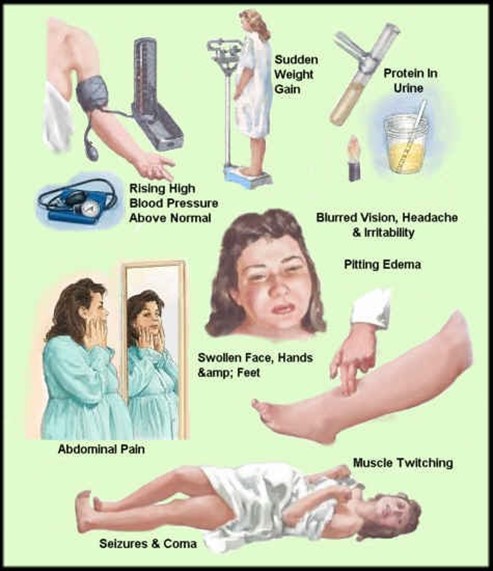
Preeclampsia can affect the placenta, the kidneys, the liver, and the brain of the mother and the fetus. It requires immediate medical attention and may lead to early delivery.
Choice A, bleeding gums, is wrong because it is a common occurrence during pregnancy due to hormonal changes that increase blood flow to the gums. It is not a cause for concern unless it is excessive or accompanied by other symptoms.
Choice B, urinary frequency, is wrong because it is also a normal finding during pregnancy due to the growing uterus putting pressure on the bladder. It is not a sign of infection or kidney problems unless it is associated with pain, burning, or blood in the urine.
Choice D, faintness upon rising, is wrong because it is usually caused by orthostatic hypotension, a drop in blood pressure when changing positions.
This can happen during pregnancy due to the dilation of blood vessels and the increased blood volume. It can be prevented by rising slowly, drinking enough fluids, and avoiding prolonged standing.
Similar Questions
A nurse is assessing a client who is experiencing hypovolemia.
Which of the following manifestations should the nurse expect
A. Epistaxis
epistaxis, is wrong because it is not a sign of hypovolemia, but rather a possible cause of it. Epistaxis is a nosebleed that can result from trauma, infection, dryness, or coagulation disorders.
B. Headache
headache, is wrong because it is not a specific sign of hypovolemia, but rather a nonspecific symptom that can have many causes. Headache can be associated with dehydration, but it can also be caused by stress, infection, inflammation, or other factors.
C. Dizziness
Dizziness is a manifestation of hypovolemia, which is a decrease in blood volume due to fluid loss. Hypovolemia can cause orthostatic hypotension, which is a drop in blood pressure when changing positions. This can lead to dizziness, lightheadedness, or fainting.
D. Shortness of breath
shortness of breath, is wrong because it is not a sign of hypovolemia, but rather a sign of fluid volume excess. Fluid volume excess is an increase in blood volume due to fluid retention or overload. Fluid volume excess can cause dyspnea, which is difficulty breathing or shortness of breath. Normal ranges for blood pressure are 90/60 mm Hg to 120/80 mm Hg for adults. Normal ranges for heart rate are 60 to 100 beats per minute for adults.
Full Explanation
, dizziness.
Dizziness is a manifestation of hypovolemia, which is a decrease in blood volume due to fluid loss.
Hypovolemia can cause orthostatic hypotension, which is a drop in blood pressure when changing positions. This can lead to dizziness, lightheadedness, or fainting.
Choice A, epistaxis, is wrong because it is not a sign of hypovolemia, but rather a possible cause of it. Epistaxis is a nosebleed that can result from trauma, infection, dryness, or coagulation disorders.
Choice B, headache, is wrong because it is not a specific sign of hypovolemia, but rather a nonspecific symptom that can have many causes. Headache can be associated with dehydration, but it can also be caused by stress, infection, inflammation, or other factors.
Choice D, shortness of breath, is wrong because it is not a sign of hypovolemia, but rather a sign of fluid volume excess.
Fluid volume excess is an increase in blood volume due to fluid retention or overload. Fluid volume excess can cause dyspnea, which is difficulty breathing or shortness of breath.
Normal ranges for blood pressure are 90/60 mm Hg to 120/80 mm Hg for adults.
Normal ranges for heart rate are 60 to 100 beats per minute for adults.
A nurse is planning care for a client who is scheduled for a thoracentesis.
Which of the following actions should the nurse plan to take
A. Instruct the client to avoid coughing during the procedure
Instruct the client to avoid coughing during the procedure. A thoracentesis is a procedure that involves inserting a needle into the pleural space to remove excess fluid or air. Coughing can increase the risk of pneumothorax (collapsed lung) or bleeding during the procedure.
B. Inform the client that he will be NPO for 6 hr prior to the procedure
is wrong because the client does not need to be NPO (nothing by mouth) for 6 hr prior to the procedure. There is no risk of aspiration during a thoracentesis.
C. Position the client on the affected side for 4 hr following the procedure.
wrong because the client should be positioned on the unaffected side for 4 hr following the procedure. This allows the affected lung to re-expand and prevents fluid from accumulating in the pleural space again.
D. Place the client in the prone position during the procedure
because the client should not be placed in the prone position during the procedure. The prone position makes it difficult to access the pleural space and can compromise breathing.
Full Explanation
The correct answer is choice A. Instruct the client to avoid coughing during the procedure.
A thoracentesis is a procedure that involves inserting a needle into the pleural space to remove excess fluid or air. Coughing can increase the risk of pneumothorax (collapsed lung) or bleeding during the procedure.
Choice B is wrong because the client does not need to be NPO (nothing by mouth) for 6 hr prior to the procedure. There is no risk of aspiration during a thoracentesis.
Choice C is wrong because the client should be positioned on the unaffected side for 4 hr following the procedure. This allows the affected lung to re-expand and prevents fluid from accumulating in the pleural space again.
Choice D is wrong because the client should not be placed in the prone position during the procedure. The prone position makes it difficult to access the pleural space and can compromise breathing.
A nurse is caring for a school-age child who is postoperative and received morphine via IV bolus for pain 10 min ago.
Which of the following findings is the nurse’s priority?
A. Euphoria
euphoria, is wrong because euphoria is a feeling of intense happiness or well-being that is a common side effect of morphine. Euphoria is not a priority finding and does not indicate a serious complication of morphine.
B. Bradypnea
Bradypnea is abnormally slow breathing, which can be a sign of life-threatening respiratory depression caused by morphine. Respiratory depression is the most serious adverse effect of morphine and can lead to coma and death if not treated promptly. Therefore, the nurse should monitor the child’s respiratory rate and oxygen saturation closely and be prepared to administer naloxone, an opioid antagonist, if needed.
C. Constipation
is wrong because constipation is a common and chronic side effect of morphine that affects the gastrointestinal system
D. Constipation
is wrong because sedation is another common side effect of morphine that affects the central nervous system. Sedation can impair the child’s level of consciousness and ability to respond to stimuli, but it is not as urgent as respiratory depression.
Full Explanation
The correct answer is choice B, bradypnea. Bradypnea is abnormally slow breathing, which can be a sign of life-threatening respiratory depression caused by morphine. Respiratory depression is the most serious adverse effect of morphine and can lead to coma and death if not treated promptly. Therefore, the nurse should monitor the child’s respiratory rate and oxygen saturation closely and be prepared to administer naloxone, an opioid antagonist, if needed.
Choice A, euphoria, is wrong because euphoria is a feeling of intense happiness or well-being that is a common side effect of morphine.
Euphoria is not a priority finding and does not indicate a serious complication of morphine.
Choice C, constipation, is wrong because constipation is a common and chronic side effect of morphine that affects the gastrointestinal system.
Constipation can cause discomfort and complications such as bowel obstruction, but it is not a priority finding compared to respiratory depression.
Choice D, sedation, is wrong because sedation is another common side effect of morphine that affects the central nervous system.
Sedation can impair the child’s level of consciousness and ability to respond to stimuli, but it is not as urgent as respiratory depression.