
Nursing practice questions with comprehensive rationales
NurseDive Free Nursing Practice Question
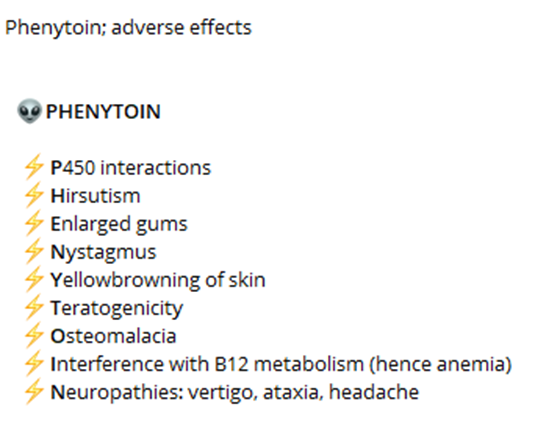
A nurse is reinforcing teaching a client who has a new prescription for phenytoin. The nurse should instruct the client to monitor and report which of the following adverse effects of this medication?
A. Diarrhea
Diarrhea:Diarrhea is not a common side effect of phenytoin. While gastrointestinal disturbances such as nausea, vomiting, and constipation may occur, diarrhea is less common. Therefore, it is not a primary adverse effect that the nurse should instruct the client to monitor and report.
B. Wrist pain
Wrist pain:Wrist pain is not a common side effect of phenytoin. Side effects related to musculoskeletal issues such as joint pain, muscle weakness, or muscle twitching can occur, but wrist pain specifically is not commonly associated with phenytoin use. Therefore, it is not a primary adverse effect that the nurse should instruct the client to monitor and report.
C. Skin rash
Skin rash: Skin rash is a potential adverse effect of phenytoin that should be monitored and reported. Phenytoin can cause various skin reactions, including a mild rash or more severe reactions such as Stevens-Johnson syndrome or toxic epidermal necrolysis. Therefore, the nurse should instruct the client to promptly report any signs of skin rash or other skin changes.
D. Metallic taste
Metallic taste:Metallic taste is a common side effect of phenytoin. While it is not usually a serious adverse effect, it can be bothersome for some individuals. Therefore, the nurse should instruct the client to monitor for this side effect and report it if it occurs persistently or becomes bothersome.
This question is an excerpt from Nurse Dive's nursing test bank - Ati Lpn Med Surg Neuro Test 2024 Proctored Exam. Take the full exam now
Full Explanation
A. Diarrhea:
Diarrhea is not a common side effect of phenytoin. While gastrointestinal disturbances such as nausea, vomiting, and constipation may occur, diarrhea is less common. Therefore, it is not a primary adverse effect that the nurse should instruct the client to monitor and report.
B. Wrist pain:
Wrist pain is not a common side effect of phenytoin. Side effects related to musculoskeletal issues such as joint pain, muscle weakness, or muscle twitching can occur, but wrist pain specifically is not commonly associated with phenytoin use. Therefore, it is not a primary adverse effect that the nurse should instruct the client to monitor and report.
C. Skin rash:
Skin rash is a potential adverse effect of phenytoin that should be monitored and reported. Phenytoin can cause various skin reactions, including a mild rash or more severe reactions such as Stevens-Johnson syndrome or toxic epidermal necrolysis. Therefore, the nurse should instruct the client to promptly report any signs of skin rash or other skin changes.
D. Metallic taste:
Metallic taste is a common side effect of phenytoin. While it is not usually a serious adverse effect, it can be bothersome for some individuals. Therefore, the nurse should instruct the client to monitor for this side effect and report it if it occurs persistently or becomes bothersome.
Similar Questions
A nurse is reinforcing teaching with a client who is taking benztropine to treat Parkinson's disease. The nurse should instruct the client to report which of the following findings as an adverse effect of the medication?
A. Excessive salvation
Excessive salivation:Excessive salivation is not a common adverse effect of benztropine. Instead, anticholinergic medications like benztropine often cause dry mouth, which is more common than excessive salivation.
B. Difficulty voiding
Difficulty voiding:Difficulty voiding, or urinary retention, is a potential adverse effect of anticholinergic medications like benztropine. Anticholinergic drugs can cause relaxation of the detrusor muscle in the bladder, leading to urinary retention. Therefore, the nurse should instruct the client to report any difficulty or inability to urinate.
C. Diarrhea
Diarrhea: Diarrhea is not a common adverse effect of benztropine. Instead, anticholinergic medications like benztropine typically cause constipation due to their antimuscarinic effects on the gastrointestinal tract.
D. Slow pulse
Slow pulse:Slow pulse, or bradycardia, is not a common adverse effect of benztropine. Instead, anticholinergic medications like benztropine may cause tachycardia (increased heart rate) due to their effects on the autonomic nervous system.
Full Explanation
A. Excessive salivation:
Excessive salivation is not a common adverse effect of benztropine. Instead, anticholinergic medications like benztropine often cause dry mouth, which is more common than excessive salivation.
B. Difficulty voiding:
Difficulty voiding, or urinary retention, is a potential adverse effect of anticholinergic medications like benztropine. Anticholinergic drugs can cause relaxation of the detrusor muscle in the bladder, leading to urinary retention. Therefore, the nurse should instruct the client to report any difficulty or inability to urinate.
C. Diarrhea:
Diarrhea is not a common adverse effect of benztropine. Instead, anticholinergic medications like benztropine typically cause constipation due to their antimuscarinic effects on the gastrointestinal tract.
D. Slow pulse:
Slow pulse, or bradycardia, is not a common adverse effect of benztropine. Instead, anticholinergic medications like benztropine may cause tachycardia (increased heart rate) due to their effects on the autonomic nervous system.
A nurse is caring for a client who has a spinal cord injury at T-4. The nurse should recognize that the client is at risk for autonomic dysreflexia. Which of the following interventions should the nurse take to prevent autonomic dysreflexia?
A. Monitor for elevated blood pressure.
While monitoring for elevated blood pressure is important in identifying autonomic dysreflexia once it occurs, it does not prevent the condition. The nurse should focus on eliminating potential triggers, such as bladder distention or constipation, to prevent the occurrence.
B. Provide analgesia for headaches.
Headaches are a symptom of autonomic dysreflexia, often related to severe hypertension. While treating the headache may alleviate discomfort, it does not address the underlying cause, nor does it prevent the onset of autonomic dysreflexia.
C. Prevent bladder distention.
Bladder distention is a common trigger for autonomic dysreflexia in individuals with spinal cord injuries. The nurse should ensure that the client's bladder is regularly emptied to prevent overdistention, which can stimulate the autonomic reflex and trigger AD.
D. Elevate the client's head.
Elevating the head is an intervention used during an episode of autonomic dysreflexia to help lower blood pressure and reduce symptoms. However, this action does not prevent the condition from occurring.
Full Explanation
A. While monitoring for elevated blood pressure is important in identifying autonomic dysreflexia once it occurs, it does not prevent the condition. The nurse should focus on eliminating potential triggers, such as bladder distention or constipation, to prevent the occurrence.
B. Headaches are a symptom of autonomic dysreflexia, often related to severe hypertension. While treating the headache may alleviate discomfort, it does not address the underlying cause, nor does it prevent the onset of autonomic dysreflexia.
C. Bladder distention is a common trigger for autonomic dysreflexia in individuals with spinal cord injuries. The nurse should ensure that the client's bladder is regularly emptied to prevent overdistention, which can stimulate the autonomic reflex and trigger AD.
D. Elevating the head is an intervention used during an episode of autonomic dysreflexia to help lower blood pressure and reduce symptoms. However, this action does not prevent the condition from occurring.
A nurse is caring for a client who is difficult to arouse and very sleepy for several hours following a generalized tonic-clonic seizure. Which of the following descriptions should the nurse use when documenting this finding in the medical record?
A. Aura phase
Aura phase:The aura phase occurs before the seizure and is characterized by subjective sensations or experiences that some individuals may have. It serves as a warning sign that a seizure is about to occur. This phase precedes the seizure itself and is not applicable to the period immediately afterward.
B. Presence of automatisms
Presence of automatisms:Automatisms refer to repetitive, involuntary movements or actions that some individuals may exhibit during certain types of seizures, such as complex partial seizures. They are not typically observed during the postictal phase of a generalized tonic-clonic seizure.
C. Postictal phase
Postictal phase: The postictal phase, also known as the postictal state, refers to the period following a seizure during which the individual may experience confusion, drowsiness, or other altered states of consciousness. This phase typically lasts for minutes to hours and is characterized by gradual recovery of normal function.
D. Presence of absence seizures
Presence of absence seizures:Absence seizures are characterized by brief episodes of altered consciousness, often manifesting as staring spells or momentary loss of awareness. They are distinct from generalized tonic-clonic seizures and do not involve the same postictal phase characterized by drowsiness and altered arousal.
Full Explanation
A. Aura phase:
The aura phase occurs before the seizure and is characterized by subjective sensations or experiences that some individuals may have. It serves as a warning sign that a seizure is about to occur. This phase precedes the seizure itself and is not applicable to the period immediately afterward.
B. Presence of automatisms:
Automatisms refer to repetitive, involuntary movements or actions that some individuals may exhibit during certain types of seizures, such as complex partial seizures. They are not typically observed during the postictal phase of a generalized tonic-clonic seizure.
C. Postictal phase:
The postictal phase, also known as the postictal state, refers to the period following a seizure during which the individual may experience confusion, drowsiness, or other altered states of consciousness. This phase typically lasts for minutes to hours and is characterized by gradual recovery of normal function.
D. Presence of absence seizures:
Absence seizures are characterized by brief episodes of altered consciousness, often manifesting as staring spells or momentary loss of awareness. They are distinct from generalized tonic-clonic seizures and do not involve the same postictal phase characterized by drowsiness and altered arousal.