
Nursing practice questions with comprehensive rationales
NurseDive Free Nursing Practice Question
A nurse is reinforcing teaching about delegation to assistive personnel (AP) with a newly licensed nurse. Which of the following statements should the nurse include in the teaching?
A. "After a task is delegated, the accountability for the task belongs to the AP."
Option A is incorrect because accountability for a delegated task remains with the delegator, not the AP.
B. "Delegation permits a designated individual to meet a goal on your behalf."
The nurse should include the statement "Delegation permits a designated individual to meet a goal on your behalf" in the teaching. This is because delegation allows the nurse to assign tasks to an AP who has the appropriate skills and knowledge to complete them, while still maintaining accountability for the outcome of the task.
C. "Discharge teaching activities for clients can be delegated to an AP."
Option C is incorrect because discharge teaching activities for clients cannot be delegated to an AP as they require nursing judgment and assessment.
D. "If the AP has completed the task before, there is no need to follow up."
Option D is incorrect because it is important for the nurse to follow up on delegated tasks even if the AP has completed them before to ensure that they have been completed correctly and that the client's needs have been met.
This question is an excerpt from Nurse Dive's nursing test bank - ATI PN Medical Surgical Leadership Proctored Exam. Take the full exam now
Full Explanation
The nurse should include the statement "Delegation permits a designated individual to meet a goal on your behalf" in the teaching. This is because delegation allows the nurse to assign tasks to an AP who has the appropriate skills and knowledge to complete them, while still maintaining accountability for the outcome of the task.
Option A is incorrect because accountability for a delegated task remains with the delegator, not the AP.
Option C is incorrect because discharge teaching activities for clients cannot be delegated to an AP as they require nursing judgment and assessment.
Option D is incorrect because it is important for the nurse to follow up on delegated tasks even if the AP has completed them before to ensure that they have been completed correctly and that the client's needs have been met.
Similar Questions
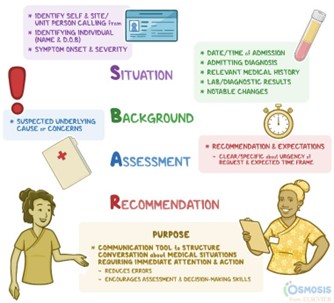
A nurse wants to prepare a patient report utilizing SBAR, which she knows is a systematic method of communication. To ensure the report is thorough, what types of information does she need? SELECT ALL THAT APPLY:
A. Assessment of the patient
B. Recommendations for moving forward.
C. Situation of the patient
D. Barriers to providing treatment.
is incorrect because barriers to providing treatment are not part of the SBAR framework.
F. Reason why a report is needed.
is incorrect because the reason why the report is needed is not part of the SBAR framework.
Full Explanation
SBAR stands for Situation, Background, Assessment, and Recommendation. It is a systematic method of communication that provides a structured framework for conveying important information about a patient. To ensure that the report is thorough, the nurse needs to include information about the situation of the patient, the background leading up to the situation, an assessment of the patient, and recommendations for moving forward.
Option d is incorrect because barriers to providing treatment are not part of the SBAR framework.
Option f is incorrect because the reason why the report is needed is not part of the SBAR framework.
A nurse witnesses an adult who is experiencing a cardiac arrest while at the grocery store. The nurse performs CPR. Which of the following criteria is necessary for the Good Samaritan law to provide civil immunity for the nurse?
A. The nurse has a license to practice nursing in the state where the event occurred.
While having a license to practice nursing in the state where the event occurred is important for professional practice, it is not a specific requirement for the Good Samaritan law to provide civil immunity. The Good Samaritan law generally protects individuals who provide emergency care in good faith, regardless of their licensure status in that particular state.
B. The nurse has basic life support certification.
Basic life support (BLS) certification is a valuable credential for performing CPR and other emergency procedures. However, the Good Samaritan law does not require the responder to have BLS certification to be protected. The law focuses more on the intent and actions of the responder rather than their specific certifications.
C. The nurse does not cause any harm to the client.
The primary criterion for the Good Samaritan law to provide civil immunity is that the responder does not cause harm to the client. The law is designed to protect those who act in good faith to provide emergency care without gross negligence or willful misconduct. If the nurse’s actions are reasonable and do not result in harm, they are typically protected under the Good Samaritan law.
D. The nurse remains with the client when traveling to the hospital in an ambulance.
Remaining with the client when traveling to the hospital in an ambulance is not a requirement for Good Samaritan law protection. The law applies to the immediate emergency care provided at the scene. Once professional medical personnel take over, the Good Samaritan law’s protection generally ends.
Full Explanation
The correct answer is choice C. The nurse does not cause any harm to the client.
Choice A rationale:
While having a license to practice nursing in the state where the event occurred is important for professional practice, it is not a specific requirement for the Good Samaritan law to provide civil immunity. The Good Samaritan law generally protects individuals who provide emergency care in good faith, regardless of their licensure status in that particular state.
Choice B rationale:
Basic life support (BLS) certification is a valuable credential for performing CPR and other emergency procedures. However, the Good Samaritan law does not require the responder to have BLS certification to be protected. The law focuses more on the intent and actions of the responder rather than their specific certifications.
Choice C rationale:
The primary criterion for the Good Samaritan law to provide civil immunity is that the responder does not cause harm to the client. The law is designed to protect those who act in good faith to provide emergency care without gross negligence or willful misconduct. If the nurse’s actions are reasonable and do not result in harm, they are typically protected under the Good Samaritan law.
Choice D rationale:
Remaining with the client when traveling to the hospital in an ambulance is not a requirement for Good Samaritan law protection. The law applies to the immediate emergency care provided at the scene. Once professional medical personnel take over, the Good Samaritan law’s protection generally ends.
A nurse observes another nurse performing a procedure in the incorrect sequence. The procedure does not harm the client. Which of the following actions should the nurse take first?
A. Correct the mistake independently.
Option A is incorrect because correcting the mistake independently does not address the underlying issue of the other nurse performing the procedure incorrectly.
B. Speak with the other nurse privately.
The first action the nurse should take is to speak with the other nurse privately. This allows the nurse to address the mistake in a respectful and professional manner and provide guidance on how to perform the procedure correctly in the future.
C. Volunteer to perform the procedure next time.
Option C is incorrect because volunteering to perform the procedure next time does not address the underlying issue of the other nurse performing the procedure incorrectly.
D. Submit an incident report.
Option D is incorrect because submitting an incident report may be necessary, but it should not be the first action taken.
Full Explanation
The first action the nurse should take is to speak with the other nurse privately. This allows the nurse to address the mistake in a respectful and professional manner and provide guidance on how to perform the procedure correctly in the future.
Option A is incorrect because correcting the mistake independently does not address the underlying issue of the other nurse performing the procedure incorrectly.
Option C is incorrect because volunteering to perform the procedure next time does not address the underlying issue of the other nurse performing the procedure incorrectly.
Option D is incorrect because submitting an incident report may be necessary, but it should not be the first action taken.