
Nursing practice questions with comprehensive rationales
NurseDive Free Nursing Practice Question
A nurse is reinforcing teaching with a client who is at 17 weeks of gestation and is scheduled to have a maternal serum alpha-fetoprotein (MSAFP) determination.
Which of the following information should the nurse include?
A. This test will screen for gestational diabetes.
Choice A is incorrect because this test does not screen for gestational diabetes.
B. This test will screen for fetal maturity.
Choice B is incorrect because this test does not screen for fetal maturity.
C. This test will screen for neural tube defects.
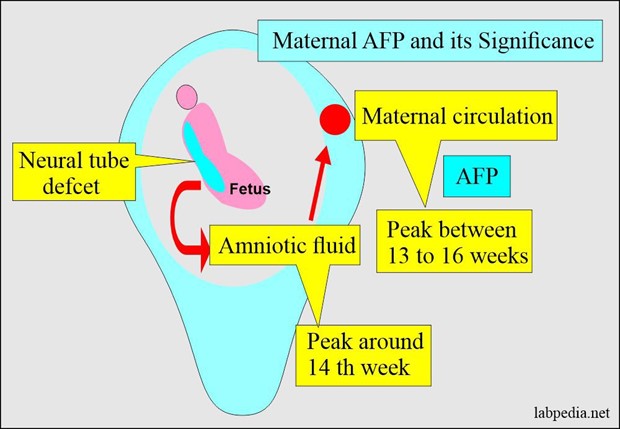
The MSAFP test measures the levels of alpha-fetoprotein (AFP) in the mother’s body. AFP is a protein produced by the baby during pregnancy. Too much AFP in the mother’s body may indicate that the baby is at risk of a neural tube defect, like spina bifida.
D. This test will screen for ABO incompatibility.
Choice D is incorrect because this test does not screen for ABO incompatibility.
This question is an excerpt from Nurse Dive's nursing test bank - ATI Custom- Wn23 NS122 Proctored Exam. Take the full exam now
Full Explanation
The MSAFP test measures the levels of alpha-fetoprotein (AFP) in the mother’s body.
AFP is a protein produced by the baby during pregnancy.
Too much AFP in the mother’s body may indicate that the baby is at risk of a neural tube defect, like spina bifida.
Choice A is incorrect because this test does not screen for gestational diabetes.
Choice B is incorrect because this test does not screen for fetal maturity.
Choice D is incorrect because this test does not screen for ABO incompatibility.
Similar Questions
A nurse is assisting with the care of a client who is in early labor with intact membranes and a temperature of 38.9°C (102°F).
After notifying the provider, which of the following actions should the nurse take?
A. Administer misoprostol vaginally.
Choice A is incorrect because misoprostol is not used to treat fever during labor.
B. Administer acetaminophen orally.
Acetaminophen can be used to reduce fever during pregnancy.
C. Prepare the client for placement of an intrauterine pressure catheter.
Choice C is incorrect because the placement of an intrauterine pressure catheter is not used to treat fever during labor.
D. Recheck the client's temperature in 2 hr.
Choice D is incorrect because simply rechecking the client’s temperature in 2 hours does not address the issue of the client’s fever.
Full Explanation
Acetaminophen can be used to reduce fever during pregnancy.
Choice A is incorrect because misoprostol is not used to treat fever during labor.
Choice C is incorrect because the placement of an intrauterine pressure catheter is not used to treat fever during labor.
Choice D is incorrect because simply rechecking the client’s temperature in 2 hours does not address the issue of the client’s fever.
The nurse has just received the results of a pregnant client's MSAFP screening and notes the levels are elevated.
The nurse should prioritize which discussion with the client.
A. Risk for Down syndrome.
Choice A is incorrect because low levels of MSAFP may indicate a risk for Down syndrome, not elevated levels.
B. Risk for neural tube defects.
Choice B is incorrect because while elevated levels of MSAFP may indicate a risk for neural tube defects, further testing is required to confirm this.
C. Further testing is required.
Elevated levels of MSAFP may indicate that the baby is at risk of a neural tube defect, like spina bifida. However, further testing is required to confirm the results and determine the cause of the elevated levels.
D. Test needs to be repeated.
Choice D is incorrect because while repeating the test may be necessary, further testing beyond just repeating the MSAFP screening may also be required.
Full Explanation
Elevated levels of MSAFP may indicate that the baby is at risk of a neural tube defect, like spina bifida.
However, further testing is required to confirm the results and determine the cause of the elevated levels.
Choice A is incorrect because low levels of MSAFP may indicate a risk for Down syndrome, not elevated levels.
Choice B is incorrect because while elevated levels of MSAFP may indicate a risk for neural tube defects, further testing is required to confirm this.
Choice D is incorrect because while repeating the test may be necessary, further testing beyond just repeating the MSAFP screening may also be required.
A nurse is reviewing contraception options for four clients.
The nurse should identify which of the following clients as having a contraindication to oral contraceptives.
A. A client who has a blood pressure of 140/90 mm Hg.
A client who has a blood pressure of 140/90 mm Hg. Hypertension is a contraindication to oral contraceptives.
B. A client who has a menstrual cycle every 14 days.
Choice B is incorrect because having a menstrual cycle every 14 days is not a contraindication to oral contraceptives.
C. A client who has a hematocrit of 39%.
Choice C is incorrect because having a hematocrit of 39% is not a contraindication to oral contraceptives.
D. A 15-year-old client who has acne.
Choice D is incorrect because being 15 years old and having acne is not a contraindication to oral contraceptives.
Full Explanation
A client who has a blood pressure of 140/90 mm Hg. Hypertension is a contraindication to oral contraceptives.
Choice B is incorrect because having a menstrual cycle every 14 days is not a contraindication to oral contraceptives.
Choice C is incorrect because having a hematocrit of 39% is not a contraindication to oral contraceptives.
Choice D is incorrect because being 15 years old and having acne is not a contraindication to oral contraceptives.