
Nursing practice questions with comprehensive rationales
NurseDive Free Nursing Practice Question
A nurse is reinforcing teaching with a parent of a preschooler about immunizations. Which of the following statements by the parent indicates an understanding of the teaching?
A. "I understand that immunizations will be withheld if my child has lactose intolerance."
Lactose intolerance is not a contraindication to receiving immunizations. Most vaccines do not contain lactose, and even if they do, the amount present is typically minimal and not expected to cause an adverse reaction in individuals with lactose intolerance.
B. "I can make several office visits, so my child does not get so many immunizations at once."
This statement demonstrates an understanding of the concept of spacing out immunizations to reduce the number of shots given during a single visit. By making multiple office visits, the parent can ensure that their child receives the recommended immunizations while minimizing the number of injections at each visit.
C. "It is recommended that my child receive his first flu immunization at the age of 6."
The first flu immunization is typically recommended for children starting at 6 months of age, not at 6 years of age.
D. "My child will need to start the human papillomavirus series when he enters kindergarten."
The human papillomavirus (HPV) vaccine is typically recommended for preteens and adolescents, usually starting between the ages of 11 and 12. It is not typically administered when a child enters kindergarten.
This question is an excerpt from Nurse Dive's nursing test bank - PN Comprehensive Predictor PN 2020 Proctored Exam. Take the full exam now
Full Explanation
This statement demonstrates an understanding of the concept of spacing out immunizations to reduce the number of shots given during a single visit. By making multiple office visits, the parent can ensure that their child receives the recommended immunizations while minimizing the number of injections at each visit.
Lactose intolerance is not a contraindication to receiving immunizations. Most vaccines do not contain lactose, and even if they do, the amount present is typically minimal and not expected to cause an adverse reaction in individuals with lactose intolerance.
The first flu immunization is typically recommended for children starting at 6 months of age, not at 6 years of age.
The human papillomavirus (HPV) vaccine is typically recommended for preteens and adolescents, usually starting between the ages of 11 and 12. It is not typically administered when a child enters kindergarten.
Similar Questions
A nurse in a mental health facility is caring for a client who reports palpitations and a sense of impending doom. Which of the following actions should the nurse take first?
A. Administer an anti-anxiety medication.
Administering an anti-anxiety medication may be considered if the client's symptoms persist or worsen, but it is not the first action to be taken. The nurse should prioritize non-pharmacological interventions and create a supportive environment before considering medication administration.
B. Explore behaviors that have helped to reduce the client's anxiety in the past.
While exploring behaviors that have helped to reduce the client's anxiety in the past and explaining to the client that anxiety causes physical manifestations are important actions, they may not provide immediate relief or address the client's immediate distress.
C. Minimize environmental stimuli in the client's surroundings.
The client is experiencing palpitations and a sense of impending doom, which may indicate a heightened state of anxiety or a panic attack. Minimizing environmental stimuli can help create a calming and safe environment for the client. By reducing noise, bright lights, and other potentially distressing stimuli, the nurse can create a more soothing atmosphere that may help alleviate the client's anxiety.
D. Explain to the client that anxiety causes physical manifestations
While exploring behaviors that have helped to reduce the client's anxiety in the past and explaining to the client that anxiety causes physical manifestations are important actions, they may not provide immediate relief or address the client's immediate distress.
Full Explanation
The client is experiencing palpitations and a sense of impending doom, which may indicate a heightened state of anxiety or a panic attack. Minimizing environmental stimuli can help create a calming and safe environment for the client. By reducing noise, bright lights, and other potentially distressing stimuli, the nurse can create a more soothing atmosphere that may help alleviate the client's anxiety.
While exploring behaviors that have helped to reduce the client's anxiety in the past and explaining to the client that anxiety causes physical manifestations are important actions, they may not provide immediate relief or address the client's immediate distress.
Administering an anti-anxiety medication may be considered if the client's symptoms persist or worsen, but it is not the first action to be taken. The nurse should prioritize non-pharmacological interventions and create a supportive environment before considering medication administration.
A nurse is caring for a client who has anorexia nervosa and a behavioral management plan in place. Which of the following findings should the nurse identify as an indication that the behavioral plan is effective?
A. Potassium 3.5 mEq/L
The normal range for potassium levels is generally between 3.5 to 5.0 mEq/L. A potassium level of 3.5 mEq/L falls within the lower end of the normal range, suggesting that the client's potassium levels are relatively stable. This finding alone does not indicate the overall effectiveness of the behavioral plan.
B. Sodium 130 mEq/L
The normal range for sodium levels is typically between 135 to 145 mEq/L. A sodium level of 130 mEq/L falls below the normal range and indicates hyponatremia (low sodium levels). Hyponatremia can be a cause for concern, and it suggests that the behavioral management plan may need further attention or adjustments.
C. Hgb 10 g/dL
The normal range for hemoglobin (Hgb) levels varies depending on factors such as age and gender. However, in general, a Hgb level of 10 g/dL falls below the normal range and indicates anemia. Anemia is a common complication in individuals with anorexia nervosa and can result from inadequate nutrient intake. This finding suggests that the behavioral plan may need further evaluation and adjustment to address the client's nutritional needs.
D. BMI 14.5
Body Mass Index (BMI) is a measure that relates weight and height. A BMI of 14.5 indicates severe underweight and is well below the normal range. This finding suggests that the client's nutritional status is still significantly compromised, and the behavioral management plan may require further attention to support weight restoration and overall recovery.
Full Explanation
The normal range for potassium levels is generally between 3.5 to 5.0 mEq/L. A potassium level of 3.5 mEq/L falls within the lower end of the normal range, suggesting that the client's potassium levels are relatively stable. This finding alone does not indicate the overall effectiveness of the behavioral plan.
The normal range for sodium levels is typically between 135 to 145 mEq/L. A sodium level of 130 mEq/L falls below the normal range and indicates hyponatremia (low sodium levels). Hyponatremia can be a cause for concern, and it suggests that the behavioral management plan may need further attention or adjustments.
The normal range for hemoglobin (Hgb) levels varies depending on factors such as age and gender. However, in general, a Hgb level of 10 g/dL falls below the normal range and indicates anemia. Anemia is a common complication in individuals with anorexia nervosa and can result from inadequate nutrient intake. This finding suggests that the behavioral plan may need further evaluation and adjustment to address the client's nutritional needs.
Body Mass Index (BMI) is a measure that relates weight and height. A BMI of 14.5 indicates severe underweight and is well below the normal range. This finding suggests that the client's nutritional status is still significantly compromised, and the behavioral management plan may require further attention to support weight restoration and overall recovery.
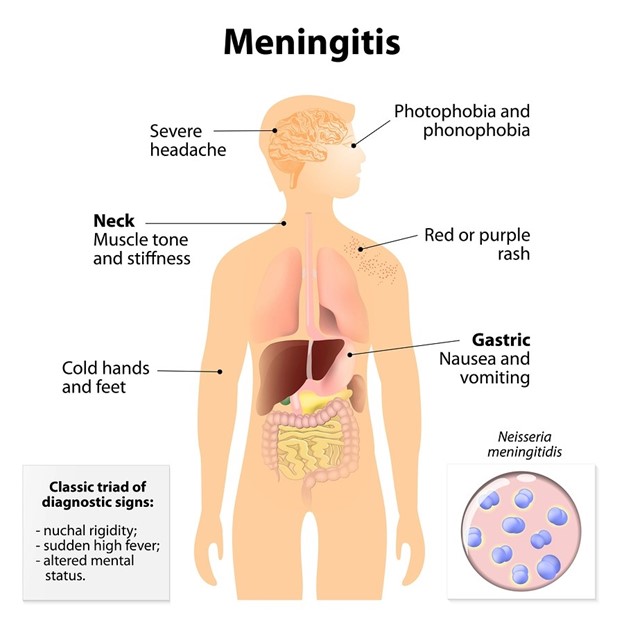
A nurse is assisting with the admission of an adolescent client who is suspected to have bacterial meningitis. Which of the following findings should the nurse expect?
A. 2+ pedal edema
Pedal edema refers to swelling of the feet and ankles and can be caused by various conditions such as heart, liver, or kidney problems.
B. Jaundice
Jaundice refers to yellowing of the skin and eyes and can be caused by liver or bile duct disease.
C. Nuchal rigidity
Bacterial meningitis is a serious infection of the membranes surrounding the brain and spinal cord that can cause inflammation and damage to the nervous system.
D. Hematuria
Hematuria refers to the presence of blood in the urine and can be caused by various conditions such as urinary tract infections, kidney stones, or bladder cancer. These findings are not related to bacterial meningitis and may suggest other health concerns that require further evaluation and management.
Full Explanation
Bacterial meningitis is a serious infection of the membranes surrounding the brain and spinal cord that can cause inflammation and damage to the nervous system.
Nuchal rigidity refers to stiffness and pain in the neck that makes it difficult to flex the neck forward. This finding is indicative of inflammation of the meninges and is a classic sign of meningitis.
Pedal edema refers to swelling of the feet and ankles and can be caused by various conditions such as heart, liver, or kidney problems.
Jaundice refers to yellowing of the skin and eyes and can be caused by liver or bile duct disease.
Hematuria refers to the presence of blood in the urine and can be caused by various conditions such as urinary tract infections, kidney stones, or bladder cancer. These findings are not related to bacterial meningitis and may suggest other health concerns that require further evaluation and management.