
Nursing practice questions with comprehensive rationales
NurseDive Free Nursing Practice Question
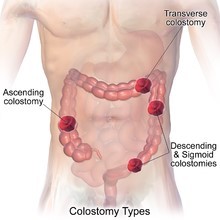
A nurse is reinforcing teaching with another nurse about how to change an ostomy appliance for a client who has a sigmoid colostomy.
Which of the following instructions should the nurse include in the teaching?
A. Create an opening on the skin barrier that is 1.27 cm (0.5 in) larger than the client's stoma
The opening on the skin barrier should be cut to fit closely around the stoma, approximately 0.3-0.6 cm (1/8 to 1/4 inch) larger than the stoma size. A larger opening (like 0.5 inches) could expose too much surrounding skin, increasing the risk of skin irritation from contact with the stoma's effluent.
B. Use a moisturizing soap to clean the skin around the client's stoma
Moisturizing soaps should be avoided because they can leave a residue on the skin, which may interfere with the adhesion of the ostomy appliance. The skin around the stoma should be cleaned with mild soap and water, or water alone, and then dried thoroughly before applying the new appliance.
C. Empty the client's ostomy pouch before removing the skin barrier
Emptying the ostomy pouch before removing the skin barrier is a practical step to reduce spillage of stool during the appliance change, making the process cleaner and easier to manage. It also minimizes the risk of contamination of the surrounding area or wound.
D. Change the client's ostomy appliance 1 hr after breakfast
Ostomy appliances are best changed when the bowel is least active, which is usually before a meal or several hours after eating. Changing the appliance shortly after a meal, such as 1 hour after breakfast, may result in more stoma output, making it harder to manage the appliance change.
This question is an excerpt from Nurse Dive's nursing test bank - ATI PN Comprehensive Predictor 2023 - Proctored Exam 1. Take the full exam now
Full Explanation
A. Create an opening on the skin barrier that is 1.27 cm (0.5 in) larger than the client's stoma. The opening on the skin barrier should be cut to fit closely around the stoma, approximately 0.3-0.6 cm (1/8 to 1/4 inch) larger than the stoma size. A larger opening (like 0.5 inches) could expose too much surrounding skin, increasing the risk of skin irritation from contact with the stoma's effluent.
B. Use a moisturizing soap to clean the skin around the client's stoma. Moisturizing soaps should be avoided because they can leave a residue on the skin, which may interfere with the adhesion of the ostomy appliance. The skin around the stoma should be cleaned with mild soap and water, or water alone, and then dried thoroughly before applying the new appliance.
C. Empty the client's ostomy pouch before removing the skin barrier. Emptying the ostomy pouch before removing the skin barrier is a practical step to reduce spillage of stool during the appliance change, making the process cleaner and easier to manage. It also minimizes the risk of contamination of the surrounding area or wound.
D. Change the client's ostomy appliance 1 hour after breakfast. Ostomy appliances are best changed when the bowel is least active, which is usually before a meal or several hours after eating. Changing the appliance shortly after a meal, such as 1 hour after breakfast, may result in more stoma output, making it harder to manage the appliance change.
Similar Questions
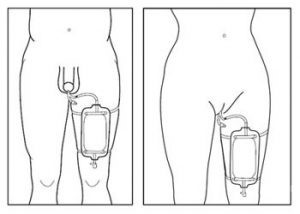
A nurse is caring for a client who has an indwelling catheter with a urinary drainage system.
Which of the following actions should the nurse take?
A. Coil the tubing on the bed above the collection bag
The tubing should not be coiled on the bed, especially not above the collection bag, as this can interfere with the drainage of urine and increase the risk of infection.
B. Instruct the client to hold the drainage bag at waist height when ambulating
The drainage bag should always be kept below the level of the bladder during ambulation to prevent backflow and reduce the risk of infection.
C. Secure the tubing with adhesive tape to the lower abdomen
Securing the catheter tubing to the lower abdomen (for male clients) or thigh (for female clients) helps to reduce the risk of catheter displacement and trauma. Proper securing also prevents unnecessary tension on the tubing, which can cause urethral irritation.
D. Collect a sterile specimen from the urinary drainage bag
A sterile specimen should be collected from the sampling port of the catheter tubing, not directly from the drainage bag, which could lead to contamination.
Full Explanation
A: The tubing should not be coiled on the bed, especially not above the collection bag, as this can interfere with the drainage of urine and increase the risk of infection.
B: The drainage bag should always be kept below the level of the bladder during ambulation to prevent backflow and reduce the risk of infection.
C: Securing the catheter tubing to the lower abdomen (for male clients) or thigh (for female clients) helps to reduce the risk of catheter displacement and trauma. Proper securing also prevents unnecessary tension on the tubing, which can cause urethral irritation.
D: A sterile specimen should be collected from the sampling port of the catheter tubing, not directly from the drainage bag, which could lead to contamination.
A nurse is caring for a client who has AIDS. Which of the following solutions should the nurse use to disinfect the client's overbed table following a blood spill?
A. Chlorhexidine
Chlorhexidine is an antiseptic commonly used for skin preparation before invasive procedures, but it is not the ideal choice for disinfecting surfaces or objects after a blood spill.
B. Isopropyl alcohol
Isopropyl alcohol is effective for disinfecting small surfaces, but it may not be as effective as bleach for blood spills, particularly in the context of bloodborne pathogens like HIV.
C. Bleach
Bleach is an effective disinfectant for blood spills and is recommended by healthcare guidelines for its ability to kill a broad range of microorganisms, including bloodborne pathogens such as human immunodeficiency virus (HIV). To prepare a bleach solution, the nurse can mix 1-part bleach with 10 parts water. This diluted bleach solution can be used to clean and disinfect the overbed table surfaces that have been contaminated with blood.
D. Hydrogen peroxide
Hydrogen peroxide can be used as a disinfectant, but it may not be as effective as bleach in eliminating bloodborne pathogens from surfaces.
Full Explanation
Explanation:
Bleach is an effective disinfectant for blood spills and is recommended by healthcare guidelines for its ability to kill a broad range of microorganisms, including bloodborne pathogens such as human immunodeficiency virus (HIV). To prepare a bleach solution, the nurse can mix 1-part bleach with 10 parts water. This diluted bleach solution can be used to clean and disinfect the overbed table surfaces that have been contaminated with blood.
A- Chlorhexidine is an antiseptic commonly used for skin preparation before invasive procedures, but it is not the ideal choice for disinfecting surfaces or objects after a blood spill.
B- Isopropyl alcohol is effective for disinfecting small surfaces, but it may not be as effective as bleach for blood spills, particularly in the context of bloodborne pathogens like HIV.
D- Hydrogen peroxide can be used as a disinfectant, but it may not be as effective as bleach in eliminating bloodborne pathogens from surfaces.
A charge nurse in a long-term care facility notices the smell of alcohol on a nurse's breath.
Which of the following actions should the nurse take first?
A. Assign clients to the remaining staff.
Assigning clients to the remaining staff can be done once the situation has been addressed and a suitable replacement for the nurse has been arranged.
B. Document objective findings about the situation.
After removing the nurse from the client care area, further actions can be taken, such as documenting the objective findings about the situation and informing the supervisor. However, the immediate priority is to ensure patient safety by removing the nurse from the care area.
C. Remove the nurse from the client care area.
When a charge nurse observes the smell of alcohol on a nurse's breath, it raises concerns about their ability to provide safe and competent care to clients. Patient safety is of utmost importance, and the charge nurse must take immediate action to address the situation. Removing the nurse from the client care area ensures that the nurse is not involved in direct patient care while their ability to provide safe care is in question. This step helps mitigate potential risks to patient safety.
D. Call the supervisor to ask for another nurse.
After removing the nurse from the client care area, further actions can be taken, such as documenting the objective findings about the situation and informing the supervisor. However, the immediate priority is to ensure patient safety by removing the nurse from the care area.
Full Explanation
When a charge nurse observes the smell of alcohol on a nurse's breath, it raises concerns about their ability to provide safe and competent care to clients. Patient safety is of utmost importance, and the charge nurse must take immediate action to address the situation.
Removing the nurse from the client care area ensures that the nurse is not involved in direct patient care while their ability to provide safe care is in question. This step helps mitigate potential risks to patient safety.
B and D- After removing the nurse from the client care area, further actions can be taken, such as documenting the objective findings about the situation and informing the supervisor. However, the immediate priority is to ensure patient safety by removing the nurse from the care area.
A- Assigning clients to the remaining staff can be done once the situation has been addressed and a suitable replacement for the nurse has been arranged.