
Nursing practice questions with comprehensive rationales
NurseDive Free Nursing Practice Question
A nurse is talking to a client who is taking a calcium supplement for osteoporosis. The client tells the nurse she is experiencing flank pain.
Which of the following adverse effects should the nurse suspect?
A. Peptic ulcer fracture
Calcium supplements are not associated with peptic ulcer formation.
B. Renal stones
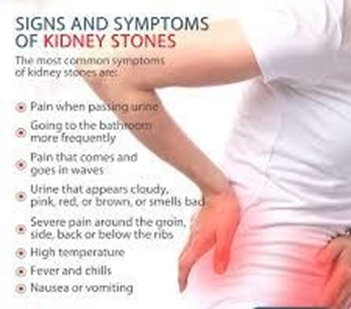
Flank pain can be a symptom of kidney stones, which can occur due to excessive calcium supplementation.
C. Pancreatitis
Pancreatitis is not typically associated with calcium supplementation.
D. Hepatitis
Hepatitis is not typically associated with calcium supplementation.
This question is an excerpt from Nurse Dive's nursing test bank - Ati Med Surg Proctored Exam 8. Take the full exam now
Full Explanation
A. Calcium supplements are not associated with peptic ulcer formation.
B. Flank pain can be a symptom of kidney stones, which can occur due to excessive calcium supplementation.
C. Pancreatitis is not typically associated with calcium supplementation.
D. Hepatitis is not typically associated with calcium supplementation.
Similar Questions
A nurse is caring for a client who has polycystic kidney disease (PKD). Which of the following findings should the nurse expect?
A. Confusion
Confusion is not a typical finding in polycystic kidney disease.
B. Flank pain
Flank pain is a common symptom of polycystic kidney disease due to the enlargement of the kidneys from cyst formation.
C. Urinary retention
Urinary retention is not typically associated with polycystic kidney disease.
D. Hypotension
Hypotension is not a typical finding in polycystic kidney disease unless there are complications such as renal failure.
Full Explanation
A. Confusion is not a typical finding in polycystic kidney disease.
B. Flank pain is a common symptom of polycystic kidney disease due to the enlargement of the kidneys from cyst formation.
C. Urinary retention is not typically associated with polycystic kidney disease.
D. Hypotension is not a typical finding in polycystic kidney disease unless there are complications such as renal failure.
A nurse is caring for a client who has nephrotic syndrome and is receiving high-dose corticosteroid therapy. For which of the following electrolyte imbalances should the nurse monitor?
A. Hypomagnesemia
While electrolyte imbalances can occur in nephrotic syndrome, hypomagnesemia is not typically associated with corticosteroid therapy.
B. Hypokalemia
Corticosteroid therapy can lead to increased urinary potassium loss and subsequent hypokalemia.
C. Hyperkalemia
Corticosteroid therapy is not typically associated with hyperkalemia.
D. Hypermagnesemia
Hypermagnesemia is not typically associated with nephrotic syndrome or corticosteroid therapy.
Full Explanation
A. While electrolyte imbalances can occur in nephrotic syndrome, hypomagnesemia is not typically associated with corticosteroid therapy.
B. Corticosteroid therapy can lead to increased urinary potassium loss and subsequent hypokalemia.
C. Corticosteroid therapy is not typically associated with hyperkalemia.
D. Hypermagnesemia is not typically associated with nephrotic syndrome or corticosteroid therapy.
Mrs. Jamerson, who had undergone surgery in the post-anesthesia care unit (PACU), is difficult to arouse two hours following surgery. Nurse Williams in the PACU has been administering Morphine Sulfate intravenously to the client for complaints of post-surgical pain. The client's respiratory rate is 7 per minute and demonstrates shallow breathing. The patient does not respond to any stimuli. The nurse assesses the ABCs (remember Airway, Breathing, Circulation!) and obtains ABGS STAT! Arterial blood gas measurement shows pH 7.10. PaCO2 70 mm Hg, and HCO3 24 mEq/L
What does this mean?
A. Metabolic Acidosis, Uncompensated
Metabolic Acidosis, Uncompensated, is ruled out because the elevated PaCO2 and low pH indicate a respiratory problem rather than a metabolic one.
B. Respiratory Alkalosis. Partially Compensated
Respiratory Alkalosis. Partially Compensated is ruled out because the pH and PaCO2 levels are both abnormal and indicate acidosis rather than alkalosis.
C. Respiratory Acidosis. Uncompensated
The low pH (acidosis) along with the high PaCO2 indicate respiratory acidosis, and there is no evidence of compensation by the kidneys (normal HCO3).
D. Metabolic Alkalosis. Partially Compensated
Metabolic Alkalosis. Partially Compensated, is ruled out because the pH is low (acidosis) rather than high (alkalosis), and the PaCO2 is elevated, suggesting a respiratory problem rather than a metabolic one.
Full Explanation
A. Metabolic Acidosis, Uncompensated, is ruled out because the elevated PaCO2 and low pH indicate a respiratory problem rather than a metabolic one.
B. Respiratory Alkalosis. Partially Compensated is ruled out because the pH and PaCO2 levels are both abnormal and indicate acidosis rather than alkalosis.
C. The low pH (acidosis) along with the high PaCO2 indicate respiratory acidosis, and there is no evidence of compensation by the kidneys (normal HCO3).
D. Metabolic Alkalosis. Partially Compensated, is ruled out because the pH is low (acidosis) rather than high (alkalosis), and the PaCO2 is elevated, suggesting a respiratory problem rather than a metabolic one.