Nursing practice questions with comprehensive rationales
NurseDive Free Nursing Practice Question
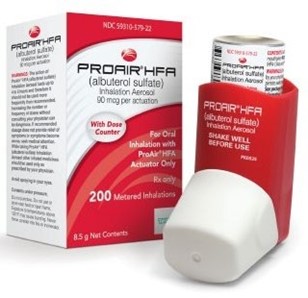
A nurse is talking with the parent of a child who has asthma and a new prescription for albuterol inhalation aerosol 8.5 g, inhale 1 to 2 puffs orally every 4 to 6 hr as needed for asthma. The nurse interprets this medication as which of the following types of prescription?
A. Now
B. PRN
The prescription for albuterol inhalation aerosol 8.5 g, inhale 1 to 2 puffs orally every 4 to 6 hr as needed for asthma is a PRN prescription. PRN stands for "pro re nata," which means "as needed" in Latin. This type of prescription allows the patient to take the medication as needed for a specific condition or symptom, rather than on a regular schedule.
C. Single
D. Standard
This question is an excerpt from Nurse Dive's nursing test bank - Ati Dosage Calculations RN Fundamentals Proctored Exam. Take the full exam now
Full Explanation
The prescription for albuterol inhalation aerosol 8.5 g, inhale 1 to 2 puffs orally every 4 to 6 hr as needed for asthma is a PRN prescription. PRN stands for "pro re nata," which means "as needed" in Latin. This type of prescription allows the patient to take the medication as needed for a specific condition or symptom, rather than on a regular schedule.
Similar Questions
A nurse is reviewing the medication list of a client. Which of the following medication instructions should the nurse identify as being prescribed using a metric unit?
A. Take 1 tsp four times daily
B. Take 0.5 oz 30 min before meals and at bedtime.
C. Take 2 drops four times daily
D. Take 15 mL 1 hr after meals and at bedtime
This medication instruction is prescribed using a metric unit because mL (milliliters) is a unit of volume in the metric system. The other medication instructions are prescribed using non-metric units: tsp (teaspoon) and oz (ounce) are units of volume in the US customary system, while drops is a non-standard unit of volume.
Full Explanation
This medication instruction is prescribed using a metric unit because mL (milliliters) is a unit of volume in the metric system. The other medication instructions are prescribed using non-metric units: tsp (teaspoon) and oz (ounce) are units of volume in the US customary system, while drops is a non-standard unit of volume.
A nurse weighed a client who is following a weight-loss plan. The scale shows that the client weighs 91 kg. What is the client's weight in lb? (Round the answer to the nearest whole number. Use a leading zero if it applies. Do not use a trailing zero.)
Full Explanation
To convert the client's weight from kilograms to pounds, you need to multiply the weight in kilograms by the conversion factor of 2.2 lb/kg. So, 91 kg * 2.2 lb/kg = 200.2 lb. When rounded to the nearest whole number, this becomes 200 lb.
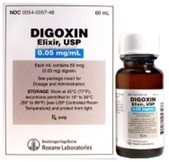
A nurse is preparing to administer digoxin 7.5 mcg/kg/day PO daily to a school-age child who weighs 52 lb. Available is digoxin elixir 50 mcg/mL. How many mL should the nurse administer per dose? (Round the answer to the nearest tenth. Use a leading zero if it applies. Do not use a trailing zero.)
Full Explanation
First, we need to convert the child's weight from pounds to kilograms.
Since there are approximately 2.20462 pounds in 1 kilogram, 52 pounds is equivalent to 52/2.20462 =
23.587 kilograms.
The prescribed dose of digoxin is 7.5 mcg/kg/day, so for a child who weighs 23.587 kg, the total daily dose is 7.5 * 23.587 = 176.9 mcg/day.
Since the medication is available as a 50 mcg/mL elixir, the nurse should administer 176.9/50 = 3.538 mL/day.
Since the medication is to be administered once daily, the nurse should administer 3.538 mL per dose. Answer: 3.5