
Nursing practice questions with comprehensive rationales
NurseDive Free Nursing Practice Question
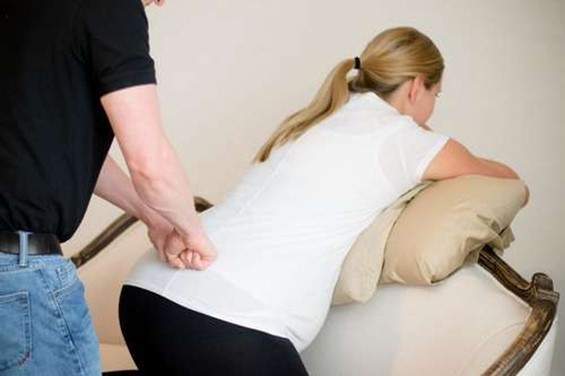
A nurse is teaching a client and her partner about the technique of counterpressure during labor.
Which of the following statements by the nurse is appropriate?
A. "Your partner will apply continuous, firm pressure between your thumb and index finger.”
(A) "Your partner will apply continuous, firm pressure between your thumb and index finger": This statement is not appropriate for describing counterpressure during labor. Counterpressure typically involves applying pressure to areas such as the lower back or sacrum, not between the thumb and index finger.
B. "Your partner will apply pressure to the top of your uterus during contractions
(B) "Your partner will apply pressure to the top of your uterus during contractions": This statement is not appropriate. Applying pressure to the top of the uterus during contractions could be harmful and is not recommended as a counterpressure technique during labor. Counterpressure is generally applied to the lower back or hips to alleviate pain.
C. "Your partner will apply steady pressure with a tennis ball to your finger.”
(C) "Your partner will apply steady pressure with a tennis ball to your finger": This statement is not correct. Counterpressure during labor involves applying pressure to the lower back or hips, not to the fingers. A tennis ball may be used, but it is applied to the lower back or sacral area, not the fingers.
D. "Your partner will apply upward pressure on you.”
(D) "Your partner will apply upward pressure on you": This statement is appropriate. During labor, counterpressure is often applied by the partner to the lower back or hips, pressing upward or in a direction that helps alleviate the pain caused by contractions, particularly in cases of back labor. This technique can help relieve discomfort by counteracting the pressure from the baby's head against the mother's spine.
This question is an excerpt from Nurse Dive's nursing test bank - ATI RN Maternal Newborn 2019 with NGN Proctored Exam. Take the full exam now
Full Explanation
Answer: D
Rationale:
(A) "Your partner will apply continuous, firm pressure between your thumb and index finger": This statement is not appropriate for describing counterpressure during labor. Counterpressure typically involves applying pressure to areas such as the lower back or sacrum, not between the thumb and index finger.
(B) "Your partner will apply pressure to the top of your uterus during contractions": This statement is not appropriate. Applying pressure to the top of the uterus during contractions could be harmful and is not recommended as a counterpressure technique during labor. Counterpressure is generally applied to the lower back or hips to alleviate pain.
(C) "Your partner will apply steady pressure with a tennis ball to your finger": This statement is not correct. Counterpressure during labor involves applying pressure to the lower back or hips, not to the fingers. A tennis ball may be used, but it is applied to the lower back or sacral area, not the fingers.
(D) "Your partner will apply upward pressure on you": This statement is appropriate. During labor, counterpressure is often applied by the partner to the lower back or hips, pressing upward or in a direction that helps alleviate the pain caused by contractions, particularly in cases of back labor. This technique can help relieve discomfort by counteracting the pressure from the baby's head against the mother's spine.
Similar Questions
A nurse is providing dietary teaching to a client who is at 32 weeks of gestation and has cholelithiasis.
Which of the following foods should the nurse recommend for the client to include in her diet?
A. Baked chicken.
Baked chicken is a food that the nurse should recommend for a client who is at 32 weeks of gestation and has cholelithiasis to include in her diet. Eating healthy fats, like those found in lean meats such as chicken, can help the gallbladder contract and empty on a regular basis.
B. French fries.
Choice B is incorrect because French fries are not a food that the nurse should recommend for a client who is at 32 weeks of gestation and has cholelithiasis to include in her diet. Unhealthy fats, like those often found in fried foods, should be avoided.
C. Whole milk.
Choice C is incorrect because whole milk is not a food that the nurse should recommend for a client who is at 32 weeks of gestation and has cholelithiasis to include in her diet. Unhealthy fats, like those often found in whole milk, should be avoided.
D. Bacon cheeseburger.
Choice D is incorrect because a bacon cheeseburger is not a food that the nurse should recommend for a client who is at 32 weeks of gestation and has cholelithiasis to include in her diet. Unhealthy fats, like those often found in bacon and cheeseburgers, should be avoided.
Full Explanation
Baked chicken is a food that the nurse should recommend for a client who is at
32 weeks of gestation and has cholelithiasis to include in her diet.
Eating healthy fats, like those found in lean meats such as chicken, can help the gallbladder contract and empty on a regular basis.

Choice B is incorrect because French fries are not a food that the nurse should recommend for a client who is at 32 weeks of gestation and has cholelithiasis to include in her diet.
Unhealthy fats, like those often found in fried foods, should be avoided.
Choice C is incorrect because whole milk is not a food that the nurse should recommend for a client who is at 32 weeks of gestation and has cholelithiasis to include in her diet.
Unhealthy fats, like those often found in whole milk, should be avoided.
Choice D is incorrect because a bacon cheeseburger is not a food that the nurse should recommend for a client who is at 32 weeks of gestation and has cholelithiasis to include in her diet.
Unhealthy fats, like those often found in bacon and cheeseburgers, should be avoided.
A nurse is providing discharge instructions to a client who is 24 hours postpartum and has decided not to breastfeed.
Which of the following instructions should the nurse include in the teaching?
A. "Apply ice packs to your breasts using a 15 minutes on, 45 minutes off schedule.”
“Apply ice packs to your breasts using a 15 minutes on, 45 minutes off schedule.” This can help reduce swelling and relieve discomfort from engorgement.
B. "Shower daily, allowing warm water to run directly over your breasts.”
Choice B is incorrect because warm water can increase blood flow and may worsen engorgement.
C. "Wear a loose-fitting nonbinding bra for 72 hours.”
Choice C is incorrect because a supportive bra can help reduce discomfort from engorgement.
D. "Pump your breasts twice daily to relieve discomfort from engorgement.”
Choice D is incorrect because pumping can stimulate milk production and may worsen engorgement.
Full Explanation
“Apply ice packs to your breasts using a 15 minutes on, 45 minutes off schedule.”
This can help reduce swelling and relieve discomfort from engorgement.

Choice B is incorrect because warm water can increase blood flow and may worsen engorgement.
Choice C is incorrect because a supportive bra can help reduce discomfort from engorgement.
Choice D is incorrect because pumping can stimulate milk production and may worsen engorgement.
A nurse is performing a heel stick on a newborn. Which of the following actions should the nurse take?
A. Puncture the heel on the inner aspect of the foot.
Choice A is incorrect because the heel should be punctured on the outer aspect of the foot to avoid damaging the calcaneus bone.
B. Use an automatic puncture device on the heel.
“Use an automatic puncture device on the heel.” This is the most common and minimally invasive method to draw capillary blood from an infant for medical testing.
C. Cleanse the newborn's heel with an alcohol swab after the procedure.
Choice C is incorrect because the heel should be cleansed with an alcohol swab before, not after, the procedure.
D. Place an ice pack on the newborn's heel 5 min before the procedure.
Choice D is incorrect because there is no need to place an ice pack on the newborn’s heel before the procedure.
Full Explanation
“Use an automatic puncture device on the heel.” This is the most common and minimally invasive method to draw capillary blood from an infant for medical testing.
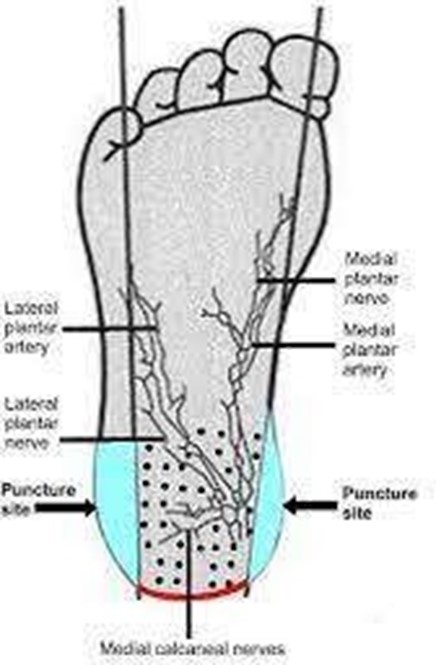
Choice A is incorrect because the heel should be punctured on the outer aspect of the foot to avoid damaging the calcaneus bone.
Choice C is incorrect because the heel should be cleansed with an alcohol swab
before, not after, the procedure.
Choice D is incorrect because there is no need to place an ice pack on the newborn’s heel before the procedure.