
Nursing practice questions with comprehensive rationales
NurseDive Free Nursing Practice Question
A nurse is teaching a client who has a family history of pancreatic cancer about manifestations associated with the disease. Which of the following findings should the nurse include?
A. Asterixis
Asterixis is a hand-flapping tremor that can be associated with hepatic encephalopathy, not pancreatic cancer.
B. Weight gain
Weight gain is not typically associated with pancreatic cancer and may not be a relevant manifestation to include.
C. Abdominal pain
Abdominal pain is a common manifestation of pancreatic cancer and should be included in the teaching.
D. Constipation
Constipation is not typically associated with pancreatic cancer and may not be a relevant manifestation to include.
This question is an excerpt from Nurse Dive's nursing test bank - RN ati Concept-based assessment level proctored exam. Take the full exam now
Full Explanation
Choice A rationale:
Asterixis is a hand-flapping tremor that can be associated with hepatic encephalopathy, not pancreatic cancer.
Choice B rationale:
Weight gain is not typically associated with pancreatic cancer and may not be a relevant manifestation to include.
Choice C rationale:
Abdominal pain is a common manifestation of pancreatic cancer and should be included in the teaching.
Choice D rationale:
Constipation is not typically associated with pancreatic cancer and may not be a relevant manifestation to include.
Similar Questions
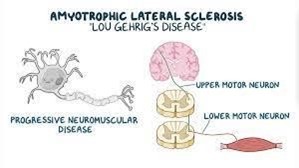
A nurse is teaching a client who has amyotrophic lateral sclerosis (ALS) about the end stages of the disease process. Which of the following information should the nurse include in the teaching?
A. "You might wear splints over affected joints while you are sleeping."
Wearing splints over affected joints while sleeping is a strategy to prevent contractures, which are common in ALS.
B. "You will be given dexamethasone to treat muscle atrophy."
Dexamethasone is not used to treat muscle atrophy in ALS.
C. "You might require a machine to keep your airway open.
As ALS progresses, clients may lose the ability to control their respiratory muscles, and a machine such as a ventilator may be required to assist with breathing.
D. "You will receive nutrition through a central venous access device.
Nutrition through a central venous access device is not a standard intervention for ALS, as the focus is on preserving the client's ability to eat and swallow for as long as possible.
Full Explanation
Choice A rationale:
Wearing splints over affected joints while sleeping is a strategy to prevent contractures, which are common in ALS.
Choice B rationale:
Dexamethasone is not used to treat muscle atrophy in ALS.
Choice C rationale:
As ALS progresses, clients may lose the ability to control their respiratory muscles, and a machine such as a ventilator may be required to assist with breathing.
Choice D rationale:
Nutrition through a central venous access device is not a standard intervention for ALS, as the focus is on preserving the client's ability to eat and swallow for as long as possible.
A nurse is caring for a newly admitted client who has schizophrenia. Which of the following actions is the nurse's priority?
A. Determine if the client is experiencing command hallucinations.
Assessing for the presence of command hallucinations is a priority, as they can pose a risk to the client's safety and the safety of others.
B. Arrange for the client to have consistent staff assignments.
Consistent staff assignments can be important for clients with schizophrenia, but immediate safety concerns should take precedence.
C. Administer lorazepam to the client.
Administering medication is not the priority action unless there is a specific reason to do so based on the assessment.
D. Use the client's name when talking to him.
Using the client's name is respectful and helpful, but it is not the priority action in this scenario.
Full Explanation
Choice A rationale:
Assessing for the presence of command hallucinations is a priority, as they can pose a risk to the client's safety and the safety of others.
Choice B rationale:
Consistent staff assignments can be important for clients with schizophrenia, but immediate safety concerns should take precedence.
Choice C rationale:
Administering medication is not the priority action unless there is a specific reason to do so based on the assessment.
Choice D rationale:
Using the client's name is respectful and helpful, but it is not the priority action in this scenario.
A nurse is reviewing the laboratory report for a client who has acute pancreatitis. The nurse should identify that which of the following findings indicates an improvement in the client's condition?
A. Increased serum amylase
Increased serum amylase is a common finding in acute pancreatitis, and its decrease would be a positive sign. However, lipase is a more specific marker for pancreatic injury.
B. Increased C-reactive protein
Increased C-reactive protein is a marker of inflammation and would not necessarily indicate improvement in pancreatitis.
C. Decreased serum lipase
Decreased serum lipase indicates improvement in the pancreatic injury and is a positive sign.
D. Decreased platelets
Decreased platelets would not specifically indicate improvement in acute pancreatitis.
Full Explanation
Choice A rationale:
Increased serum amylase is a common finding in acute pancreatitis, and its decrease would be a positive sign. However, lipase is a more specific marker for pancreatic injury.
Choice B rationale:
Increased C-reactive protein is a marker of inflammation and would not necessarily indicate improvement in pancreatitis.
Choice C rationale:
Decreased serum lipase indicates improvement in the pancreatic injury and is a positive sign.
Choice D rationale:
Decreased platelets would not specifically indicate improvement in acute pancreatitis.