
Nursing practice questions with comprehensive rationales
NurseDive Free Nursing Practice Question
A nurse is teaching a client who has a new prescription for total parenteral nutrition through a central line. Which of the following information should the nurse include in the teaching?
A. "I will change your IV tubing once every 48 hours."
IV tubing for total parenteral nutrition should be changed every 24 hours to prevent infection.
B. "Abdominal distention is an expected effect of this therapy."
Abdominal distention is not an expected effect of total parenteral nutrition. It could indicate a complication such as fluid overload or bowel obstruction.
C. "I will need to check your gastric residual before administering feedings."
Gastric residual is not relevant for total parenteral nutrition, which bypasses the gastrointestinal tract.
D. "I will need to measure your weight daily."
Weight measurement is an important indicator of fluid balance and nutritional status for clients receiving total parenteral nutrition.
This question is an excerpt from Nurse Dive's nursing test bank - RN Comprehensive Online Practice 2019 B with NGN Proctored Exam. Take the full exam now
Full Explanation
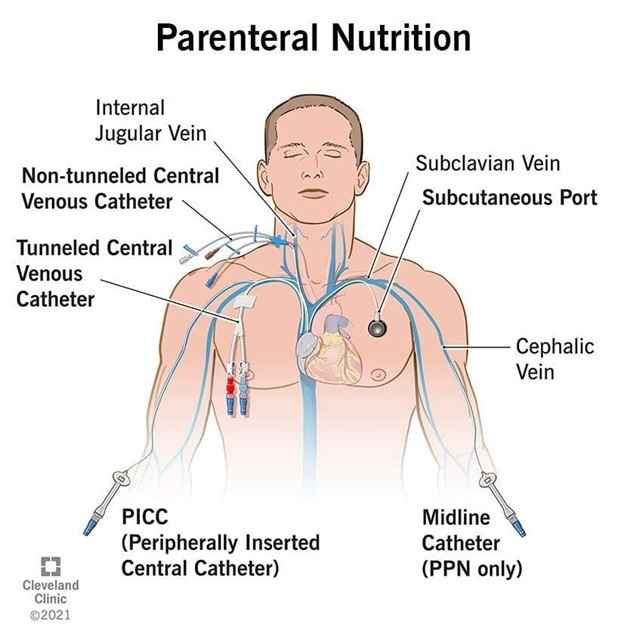
- A is incorrect because IV tubing for total parenteral nutrition should be changed every 24 hours to prevent infection.
- B is incorrect because abdominal distention is not an expected effect of total parenteral nutrition. It could indicate a complication such as fluid overload or bowel obstruction.
- C is incorrect because gastric residual is not relevant for total parenteral nutrition, which bypasses the gastrointestinal tract.
- D is correct because weight measurement is an important indicator of fluid balance and nutritional status for clients receiving total parenteral nutrition.
Similar Questions
A nurse in an emergency department is caring for a child who has a fever and fluid-filled vesicles on the trunk and extremities. Which of the following interventions should the nurse identify as the priority?
A. Apply topical calamine lotion.
Applying topical calamine lotion may help soothe the itching and discomfort caused by the vesicles, but it is not the priority intervention, as it does not prevent infection transmission or treat the underlying cause of the fever.
B. Encourage oral fluids.
Encouraging oral fluids is an important intervention for a child who has a fever, as it helps prevent dehydration and electrolyte imbalance. However, it is not the priority intervention, as it does not address the risk of infection transmission to other clients or staff.
C. Administer acetaminophen as an antipyretic
Administering acetaminophen as an antipyretic may help reduce the fever and provide symptomatic relief for the child, but it is not the priority intervention, as it does not prevent infection transmission or treat the underlying cause of the fever.
D. Initiate transmission-based precautions
Initiating transmission-based precautions is the priority intervention, as it protects other clients and staff from exposure to the infectious agent that causes the vesicles and fever. The nurse should wear gloves, gown, mask, and eye protection when caring for the child, and place them in a private room or cohort them with other clients who have similar symptoms.
Full Explanation
Initiate transmission-based precautions.
Rationale:
- B- Encouraging oral fluids is an important intervention for a child who has a fever, as it helps prevent dehydration and electrolyte imbalance. However, it is not the priority intervention, as it does not address the risk of infection transmission to other clients or staff.
- A - Applying topical calamine lotion may help soothe the itching and discomfort caused by the vesicles, but it is not the priority intervention, as it does not prevent infection transmission or treat the underlying cause of the fever.
- C - Administering acetaminophen as an antipyretic may help reduce the fever and provide symptomatic relief for the child, but it is not the priority intervention, as it does not prevent infection transmission or treat the underlying cause of the fever.
- D - Initiating transmission-based precautions is the priority intervention, as it protects other clients and staff from exposure to the infectious agent that causes the vesicles and fever. The nurse should wear gloves, gown, mask, and eye protection when caring for the child, and place them in a private room or cohort them with other clients who have similar symptoms.
A nurse manager is preparing an educational session for nursing staff about how to provide cost-effective care. Which of the following methods should the nurse include in the teaching?
A. Delegate non-nursing tasks to ancillary staff.
Delegating non-nursing tasks to ancillary staff allows nurses to focus on more complex and skilled tasks that require their expertise and judgment, thus improving efficiency and quality of care.
B. Stock client rooms with extra supplies.
Stocking client rooms with extra supplies increases waste and costs, as well as clutter and infection risk.
C. Assign dedicated equipment to each client's room.
Assigning dedicated equipment to each client's room reduces availability and accessibility of equipment for other clients, as well as increases maintenance and cleaning costs.
D. Change continuous IV infusion tubing every 24 hr.
Changing continuous IV infusion tubing every 24 hr is not cost-effective, as it does not reduce the risk of infection significantly compared to changing it every 72 hr, according to current evidence-based practice guidelines.
Full Explanation
- A is correct because delegating non-nursing tasks to ancillary staff allows nurses to focus on more complex and skilled tasks that require their expertise and judgment, thus improving efficiency and quality of care.
- B is incorrect because stocking client rooms with extra supplies increases waste and costs, as well as clutter and infection risk.
- C is incorrect because assigning dedicated equipment to each client's room reduces availability and accessibility of equipment for other clients, as well as increases maintenance and cleaning costs.
- D is incorrect because changing continuous IV infusion tubing every 24 hr is not cost-effective, as it does not reduce the risk of infection significantly compared to changing it every 72 hr, according to current evidence-based practice guidelines.
A nurse is caring for a client who is taking valproic acid for seizure control. For which of the following adverse effects should the nurse monitor and report?
A. Weight loss
Weight loss is not a common or serious adverse effect of valproic acid. Valproic acid can cause weight gain, not weight loss.
B. Jaundice
Jaundice is a sign of liver damage, which is a serious and potentially fatal adverse effect of valproic acid. Valproic acid can impair fatty acid metabolism and mitochondrial function, leading to hepatotoxicity and steatosis. The nurse should monitor the client's liver function tests and report any signs of jaundice, such as yellowing of the skin or eyes, dark urine, or clay-colored stools .
C. Bradycardia
Bradycardia is not a common or serious adverse effect of valproic acid. Valproic acid can cause cardiac arrhythmias, but they are usually tachycardic, not bradycardic.
D. Polyuria
Polyuria is not a common or serious adverse effect of valproic acid. Valproic acid can cause hypernatremia and hypocalcemia, which can affect urine output, but polyuria is not a specific symptom of these electrolyte imbalances.
Full Explanation
Jaundice.
Rationale:
- A. Weight loss is not a common or serious adverse effect of valproic acid. Valproic acid can cause weight gain, not weight loss.
- B. Jaundice is a sign of liver damage, which is a serious and potentially fatal adverse effect of valproic acid. Valproic acid can impair fatty acid metabolism and mitochondrial function, leading to hepatotoxicity and steatosis. The nurse should monitor the client's liver function tests and report any signs of jaundice, such as yellowing of the skin or eyes, dark urine, or clay-colored stools .
- C. Bradycardia is not a common or serious adverse effect of valproic acid. Valproic acid can cause cardiac arrhythmias, but they are usually tachycardic, not bradycardic.
- D. Polyuria is not a common or serious adverse effect of valproic acid. Valproic acid can cause hypernatremia and hypocalcemia, which can affect urine output, but polyuria is not a specific symptom of these electrolyte imbalances.