Nursing practice questions with comprehensive rationales
NurseDive Free Nursing Practice Question
A nurse is teaching a client who has a spinal cord injury about prevention of atelectasis. Which of the following statements should the nurse include in the teaching?
A. "Do panting breaths several times a day."
"Do panting breaths several times a day." This statement is inappropriate. Panting breaths involve rapid, shallow breathing similar to what a dog does when it's hot. This technique may not be as effective in clearing mucus or promoting lung expansion compared to deep coughing. While panting breaths may have some benefits in promoting ventilation and increasing lung volume, they may not be as targeted or efficient in preventing atelectasis as other techniques such as deep coughing
B. "Perform deep coughing twice a day."
"Perform deep coughing twice a day." This statement is correct. Deep coughing helps clear mucus and secretions from the airways, reducing the risk of blockages that can lead to atelectasis. It promotes airway clearance and lung expansion, maintaining respiratory function. Regular deep coughing is particularly important for individuals with spinal cord injuries, as they may have impaired cough reflexes or weakened respiratory muscles, increasing their vulnerability to atelectasis.
C. "Strengthen your chest muscles by performing therapy exercises."
"Strengthen your chest muscles by performing therapy exercises." This statement is incorrect. While strengthening chest muscles through therapy exercises can be beneficial for overall respiratory health, it may not directly target the prevention of atelectasis. Atelectasis is primarily caused by the collapse of lung tissue due to mucus buildup or reduced lung expansion, rather than weakness of chest muscles. While therapy exercises may have other benefits such as improving respiratory function and endurance, they may not be the most effective strategy for preventing atelectasis in individuals with spinal cord injuries.
D. "Get plenty of rest throughout the day."
"Get plenty of rest throughout the day." This statement is incorrect. Rest is important for overall health and well-being, but it may not directly contribute to the prevention of atelectasis. Inactivity and prolonged bed rest can actually increase the risk of atelectasis by reducing lung expansion and promoting mucus accumulation in the airways. While adequate rest is necessary for recovery and energy conservation, it should be balanced with activities that promote lung expansion and airway clearance, such as deep breathing exercises and mobility.
This question is an excerpt from Nurse Dive's nursing test bank - Ati Medical Surgical Proctored Exam 1. Take the full exam now
Full Explanation
Choice A Reason:
"Do panting breaths several times a day." This statement is inappropriate. Panting breaths involve rapid, shallow breathing similar to what a dog does when it's hot. This technique may not be as effective in clearing mucus or promoting lung expansion compared to deep coughing. While panting breaths may have some benefits in promoting ventilation and increasing lung volume, they may not be as targeted or efficient in preventing atelectasis as other techniques such as deep coughing
Choice B Reason:
"Perform deep coughing twice a day." This statement is correct. Deep coughing helps clear mucus and secretions from the airways, reducing the risk of blockages that can lead to atelectasis. It promotes airway clearance and lung expansion, maintaining respiratory function. Regular deep coughing is particularly important for individuals with spinal cord injuries, as they may have impaired cough reflexes or weakened respiratory muscles, increasing their vulnerability to atelectasis.
Choice C Reason:
"Strengthen your chest muscles by performing therapy exercises." This statement is incorrect. While strengthening chest muscles through therapy exercises can be beneficial for overall respiratory health, it may not directly target the prevention of atelectasis. Atelectasis is primarily caused by the collapse of lung tissue due to mucus buildup or reduced lung expansion, rather than weakness of chest muscles. While therapy exercises may have other benefits such as improving respiratory function and endurance, they may not be the most effective strategy for preventing atelectasis in individuals with spinal cord injuries.
Choice D Reason:
"Get plenty of rest throughout the day." This statement is incorrect. Rest is important for overall health and well-being, but it may not directly contribute to the prevention of atelectasis. Inactivity and prolonged bed rest can actually increase the risk of atelectasis by reducing lung expansion and promoting mucus accumulation in the airways. While adequate rest is necessary for recovery and energy conservation, it should be balanced with activities that promote lung expansion and airway clearance, such as deep breathing exercises and mobility.
Similar Questions
A nurse is teaching a client who has a complete spinal cord injury about bowel and bladder management. Which of the following instructions should the nurse include in the teaching? (Select all that apply.)
(Select All that Apply.)
A. "It will be necessary to take a stool softener to keep you from becoming constipated."
"It will be necessary to take a stool softener to keep you from becoming constipated." This instruction is correct. Individuals with spinal cord injuries often experience bowel dysfunction, including constipation, due to decreased mobility and impaired bowel function. Stool softeners can help soften the stool and facilitate easier bowel movements, reducing the risk of constipation and associated complications such as fecal impaction.
B. "Suprapubic catheterization might have to be done if you are unable to catheterize yourself."
"Suprapubic catheterization might have to be done if you are unable to catheterize yourself." This instruction is correct. Suprapubic catheterization involves the insertion of a catheter through the abdominal wall directly into the bladder to drain urine. It may be necessary if the client is unable to perform intermittent catheterization independently or if other methods of bladder management are ineffective or contraindicated.
C. "You will need to learn how to do self-intermittent catheterization to drain your bladder."
"You will need to learn how to do self-intermittent catheterization to drain your bladder." This instruction is correct. Self-intermittent catheterization involves inserting a catheter into the bladder to drain urine at regular intervals. It is a commonly used method of bladder management for individuals with spinal cord injuries to prevent urinary retention and bladder distention.
D. "Do not drink fluids excessively as this may cause diarrhea."
"Do not drink fluids excessively as this may cause diarrhea," is not typically included in bowel and bladder management instructions for individuals with spinal cord injuries. Hydration is important for overall health and may help prevent complications such as urinary tract infections, kidney stones, and constipation. Therefore, option D is not appropriate for inclusion in the teaching for a client with a complete spinal cord injury.
E. "To achieve a bowel movement, dally digital stimulation will need to be done."
"To achieve a bowel movement, daily digital stimulation will need to be done." This instruction is incorrect. Digital stimulation involves gently stimulating the rectum with a lubricated gloved finger to initiate a bowel movement. It can help individuals with spinal cord injuries who have neurogenic bowel dysfunction to stimulate bowel motility and facilitate bowel evacuation.
Full Explanation
Choice A Reason:
"It will be necessary to take a stool softener to keep you from becoming constipated." This instruction is correct. Individuals with spinal cord injuries often experience bowel dysfunction, including constipation, due to decreased mobility and impaired bowel function. Stool softeners can help soften the stool and facilitate easier bowel movements, reducing the risk of constipation and associated complications such as fecal impaction.
Choice B Reason:
"Suprapubic catheterization might have to be done if you are unable to catheterize yourself." This instruction is correct. Suprapubic catheterization involves the insertion of a catheter through the abdominal wall directly into the bladder to drain urine. It may be necessary if the client is unable to perform intermittent catheterization independently or if other methods of bladder management are ineffective or contraindicated.
Choice C Reason:
"You will need to learn how to do self-intermittent catheterization to drain your bladder." This instruction is correct. Self-intermittent catheterization involves inserting a catheter into the bladder to drain urine at regular intervals. It is a commonly used method of bladder management for individuals with spinal cord injuries to prevent urinary retention and bladder distention.
Choice D Reason:
"Do not drink fluids excessively as this may cause diarrhea," is not typically included in bowel and bladder management instructions for individuals with spinal cord injuries. Hydration is important for overall health and may help prevent complications such as urinary tract infections, kidney stones, and constipation. Therefore, option D is not appropriate for inclusion in the teaching for a client with a complete spinal cord injury.
Choice E Reason:
"To achieve a bowel movement, daily digital stimulation will need to be done." This instruction is incorrect. Digital stimulation involves gently stimulating the rectum with a lubricated gloved finger to initiate a bowel movement. It can help individuals with spinal cord injuries who have neurogenic bowel dysfunction to stimulate bowel motility and facilitate bowel evacuation.
Which of the following could the nurse expect to observe in an older adult client who has a pneumothorax?
A. Higher oxygen saturations of 98% to 99%
Higher oxygen saturations of 98% to 99% is inappropriate. A pneumothorax involves the presence of air in the pleural space, which can compromise lung function and gas exchange. This compromised lung function typically leads to decreased oxygenation of the blood, resulting in lower oxygen saturations rather than higher saturations.
B. Lower oxygen saturations of 93% to 94%
Lower oxygen saturations of 93% to 94% is appropriate. A pneumothorax disrupts the normal exchange of oxygen and carbon dioxide in the lungs due to partial or complete lung collapse. As a result, the affected lung is unable to adequately oxygenate the blood, leading to lower oxygen saturations, which are indicative of hypoxemia.
C. Lower energy expenditure
Lower energy expenditure is inappropriate. Energy expenditure is not typically affected by a pneumothorax. While the discomfort and respiratory distress associated with a pneumothorax may cause the individual to limit physical activity, there is no direct impact on overall energy expenditure.
D. Increased lung capacity
Increased lung capacity is inappropriate. A pneumothorax results in partial or complete collapse of the affected lung, reducing lung capacity rather than increasing it. The presence of air in the pleural space creates positive pressure, which can compress the lung and decrease its ability to expand fully during inhalation.
Full Explanation
Choice A Reason:
Higher oxygen saturations of 98% to 99% is inappropriate. A pneumothorax involves the presence of air in the pleural space, which can compromise lung function and gas exchange. This compromised lung function typically leads to decreased oxygenation of the blood, resulting in lower oxygen saturations rather than higher saturations.
Choice B Reason:
Lower oxygen saturations of 93% to 94% is appropriate. A pneumothorax disrupts the normal exchange of oxygen and carbon dioxide in the lungs due to partial or complete lung collapse. As a result, the affected lung is unable to adequately oxygenate the blood, leading to lower oxygen saturations, which are indicative of hypoxemia.
Choice C Reason:
Lower energy expenditure is inappropriate. Energy expenditure is not typically affected by a pneumothorax. While the discomfort and respiratory distress associated with a pneumothorax may cause the individual to limit physical activity, there is no direct impact on overall energy expenditure.
Choice D Reason:
Increased lung capacity is inappropriate. A pneumothorax results in partial or complete collapse of the affected lung, reducing lung capacity rather than increasing it. The presence of air in the pleural space creates positive pressure, which can compress the lung and decrease its ability to expand fully during inhalation.
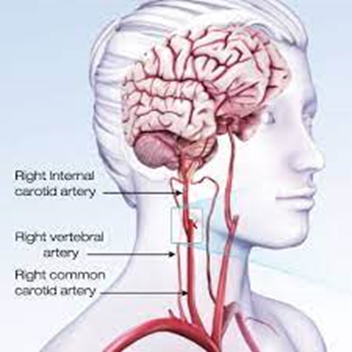
A nurse is caring for a client in the emergency department who has a preliminary diagnosis of a transient ischemic attack (TIA). Which of the following diagnostic testing should the nurse anticipate the provider to prescribe?
A. Prothrombin time (PT)
Prothrombin time (PT) is a laboratory test that measures the time it takes for blood to clot is incorrect. While PT may be part of a comprehensive evaluation in some cases, it is not typically the initial diagnostic test performed for a TIA. A TIA is caused by a temporary disruption of blood flow to the brain, often due to an embolus or transient blockage in a cerebral artery, rather than a primary disorder of blood clotting.
B. Complete blood count (CBC)
Complete blood count (CBC) is incorrect. A complete blood count (CBC) is a common laboratory test that evaluates the cellular components of the blood, including red blood cells, white blood cells, and platelets. While CBC can provide valuable information about hematological conditions such as anemia or thrombocytosis, it is not specific to diagnosing the cause of a TIA. TIA is primarily a vascular event related to transient ischemia in the brain rather than a disorder of blood cell counts.
C. Computerized tomography angiography (CTA)
Computerized tomography angiography (CTA) is appropriate. CTA is a non-invasive imaging test that combines computed tomography (CT) scanning with contrast dye to visualize blood vessels throughout the body, including those in the brain. CTA can help identify any blockages, narrowing, or abnormalities in the blood vessels supplying the brain, which may be contributing to the TIA. It provides detailed images of the blood vessels' structure and can help guide further management and treatment decisions.
D. Transesophageal echocardiogram (TEE)
Transesophageal echocardiogram (TEE) is inappropriate. Transesophageal echocardiogram (TEE) is an imaging test that provides detailed images of the heart and major blood vessels using sound waves. While TEE may be indicated in some cases of TIA to evaluate for potential cardiac sources of emboli (blood clots), such as atrial fibrillation or cardiac valve abnormalities, it is not typically the first-line diagnostic test performed in the emergency department setting for evaluating a TIA. Initial imaging studies such as CTA or magnetic resonance imaging (MRI) of the brain are usually prioritized to assess for acute changes in cerebral blood flow and potential causes of the TIA.
Full Explanation
Choice A Reason:
Prothrombin time (PT) is a laboratory test that measures the time it takes for blood to clot is incorrect. While PT may be part of a comprehensive evaluation in some cases, it is not typically the initial diagnostic test performed for a TIA. A TIA is caused by a temporary disruption of blood flow to the brain, often due to an embolus or transient blockage in a cerebral artery, rather than a primary disorder of blood clotting.
Choice B Reason:
Complete blood count (CBC) is incorrect. A complete blood count (CBC) is a common laboratory test that evaluates the cellular components of the blood, including red blood cells, white blood cells, and platelets. While CBC can provide valuable information about hematological conditions such as anemia or thrombocytosis, it is not specific to diagnosing the cause of a TIA. TIA is primarily a vascular event related to transient ischemia in the brain rather than a disorder of blood cell counts.
Choice C Reason:
Computerized tomography angiography (CTA) is appropriate. CTA is a non-invasive imaging test that combines computed tomography (CT) scanning with contrast dye to visualize blood vessels throughout the body, including those in the brain. CTA can help identify any blockages, narrowing, or abnormalities in the blood vessels supplying the brain, which may be contributing to the TIA. It provides detailed images of the blood vessels' structure and can help guide further management and treatment decisions.
Choice D Reason:
Transesophageal echocardiogram (TEE) is inappropriate. Transesophageal echocardiogram (TEE) is an imaging test that provides detailed images of the heart and major blood vessels using sound waves. While TEE may be indicated in some cases of TIA to evaluate for potential cardiac sources of emboli (blood clots), such as atrial fibrillation or cardiac valve abnormalities, it is not typically the first-line diagnostic test performed in the emergency department setting for evaluating a TIA. Initial imaging studies such as CTA or magnetic resonance imaging (MRI) of the brain are usually prioritized to assess for acute changes in cerebral blood flow and potential causes of the TIA.