
Nursing practice questions with comprehensive rationales
NurseDive Free Nursing Practice Question
A nurse is teaching a client who is about to undergo a bowel resection about advance directives.
A. "You are required to sign advance directives prior to having surgery."
Choice A is wrong because signing advance directives is not a requirement for undergoing surgery.
B. "Your provider must sign the advance directives before surgery."
Choice B is wrong because the provider does not need to sign the advance directives.
C. "You will receive written information about advance directives prior to signing."
This statement indicates that the client will be provided with information about advance directives before making a decision. Advance directives are legal documents that allow individuals to communicate their wishes for medical treatment in the event that they are unable to make decisions for themselves.
D. "Your partner must be present when you sign the advance directives."
Choice D is wrong because the presence of a partner is not required when signing advance directives.
This question is an excerpt from Nurse Dive's nursing test bank - ATI RN Fundamentals 2019 with NGN Proctored Exam. Take the full exam now
Full Explanation
This statement indicates that the client will be provided with information about advance directives before making a decision.
Advance directives are legal documents that allow individuals to communicate their wishes for medical treatment in the event that they are unable to make decisions for themselves.
Choice A is wrong because signing advance directives is not a requirement for undergoing surgery.
Choice B is wrong because the provider does not need to sign the advance directives.
Choice D is wrong because the presence of a partner is not required when signing advance directives.
Similar Questions
A nurse is preparing to obtain informed consent from a client who speaks a different language than the nurse and is scheduled for surgery.
Which of the following actions should the nurse take?
A. Have the client nod to indicate understanding.
Choice A is wrong because nodding alone is not sufficient to indicate understanding.
B. Recommend an interpreter who is the same gender as the client.
This statement indicates that the nurse should take steps to ensure effective communication with the client by recommending an interpreter who is the same gender as the client. This can help to facilitate understanding and comfort during the informed consent process.
C. Use medical terminology when explaining the procedure.
Choice C is wrong because using medical terminology can be confusing and may not facilitate understanding.
D. Address all questions to the interpreter.
Choice D is wrong because questions should be addressed directly to the client, with the interpreter facilitating communication.
Full Explanation
This statement indicates that the nurse should take steps to ensure effective communication with the client by recommending an interpreter who is the same gender as the client.
This can help to facilitate understanding and comfort during the informed consent process.

Choice A is wrong because nodding alone is not sufficient to indicate understanding.
Choice C is wrong because using medical terminology can be confusing and may not facilitate understanding.
Choice D is wrong because questions should be addressed directly to the client, with the interpreter facilitating communication.
A nurse is assisting in the use of a fracture bedpan for a client who is immobile due to a cast.
Which of the following actions should the nurse take?
A. Place the shallow end of the fracture pan under the client's buttocks.
This statement indicates that the nurse should properly position the fracture bedpan to facilitate its use. The shallow end of the fracture bedpan should be placed under the client’s buttocks to provide support and comfort.
B. Hyperextend the client's back while the fracture pan is in place.
Choice B is wrong because hyperextending the client’s back can cause discomfort and may not facilitate the use of the fracture bedpan.
C. Encourage the client to try to defecate for 20 min while on the fracture pan.
Choice C is wrong because it is not necessary for the client to try to defecate for 20 minutes while on the fracture bedpan.
D. Keep the bed flat while the client is on the fracture pan.
Choice D is wrong because keeping the bed flat may not provide the most comfortable position for the client while using the fracture bedpan.
Full Explanation
This statement indicates that the nurse should properly position the fracture bedpan to facilitate its use.
The shallow end of the fracture bedpan should be placed under the client’s buttocks to provide support and comfort.
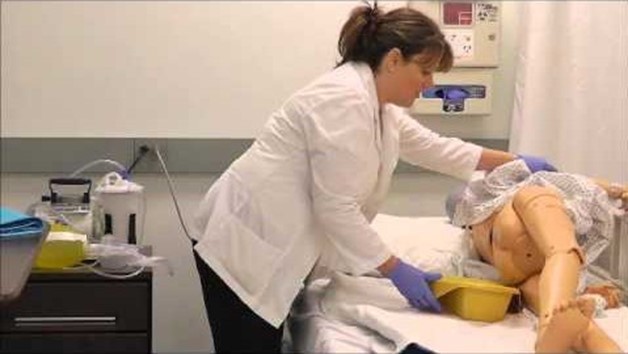
Choice B is wrong because hyperextending the client’s back can cause discomfort and may not facilitate the use of the fracture bedpan.
Choice C is wrong because it is not necessary for the client to try to defecate for 20 minutes while on the fracture bedpan.
Choice D is wrong because keeping the bed flat may not provide the most comfortable position for the client while using the fracture bedpan.
A nurse is preparing to administer medication to a client. Which of the following should the nurse use as a client identifier?
A. Room number.
Choice A is wrong because room numbers can change and may not accurately identify the client.
B. Age.
Choice B is wrong because age alone is not sufficient to identify a client.
C. Photograph.
This statement indicates that the nurse should use a photograph as a client identifier when administering medication. Using a photograph can help to ensure that the medication is being given to the correct client.
D. Bed number.
Choice D is wrong because bed numbers can change and may not accurately identify the client.
Full Explanation
This statement indicates that the nurse should use a photograph as a client identifier when administering medication.
Using a photograph can help to ensure that the medication is being given to the correct client.
Choice A is wrong because room numbers can change and may not accurately identify the client.
Choice B is wrong because age alone is not sufficient to identify a client.
Choice D is wrong because bed numbers can change and may not accurately identify the client.