
Nursing practice questions with comprehensive rationales
NurseDive Free Nursing Practice Question
A nurse is teaching a prenatal class about infection prevention at a community center.
Which of the following statements by a client indicates an understanding of the teaching
A. I should take antibiotics when I have a virus
is wrong because antibiotics are not effective against viruses and can cause adverse effects on the fetus. The nurse should teach the client to consult the provider before taking any medication during pregnancy.
B. I can visit my nephew who has chickenpox 5 days after the sores have crusted
This statement indicates an understanding of infection prevention because it demonstrates knowledge about the contagious period of chickenpox. Visiting someone with chickenpox after the sores have crusted is a safe practice, as the person is no longer contagious.
C. I should wash hands for 10 seconds with hot water
wrong because washing hands for 10 seconds with hot water is not sufficient to prevent infection. The nurse should teach the client to wash hands for at least 20 seconds with soap and warm water, especially after working in the garden where soil may contain harmful microorganisms.
D. I can clean my cat’s litter box during my pregnancy.”. Answer and explanation
Cleaning a cat's litter box during pregnancy is generally not recommended due to the risk of toxoplasmosis, a parasitic infection that can be transmitted through cat feces. Pregnant individuals are advised to have someone else handle cat litter or to use gloves and wash their hands thoroughly if they must do it themselves.
This question is an excerpt from Nurse Dive's nursing test bank - ATI Comprehensive Predictor 2023 Exit Proctored Exam A. Take the full exam now
Full Explanation
B) I can visit my nephew who has chickenpox 5 days after the sores have crusted.
This statement indicates an understanding of infection prevention because it demonstrates knowledge about the contagious period of chickenpox. Visiting someone with chickenpox after the sores have crusted is a safe practice, as the person is no longer contagious.
The other options represent misconceptions about infection prevention:
A) Taking antibiotics for a viral infection is not effective, as antibiotics are used to treat bacterial infections, not viruses.
C) This statement is identical to option B and is incorrect.
D) Cleaning a cat's litter box during pregnancy is generally not recommended due to the risk of toxoplasmosis, a parasitic infection that can be transmitted through cat feces. Pregnant individuals are advised to have someone else handle cat litter or to use gloves and wash their hands thoroughly if they must do it themselves.
Similar Questions
A nurse is caring for an adolescent who has hyperthermia.
Which of the following actions should the nurse take?
A. Cover the adolescent with a thermal blanket
wrong because covering the adolescent with a thermal blanket would increase the body temperature and worsen hyperthermia. The nurse should remove excess clothing and use cooling measures, such as fans, ice packs, or cool fluids.
B. Submerge the adolescent’s feet in ice water
is wrong because submerging the adolescent’s feet in ice water would cause vasoconstriction and shivering, which would reduce heat loss and increase heat production. The nurse should avoid using extreme cold or ice water to cool the body.
C. Initiate seizure precautions
Hyperthermia is a condition in which the body temperature is abnormally high, usually due to exposure to heat, infection, or certain medications. Hyperthermia can cause neurological complications, such as seizures, confusion, or coma. Therefore, the nurse should initiate seizure precautions for an adolescent who has hyperthermia to prevent injury and protect the airway.
D. Administer oral acetaminophen
is wrong because administering oral acetaminophen would not be effective for hyperthermia caused by non-infectious factors, such as heat exposure or medications. Acetaminophen lowers the body temperature by reducing the hypothalamic set point, which is not altered in hyperthermia. Additionally, oral medications may be difficult to swallow or absorb in a hyperthermic patient.
Full Explanation
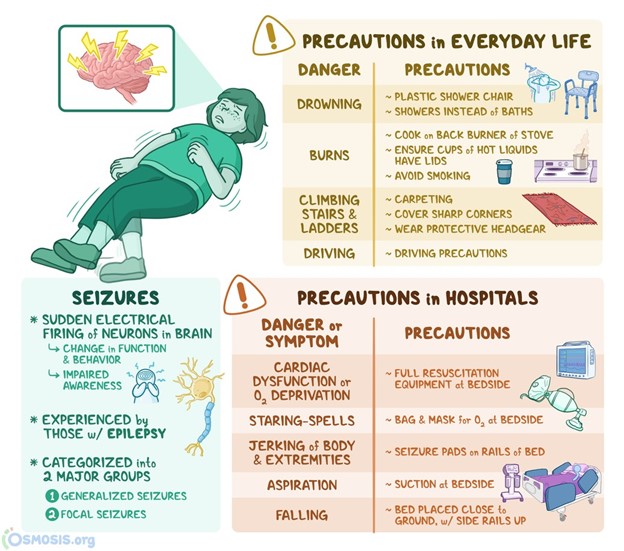
Hyperthermia is a condition in which the body temperature is abnormally high, usually due to exposure to heat, infection, or certain medications.
Hyperthermia can cause neurological complications, such as seizures, confusion, or coma. Therefore, the nurse should initiate seizure precautions for an adolescent who has hyperthermia to prevent injury and protect the airway.
Choice A is wrong because covering the adolescent with a thermal blanket would increase the body temperature and worsen hyperthermia. The nurse should remove excess clothing and use cooling measures, such as fans, ice packs, or cool fluids.
Choice B is wrong because submerging the adolescent’s feet in ice water would cause vasoconstriction and shivering, which would reduce heat loss and increase heat production. The nurse should avoid using extreme cold or ice water to cool the body.
Choice D is wrong because administering oral acetaminophen would not be effective for hyperthermia caused by non-infectious factors, such as heat exposure or medications.
Acetaminophen lowers the body temperature by reducing the hypothalamic set point, which is not altered in hyperthermia. Additionally, oral medications may be difficult to swallow or absorb in a hyperthermic patient.
Normal body temperature ranges from 36.5°C to 37.5°C (97.7°F to 99.5°F). Hyperthermia is defined as a body temperature above 38.5°C (101.3°F).
A nurse is preparing to insert an IV catheter for a client.
Which of the following actions should the nurse plan to take?
A. Select a site on the client’s dominant arm
is wrong because selecting a site on the client’s dominant arm can interfere with the client’s mobility and increase the risk of dislodging the catheter. The nurse should choose a site on the client’s non-dominant arm, preferably on the hand or forearm.
B. Apply a tourniquet below the venipuncture site
is wrong because applying a tourniquet below the venipuncture site will impede blood flow and make it harder to locate a suitable vein. The nurse should apply a tourniquet above the venipuncture site, about 10 to 15 cm from the insertion site.
C. Elevate the client’s arm prior to insertion
is wrong because elevating the client’s arm prior to insertion will decrease venous filling and make it harder to palpate a vein. The nurse should lower the client’s arm below the level of the heart to increase venous distension. Normal ranges for IV catheter size and insertion angle depend on several factors, such as the type and duration of therapy, the condition and size of the vein, and the age and preference of the client.
D. Choose a vein that is palpable and straight
This will facilitate the insertion of the catheter and reduce the risk of complications such as infiltration, phlebitis, or hematoma. A straight vein will also allow the catheter to be inserted up to the hub, which reduces the risk of contamination along the length of the catheter.
Full Explanation
The correct answer is choice D. The nurse should choose a vein that is palpable and straight for IV catheter insertion.
This will facilitate the insertion of the catheter and reduce the risk of complications such as infiltration, phlebitis, or hematoma. A straight vein will also allow the catheter to be inserted up to the hub, which reduces the risk of contamination along the length of the catheter.
Choice A is wrong because selecting a site on the client’s dominant arm can interfere with the client’s mobility and increase the risk of dislodging the catheter. The nurse should choose a site on the client’s non-dominant arm, preferably on the hand or forearm.
Choice B is wrong because applying a tourniquet below the venipuncture site will impede blood flow and make it harder to locate a suitable vein. The nurse should apply a tourniquet above the venipuncture site, about 10 to 15 cm from the insertion site.
Choice C is wrong because elevating the client’s arm prior to insertion will decrease venous filling and make it harder to palpate a vein. The nurse should lower the client’s arm below the level of the heart to increase venous distension.
Normal ranges for IV catheter size and insertion angle depend on several factors, such as the type and duration of therapy, the condition and size of the vein, and the age and preference of the client.
In general, smaller gauge catheters (20 to 24) are preferred for peripheral IV therapy, and larger gauge catheters (14 to 18) are used for rapid fluid administration or blood transfusion. The insertion angle can vary from 10 to 30 degrees, depending on the depth and location of the vein.
A nurse is providing discharge teaching to the partner of a client who has a tracheostomy.
Which of the following information should the nurse include in the teaching
A. How to change the nondisposable tracheostomy tube daily.
is wrong because the nondisposable tracheostomy tube does not need to be changed daily. It can be changed every 1 to 3 months, depending on the type of tube.
B. How to operate the portable suction machine.
The nurse should include this information in the teaching because suctioning is often needed to keep the tracheostomy tube and opening free from extra mucus and secretions that come from the lungs and tissue around the stoma. Suctioning can help prevent the tube from becoming plugged and improve breathing.
C. How to change the tracheostomy dressing using clean technique
because the tracheostomy dressing should be changed using sterile technique, not clean technique, to prevent infection.
D. How to secure the tracheostomy tube with ties at the back of the neck
the tracheostomy tube should not be secured with ties at the back of the neck. The ties should be fastened at the front or side of the neck, and they should be snug but not too tight.
Full Explanation
The correct answer is choice B. How to operate the portable suction machine. The nurse should include this information in the teaching because suctioning is often needed to keep the tracheostomy tube and opening free from extra mucus and secretions that come from the lungs and tissue around the stoma. Suctioning can help prevent the tube from becoming plugged and improve breathing.
Choice A is wrong because the nondisposable tracheostomy tube does not need to be changed daily. It can be changed every 1 to 3 months, depending on the type of tube.
Choice C is wrong because the tracheostomy dressing should be changed using sterile technique, not clean technique, to prevent infection.
Choice D is wrong because the tracheostomy tube should not be secured with ties at the back of the neck. The ties should be fastened at the front or side of the neck, and they should be snug but not too tight.