
Nursing practice questions with comprehensive rationales
NurseDive Free Nursing Practice Question
A nurse is using a bladder scanner to assess the bladder volume of a client with urinary frequency. In which position would the nurse place the client?
A. Sims’ position
Sims' position is a side-lying position with the lower leg flexed and the upper leg extended. It is not ideal for bladder scanning because it can compress the bladder and make it difficult to obtain an accurate reading. Additionally, in Sims' position, the bladder may not be fully accessible to the scanner, as it may be partially obscured by the upper thigh.
B. Dorsal recumbent position
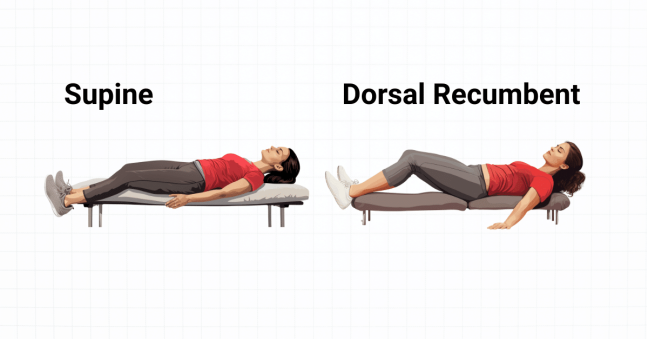
Dorsal recumbent position is the optimal position for bladder scanning. In this position, the client lies flat on their back with their knees bent and their feet flat on the bed. This position allows for: Full exposure of the bladder, making it easily accessible to the scanner. Relaxation of the abdominal muscles, which can help to ensure an accurate reading. A comfortable position for the client, promoting cooperation and reducing the likelihood of movement that could interfere with the scan.
C. Supine position
Supine position is a similar position to dorsal recumbent, but with the legs fully extended. While it is possible to perform a bladder scan in this position, it is not as ideal as dorsal recumbent because: The extended legs can place some tension on the abdominal muscles, potentially affecting bladder position and the scan's accuracy. The client may find this position less comfortable, leading to restlessness and potential movement that could interfere with the scan.
D. High Fowler’s position
High Fowler's position is a semi-sitting position with the head of the bed elevated at a 45- to 60-degree angle. This position is not suitable for bladder scanning because: Gravity can pull the bladder downwards, making it difficult to visualize and measure accurately. It can be challenging to maintain proper positioning of the scanner on the abdomen in this position, potentially leading to inaccurate readings.
This question is an excerpt from Nurse Dive's nursing test bank - Ivy tech Medical Surgical NRSG 102 Proctored Exam. Take the full exam now
Full Explanation
Choice A rationale:
Sims' position is a side-lying position with the lower leg flexed and the upper leg extended. It is not ideal for bladder scanning because it can compress the bladder and make it difficult to obtain an accurate reading.
Additionally, in Sims' position, the bladder may not be fully accessible to the scanner, as it may be partially obscured by the upper thigh.
Choice B rationale:
Dorsal recumbent position is the optimal position for bladder scanning. In this position, the client lies flat on their back with their knees bent and their feet flat on the bed. This position allows for:
Full exposure of the bladder, making it easily accessible to the scanner.
Relaxation of the abdominal muscles, which can help to ensure an accurate reading.
A comfortable position for the client, promoting cooperation and reducing the likelihood of movement that could interfere with the scan.
Choice C rationale:
Supine position is a similar position to dorsal recumbent, but with the legs fully extended. While it is possible to perform a bladder scan in this position, it is not as ideal as dorsal recumbent because:
The extended legs can place some tension on the abdominal muscles, potentially affecting bladder position and the scan's accuracy.
The client may find this position less comfortable, leading to restlessness and potential movement that could interfere with the scan.
Choice D rationale:
High Fowler's position is a semi-sitting position with the head of the bed elevated at a 45- to 60-degree angle. This position is not suitable for bladder scanning because:
Gravity can pull the bladder downwards, making it difficult to visualize and measure accurately.
It can be challenging to maintain proper positioning of the scanner on the abdomen in this position, potentially leading to inaccurate readings.
Similar Questions
A registered nurse is giving a talk to a local community group on the importance of proper diet and regular exercise. This is an example of which type of health promotion?
A. Chronic
Chronic health promotion focuses on managing and preventing complications of long-term, ongoing conditions. The nurse's talk is not addressing a specific chronic condition or its management, so it does not fall under this category.
B. Tertiary
Tertiary health promotion aims to minimize the impact of an existing disease or disability and restore function as much as possible. The nurse's talk is not addressing a current disease or disability, but rather preventing them from occurring in the first place, so it does not fall under this category.
C. Secondary
Secondary health promotion focuses on early detection and treatment of diseases to prevent or slow their progression. The nurse's talk is not focused on early detection or treatment of specific diseases, but rather on preventing them from developing in the first place, so it does not fall under this category.
D. Primary
Primary health promotion emphasizes preventing diseases and promoting overall wellness before any health problems arise. This aligns directly with the nurse's talk on diet and exercise, as these are key lifestyle factors that can significantly reduce the risk of many chronic diseases and promote overall health. Here's a breakdown of why this is primary health promotion: Focus on prevention: The talk is not about managing existing conditions or detecting diseases early; it's about preventing them from occurring in the first place. Addressing root causes: Diet and exercise are fundamental factors that influence overall health and can contribute to the development of many chronic diseases. By addressing these root causes, the nurse is working to prevent these diseases from developing. Promoting healthy behaviors: The talk encourages individuals to adopt healthy behaviors that can have a lasting impact on their health. This aligns with primary health promotion's focus on empowering individuals to take control of their own health.
Full Explanation
Choice A rationale:
Chronic health promotion focuses on managing and preventing complications of long-term, ongoing conditions. The nurse's talk is not addressing a specific chronic condition or its management, so it does not fall under this category.
Choice B rationale:
Tertiary health promotion aims to minimize the impact of an existing disease or disability and restore function as much as possible. The nurse's talk is not addressing a current disease or disability, but rather preventing them from occurring in the first place, so it does not fall under this category.
Choice C rationale:
Secondary health promotion focuses on early detection and treatment of diseases to prevent or slow their progression. The nurse's talk is not focused on early detection or treatment of specific diseases, but rather on preventing them from developing in the first place, so it does not fall under this category.
Choice D rationale:
Primary health promotion emphasizes preventing diseases and promoting overall wellness before any health problems arise. This aligns directly with the nurse's talk on diet and exercise, as these are key lifestyle factors that can significantly reduce the risk of many chronic diseases and promote overall health.
Here's a breakdown of why this is primary health promotion:
Focus on prevention: The talk is not about managing existing conditions or detecting diseases early; it's about preventing them from occurring in the first place.
Addressing root causes: Diet and exercise are fundamental factors that influence overall health and can contribute to the development of many chronic diseases. By addressing these root causes, the nurse is working to prevent these diseases from developing.
Promoting healthy behaviors: The talk encourages individuals to adopt healthy behaviors that can have a lasting impact on their health. This aligns with primary health promotion's focus on empowering individuals to take control of their own health.
A client tells the registered nurse, “Every time I sneeze, I wet my pants.” What is this type of involuntary escape of urine called?
A. Episodic urinary incompetence
Episodic urinary incompetence is not a recognized medical term. It's important to use accurate terminology in healthcare to ensure effective communication and understanding.
B. Episodic normal micturition
Episodic normal micturition refers to occasional instances of normal urination. It does not describe the involuntary leakage of urine that occurs with sneezing.
C. Episodic uncontrolled anuria
Episodic uncontrolled anuria refers to a temporary absence of urine production. This is a serious condition that requires immediate medical attention, as it can lead to kidney failure. It is not consistent with the client's report of involuntary urine leakage upon sneezing.
D. Episodic urinary incontinence
Episodic urinary incontinence is the involuntary loss of urine that occurs at specific times or events, such as sneezing, coughing, laughing, or exercising. This is the most accurate description of the client's symptoms. Key points about episodic urinary incontinence: It is a common condition, affecting millions of people worldwide. It can be caused by a variety of factors, including weakened pelvic floor muscles, overactive bladder, urinary tract infections, and neurological conditions. It can have a significant impact on a person's quality of life, causing embarrassment, social isolation, and anxiety. There are a number of treatment options available, including behavioral therapies, medications, and surgery.
Full Explanation
Choice A rationale:
Episodic urinary incompetence is not a recognized medical term. It's important to use accurate terminology in healthcare to ensure effective communication and understanding.
Choice B rationale:
Episodic normal micturition refers to occasional instances of normal urination. It does not describe the involuntary leakage of urine that occurs with sneezing.
Choice C rationale:
Episodic uncontrolled anuria refers to a temporary absence of urine production. This is a serious condition that requires immediate medical attention, as it can lead to kidney failure. It is not consistent with the client's report of involuntary urine leakage upon sneezing.
Choice D rationale:
Episodic urinary incontinence is the involuntary loss of urine that occurs at specific times or events, such as sneezing, coughing, laughing, or exercising. This is the most accurate description of the client's symptoms.
Key points about episodic urinary incontinence:
It is a common condition, affecting millions of people worldwide.
It can be caused by a variety of factors, including weakened pelvic floor muscles, overactive bladder, urinary tract infections, and neurological conditions.
It can have a significant impact on a person's quality of life, causing embarrassment, social isolation, and anxiety. There are a number of treatment options available, including behavioral therapies, medications, and surgery.
The mother of a toddler with asthma seeks support from the parents of other children with asthma. This is an example of which human dimension?
A. Socio-cultural dimension
Socio-cultural dimension encompasses the social and cultural influences that shape an individual's health beliefs, behaviors, and experiences. It includes factors such as: Social support systems: The mother's act of seeking support from other parents of children with asthma demonstrates her utilization of a social support system. This is a crucial aspect of the socio-cultural dimension, as strong social connections can provide emotional support, practical assistance, and access to information and resources. Cultural norms and values: Cultural beliefs about health, illness, and coping mechanisms can influence how individuals seek help and manage their health conditions. The mother's decision to seek support from other parents may be influenced by cultural norms that value community and shared experiences. Health disparities: Socio-cultural factors can contribute to health disparities, which are differences in health outcomes among different social groups. Understanding the socio-cultural dimension is essential for addressing these disparities and promoting health equity.
B. Intellectual and spiritual dimension
Choice B: The intellectual and spiritual dimension focuses on an individual's beliefs, values, and meaning-making processes. While these factors can influence how individuals cope with illness, they are not directly related to the mother's act of seeking support from other parents.
C. Physical dimension
Choice C: The physical dimension encompasses an individual's biological makeup and physical health status. While the child's asthma is a physical condition, the mother's act of seeking support is a social behavior that falls within the socio-cultural dimension.
D. Environmental dimension
Choice D: The environmental dimension includes factors in the physical environment that can affect health, such as air quality, housing conditions, and access to healthcare. While these factors can play a role in asthma management, they are not directly related to the mother's decision to seek support from other parents.
Full Explanation
Socio-cultural dimension encompasses the social and cultural influences that shape an individual's health beliefs, behaviors, and experiences. It includes factors such as:
Social support systems: The mother's act of seeking support from other parents of children with asthma demonstrates her utilization of a social support system. This is a crucial aspect of the socio-cultural dimension, as strong social connections can provide emotional support, practical assistance, and access to information and resources.
Cultural norms and values: Cultural beliefs about health, illness, and coping mechanisms can influence how individuals seek help and manage their health conditions. The mother's decision to seek support from other parents may be influenced by cultural norms that value community and shared experiences.
Health disparities: Socio-cultural factors can contribute to health disparities, which are differences in health outcomes among different social groups. Understanding the socio-cultural dimension is essential for addressing these disparities and promoting health equity.
Choice B: The intellectual and spiritual dimension focuses on an individual's beliefs, values, and meaning-making processes. While these factors can influence how individuals cope with illness, they are not directly related to the mother's act of seeking support from other parents.
Choice C: The physical dimension encompasses an individual's biological makeup and physical health status. While the child's asthma is a physical condition, the mother's act of seeking support is a social behavior that falls within the socio-cultural dimension.
Choice D: The environmental dimension includes factors in the physical environment that can affect health, such as air quality, housing conditions, and access to healthcare. While these factors can play a role in asthma management, they are not directly related to the mother's decision to seek support from other parents.