
Nursing practice questions with comprehensive rationales
NurseDive Free Nursing Practice Question
A nurse measures a client's weight as 70 kg and height as 1.1 m. What is the client's body mass index? (Round the answer to the nearest whole number. Use a leading zero if it applies. Do not use a trailing zero.)
This question is an excerpt from Nurse Dive's nursing test bank - RN Nutrition 2019 Nexy Updated 2023 Proctored Exam. Take the full exam now
Full Explanation
Step 1: Convert the weight from kilograms to pounds. 70 kg × 2.2 lbs/kg = 154 lbs Result at each step = 154 lbs
Step 2: Convert the height from meters to inches. 1.1 m × 39.37 inches/m = 43.307 inches Result at each step = 43.307 inches
Step 3: Convert the height from inches to feet. 43.307 inches ÷ 12 inches/foot = 3.609 feet Result at each step = 3.609 feet
Step 4: Calculate the BMI using the formula: BMI = weight (lbs) ÷ (height (inches))^2 × 703 BMI = 154 lbs ÷ (43.307 inches)^2 × 703 Result at each step = 154 lbs ÷ 1874.48 × 703 Result at each step = 0.0821 × 703 Result at each step = 57.7
Step 5: Round the BMI to the nearest whole number. Result at each step = 58
The client’s Body Mass Index (BMI) is 58.
Similar Questions
A nurse is evaluating the laboratory findings of a client who has wound dehiscence following abdominal surgery. Which of the following findings should indicate to the nurse that the client is experiencing fluid volume deficit?
A. Potassium 3.5 mEq/L
Potassium 3.5 mEq/L is not a finding that indicates fluid volume deficit because it is within the normal range, which is 3.5 to 5.0 mEq/L. Potassium is an electrolyte that regulates nerve and muscle function, acid-base balance, and fluid balance. Potassium level can be affected by various factors, such as diet, medication, kidney function, and dehydration.
B. Sodium 145 mEq/L
Sodium 145 mEq/L is not a finding that indicates fluid volume deficit because it is within the normal range, which is 136 to 145 mEq/L. Sodium is an electrolyte that regulates blood pressure, blood volume, and fluid balance. Sodium level can be affected by various factors, such as diet, medication, kidney function, and fluid loss.
C. Hematocrit 53%
Hematocrit 53% is a finding that indicates fluid volume deficit because it is above the normal range, which is 38 to 50% for men and 34 to 46% for women. Hematocrit is the percentage of red blood cells in the total blood volume. Hematocrit level can increase due to dehydration, which causes hemoconcentration or increased blood viscosity.
D. HbA1c 5%
HbA1c 5% is not a finding that indicates fluid volume deficit because it is within the normal range, which is less than 5.7%. HbA1c is the percentage of hemoglobin that is attached to glucose. HbA1c level reflects the average blood glucose level over the past two to three months. HbA1c level can be affected by various factors, such as diabetes, anemia, and medication.
Full Explanation
Choice A reason: Potassium 3.5 mEq/L is not a finding that indicates fluid volume deficit because it is within the normal range, which is 3.5 to 5.0 mEq/L. Potassium is an electrolyte that regulates nerve and muscle function, acid-base balance, and fluid balance. Potassium level can be affected by various factors, such as diet, medication, kidney function, and dehydration.
Choice B reason: Sodium 145 mEq/L is not a finding that indicates fluid volume deficit because it is within the normal range, which is 136 to 145 mEq/L. Sodium is an electrolyte that regulates blood pressure, blood volume, and fluid balance. Sodium level can be affected by various factors, such as diet, medication, kidney function, and fluid loss.
Choice C reason: Hematocrit 53% is a finding that indicates fluid volume deficit because it is above the normal range, which is 38 to 50% for men and 34 to 46% for women. Hematocrit is the percentage of red blood cells in the total blood volume. Hematocrit level can increase due to dehydration, which causes hemoconcentration or increased blood viscosity.
Choice D reason: HbA1c 5% is not a finding that indicates fluid volume deficit because it is within the normal range, which is less than 5.7%. HbA1c is the percentage of hemoglobin that is attached to glucose. HbA1c level reflects the average blood glucose level over the past two to three months. HbA1c level can be affected by various factors, such as diabetes, anemia, and medication.
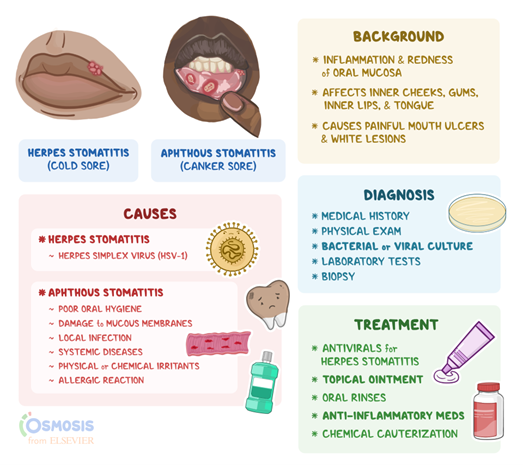
A nurse is caring for a client who has stomatitis following radiation therapy. Which of the following interventions is appropriate for the nurse to take?
A. Offer the client frozen banana as a snack.
Offering the client frozen banana as a snack is an appropriate intervention for the nurse to take because it can help soothe and cool the inflamed mucous membranes in the mouth and throat, which are caused by stomatitis. Stomatitis is an inflammation of the oral cavity that can result from radiation therapy or chemotherapy. Frozen banana also provides potassium, vitamin C, and fiber for the client.
B. Serve the client hot meals.
Serving the client hot meals is not an appropriate intervention for the nurse to take because it can worsen nausea and vomiting. Hot meals are aromatic, spicy, and greasy, which are characteristics of emetic foods. Hot meals can also irritate the stomach lining and trigger the gag reflex.
C. Avoid serving sauces or gravies.
Avoiding serving sauces or gravies is not an appropriate intervention for the nurse to take because it can cause dehydration and malnutrition. Sauces and gravies are liquid, mild, and moist, which are characteristics of antiemetic foods. Sauces and gravies can also enhance the flavor and texture of bland foods and provide calories and nutrients for the client.
D. Discourage the use of a straw.
Discouraging the use of a straw is not an appropriate intervention for the nurse to take because it can prevent adequate fluid intake and hydration. Using a straw can help the client sip small amounts of clear liquids, such as water, ginger ale, or broth, which are antiemetic fluids. Using a straw can also reduce the exposure to odors and tastes that may cause nausea.
Full Explanation
Choice A reason: Offering the client frozen banana as a snack is an appropriate intervention for the nurse to take because it can help soothe and cool the inflamed mucous membranes in the mouth and throat, which are caused by stomatitis. Stomatitis is an inflammation of the oral cavity that can result from radiation therapy or chemotherapy. Frozen banana also provides potassium, vitamin C, and fiber for the client.
Choice B reason: Serving the client hot meals is not an appropriate intervention for the nurse to take because it can worsen nausea and vomiting. Hot meals are aromatic, spicy, and greasy, which are characteristics of emetic foods. Hot meals can also irritate the stomach lining and trigger the gag reflex.
Choice C reason: Avoiding serving sauces or gravies is not an appropriate intervention for the nurse to take because it can cause dehydration and malnutrition. Sauces and gravies are liquid, mild, and moist, which are characteristics of antiemetic foods. Sauces and gravies can also enhance the flavor and texture of bland foods and provide calories and nutrients for the client.
Choice D reason: Discouraging the use of a straw is not an appropriate intervention for the nurse to take because it can prevent adequate fluid intake and hydration. Using a straw can help the client sip small amounts of clear liquids, such as water, ginger ale, or broth, which are antiemetic fluids. Using a straw can also reduce the exposure to odors and tastes that may cause nausea.
A nurse is teaching a client ways to manage anorexia while receiving radiation therapy. Which of the following statements by the client shows an understanding of the teaching?
A. “I will limit high-calorie supplements to between meals.”
Limiting high-calorie supplements to between meals is not a good strategy for managing anorexia while receiving radiation therapy because it can reduce the appetite and intake of regular meals, which are more nutritious and balanced. High-calorie supplements should be used as an addition to, not a replacement for, regular meals.
B. “I will avoid overeating during 'good' days.”
Avoiding overeating during 'good' days is not a good strategy for managing anorexia while receiving radiation therapy because it can cause discomfort, nausea, or vomiting, which can worsen anorexia and affect the tolerance of radiation therapy. Eating should be based on hunger and satiety cues, not on good or bad days.
C. “I will consume nutrition-dense foods first.”
Consuming nutrition-dense foods first is a good strategy for managing anorexia while receiving radiation therapy because it can ensure adequate intake of calories, protein, vitamins, and minerals, which are essential for healing and recovery. Nutrition-dense foods are those that provide high amounts of nutrients per serving, such as eggs, cheese, nuts, beans, and meat.
D. “I will eat hot foods rather than cold foods.”
Eating hot foods rather than cold foods is not a good strategy for managing anorexia while receiving radiation therapy because it can irritate the mouth and throat, which may be inflamed or sore due to radiation therapy. Cold foods are more soothing and refreshing for the mouth and throat, such as ice cream, yogurt, smoothies, and popsicles.
Full Explanation
Choice A reason: Limiting high-calorie supplements to between meals is not a good strategy for managing anorexia while receiving radiation therapy because it can reduce the appetite and intake of regular meals, which are more nutritious and balanced. High-calorie supplements should be used as an addition to, not a replacement for, regular meals.
Choice B reason: Avoiding overeating during 'good' days is not a good strategy for managing anorexia while receiving radiation therapy because it can cause discomfort, nausea, or vomiting, which can worsen anorexia and affect the tolerance of radiation therapy. Eating should be based on hunger and satiety cues, not on good or bad days.
Choice C reason: Consuming nutrition-dense foods first is a good strategy for managing anorexia while receiving radiation therapy because it can ensure adequate intake of calories, protein, vitamins, and minerals, which are essential for healing and recovery. Nutrition-dense foods are those that provide high amounts of nutrients per serving, such as eggs, cheese, nuts, beans, and meat.
Choice D reason: Eating hot foods rather than cold foods is not a good strategy for managing anorexia while receiving radiation therapy because it can irritate the mouth and throat, which may be inflamed or sore due to radiation therapy. Cold foods are more soothing and refreshing for the mouth and throat, such as ice cream, yogurt, smoothies, and popsicles.