
Nursing practice questions with comprehensive rationales
NurseDive Free Nursing Practice Question
A patient is admitted with hypernatremia caused by being stranded on a boat in the Atlantic Ocean for five days without a fresh water source. What is this patient at risk for developing?
A. Stress fractures.
Stress fractures are not directly related to hypernatremia. Hypernatremia is an electrolyte imbalance, and its main effects are related to cellular dehydration and neurological symptoms rather than bone fractures.
B. Cerebral bleeding.
This is the correct answer because hypernatremia can lead to severe dehydration and cause neurological complications, including cerebral bleeding. The brain cells can shrink due to water loss, causing blood vessels to rupture, leading to bleeding in the brain.
C. Atrial dysrhythmias.
Atrial dysrhythmias are not directly associated with hypernatremia. Hypernatremia primarily affects the central nervous system and can lead to neurological symptoms rather than cardiac dysrhythmias.
D. Pulmonary edema.
Pulmonary edema is not a likely consequence of hypernatremia. Pulmonary edema is associated with fluid volume excess, not fluid volume deficit, which is characteristic of hypernatremia.
This question is an excerpt from Nurse Dive's nursing test bank - ATI custom Fluid and Electrolyte Exam Summer 2023 Proctored Exam. Take the full exam now
Full Explanation
Cerebral bleeding. Choice A rationale:
Stress fractures are not directly related to hypernatremia. Hypernatremia is an electrolyte imbalance, and its main effects are related to cellular dehydration and neurological symptoms rather than bone fractures.
Choice B rationale:
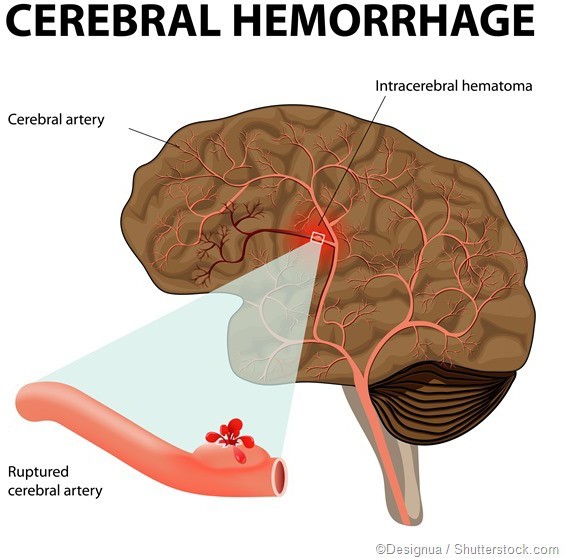
This is the correct answer because hypernatremia can lead to severe dehydration and cause neurological complications, including cerebral bleeding. The brain cells can shrink due to water loss, causing blood vessels to rupture, leading to bleeding in the brain.
Choice C rationale:
Atrial dysrhythmias are not directly associated with hypernatremia. Hypernatremia primarily affects the central nervous system and can lead to neurological symptoms rather than cardiac dysrhythmias.
Choice D rationale:
Pulmonary edema is not a likely consequence of hypernatremia. Pulmonary edema is associated with fluid volume excess, not fluid volume deficit, which is characteristic of hypernatremia.
Similar Questions
A nurse is reviewing the medical record of a client who has a potassium level of 3.0 mEq/L. Which of the following findings should the nurse recognize as a potential causative factor?
A. Client has an NG tube to gastric suction.
Having an NG tube to gastric suction can lead to hypokalemia because the suctioning process removes potassium from the stomach contents, leading to a decrease in serum potassium levels.
B. Client has a history of alcohol abuse disorder.
While a history of alcohol abuse disorder can lead to various electrolyte imbalances, it is not the most direct cause of hypokalemia compared to gastric suction.
C. Client reports drinking 3.5 to 4 L of water each day.
Drinking 3.5 to 4 liters of water each day can lead to dilutional hyponatremia but is less likely to cause hypokalemia directly.
D. Client is currently prescribed spironolactone.
Spironolactone is a potassium-sparing diuretic, which means it helps retain potassium in the body. Therefore, it is not a causative factor for hypokalemia.
Full Explanation
The correct answer is choice A. Client has an NG tube to gastric suction.
Choice A rationale:
Having an NG tube to gastric suction can lead to hypokalemia because the suctioning process removes potassium from the stomach contents, leading to a decrease in serum potassium levels.
Choice B rationale:
While a history of alcohol abuse disorder can lead to various electrolyte imbalances, it is not the most direct cause of hypokalemia compared to gastric suction.
Choice C rationale:
Drinking 3.5 to 4 liters of water each day can lead to dilutional hyponatremia but is less likely to cause hypokalemia directly.
Choice D rationale:
Spironolactone is a potassium-sparing diuretic, which means it helps retain potassium in the body. Therefore, it is not a causative factor for hypokalemia.
A patient is diagnosed with hypokalemia. After reviewing the patient's current medications, which drug should the nurse consider that might have contributed to the patient's health problem?
A. Narcotic.
Narcotics are not known to directly cause hypokalemia. Their main effects are related to pain relief and central nervous system depression.
B. Thiazide diuretic.
Thiazide diuretics can cause potassium loss in the urine, leading to hypokalemia. These diuretics work by inhibiting sodium reabsorption in the distal convoluted tubule, which can lead to potassium excretion as well.
C. Corticosteroid.
Corticosteroids can cause sodium and water retention but are not typically associated with significant potassium abnormalities.
D. Muscle relaxer.
Muscle relaxers are not known to cause hypokalemia. They primarily act on the neuromuscular junction and do not directly impact potassium levels.
Full Explanation
Choice A rationale:
Narcotics are not known to directly cause hypokalemia. Their main effects are related to pain relief and central nervous system depression.
Choice B rationale:
Thiazide diuretics can cause potassium loss in the urine, leading to hypokalemia. These diuretics work by inhibiting sodium reabsorption in the distal convoluted tubule, which can lead to potassium excretion as well.
Choice C rationale:
Corticosteroids can cause sodium and water retention but are not typically associated with significant potassium abnormalities.
Choice D rationale:
Muscle relaxers are not known to cause hypokalemia. They primarily act on the neuromuscular junction and do not directly impact potassium levels.
A nurse is reviewing the laboratory values of a client who has respiratory acidosis. Which of the following findings should the nurse expect?
A. Potassium 3.3 mEq/L.
Potassium levels are not directly related to respiratory acidosis. Potassium levels may be affected in certain conditions, but they are not specific indicators of respiratory acidosis.
B. HCO3- 30 mEq/L.
HCO3- (bicarbonate) levels may be elevated in metabolic alkalosis, not respiratory acidosis. In respiratory acidosis, the primary abnormality is an increased PacO2, not HCO3-.
C. PacO2 50 mm Hg.
The partial pressure of carbon dioxide (PacO2) is a key parameter in diagnosing respiratory acidosis. In this case, a PacO2 of 50 mm Hg suggests hypoventilation and an excess of carbon dioxide in the blood, contributing to acidosis.
D. pH 7.45.
The pH level given (pH 7.45) is within the normal range, which contradicts the diagnosis of respiratory acidosis. In respiratory acidosis, the pH would be expected to be below the normal range of 7.35-7.45 due to increased carbon dioxide levels.
Full Explanation
PacO2 50 mm Hg. Choice A rationale:
Potassium levels are not directly related to respiratory acidosis. Potassium levels may be affected in certain conditions, but they are not specific indicators of respiratory acidosis.
Choice B rationale:
HCO3- (bicarbonate) levels may be elevated in metabolic alkalosis, not respiratory acidosis. In respiratory acidosis, the primary abnormality is an increased PacO2, not HCO3-.
Choice C rationale:
The partial pressure of carbon dioxide (PacO2) is a key parameter in diagnosing respiratory acidosis. In this case, a PacO2 of 50 mm Hg suggests hypoventilation and an excess of carbon dioxide in the blood, contributing to acidosis.
Choice D rationale:
The pH level given (pH 7.45) is within the normal range, which contradicts the diagnosis of respiratory acidosis. In respiratory acidosis, the pH would be expected to be below the normal range of 7.35-7.45 due to increased carbon dioxide levels.