
Nursing practice questions with comprehensive rationales
NurseDive Free Nursing Practice Question
A patient with a head injury opens his eyes to verbal stimulation, shouts out when stimulated, and does not respond to a verbal command to move but attempts to push away a painful stimulus. How would the nurse record the patient's Glasgow Coma Scale score?
A. 9
Reason: This is correct because the patient's Glasgow Coma Scale score is 9. The Glasgow Coma Scale is a tool that assesses the level of consciousness of a patient with a head injury by measuring three parameters: eye opening, verbal response, and motor response. The patient's eye opening score is 3 (opens eyes to verbal command), verbal response score is 4 (confused speech), and motor response score is 2 (withdraws from pain). The total score is the sum of these three scores, which is 9.
B. 11
Reason: This is incorrect because the patient's Glasgow Coma Scale score is not 11. To get a score of 11, the patient would need to have a higher motor response score, such as 4 (withdraws to touch) or 5 (localizes to pain).
C. 15
Reason: This is incorrect because the patient's Glasgow Coma Scale score is not 15. To get a score of 15, the patient would need to have the highest scores for all three parameters, such as 4 (opens eyes spontaneously), 5 (oriented speech), and 6 (obeys commands).
D. 13
Reason: This is incorrect because the patient's Glasgow Coma Scale score is not 13. To get a score of 13, the patient would need to have a higher verbal response score, such as 5 (oriented speech).
This question is an excerpt from Nurse Dive's nursing test bank - ATI Med Surg Proctored Exam 4. Take the full exam now
Full Explanation
Choice A Reason: This is correct because the patient's Glasgow Coma Scale score is 9. The Glasgow Coma Scale is a tool that assesses the level of consciousness of a patient with a head injury by measuring three parameters: eye opening, verbal response, and motor response. The patient's eye opening score is 3 (opens eyes to verbal command), verbal response score is 4 (confused speech), and motor response score is 2 (withdraws from pain). The total score is the sum of these three scores, which is 9.
Choice B Reason: This is incorrect because the patient's Glasgow Coma Scale score is not 11. To get a score of 11, the patient would need to have a higher motor response score, such as 4 (withdraws to touch) or 5 (localizes to pain).
Choice C Reason: This is incorrect because the patient's Glasgow Coma Scale score is not 15. To get a score of 15, the patient would need to have the highest scores for all three parameters, such as 4 (opens eyes spontaneously), 5 (oriented speech), and 6 (obeys commands).
Choice D Reason: This is incorrect because the patient's Glasgow Coma Scale score is not 13. To get a score of 13, the patient would need to have a higher verbal response score, such as 5 (oriented speech).
Similar Questions
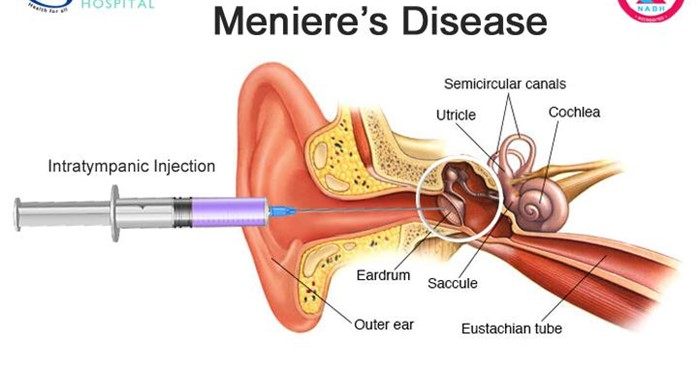
A nurse is providing education to a client recently diagnosed with Meniere's disease. Which of the following will the nurse include in the teaching? (Select all that apply.)
A. Avoid swimming underwater
Choice A reason: This is correct because avoiding swimming underwater can help prevent the worsening of Meniere's disease. Meniere's disease is a disorder of the inner ear that causes episodes of vertigo, tinnitus, hearing loss, and fullness in the ear. Swimming underwater can increase pressure in the ear and trigger an attack. The nurse should advise the client to avoid activities that involve changes in altitude or pressure, such as flying, diving, or climbing.
B. Wear earphones when in crowded places
Choice B reason: This is incorrect because wearing earphones when in crowded places can worsen Meniere's disease. Earphones can increase noise exposure and damage hearing, which is already impaired by Meniere's disease. The nurse should advise the client to avoid loud noises and use hearing aids if needed.
C. Keep eyes open during an acute attack
Choice C reason: This is incorrect because keeping eyes open during an acute attack can increase vertigo and nausea. Vertigo is a sensation of spinning or moving when still, which can be caused by Meniere's disease. Keeping eyes open can make vertigo worse by creating a visual mismatch with vestibular signals from the inner ear. The nurse should advise the client to close their eyes or focus on a stationary object during an attack.
D. Sit or lie down if whirling occurs
Choice D reason: This is correct because sitting or lying down if whirling occurs can help prevent falls or injuries due to vertigo. Whirling is another term for vertigo, which can affect balance and coordination. Sitting or lying down can reduce movement and stabilize posture during an attack. The nurse should advise the client to avoid driving or operating machinery when experiencing vertigo.
E. We do not know the exact cause
Choice E reason: This is correct because we do not know the exact cause of Meniere's disease. Meniere's disease is thought to be related to abnormal fluid balance or pressure in the inner ear, but what triggers this condition is unknown. The nurse should educate the client about possible risk factors, such as genetics, infections, allergies, autoimmune disorders, or head trauma, but also acknowledge the uncertainty and variability of the disease.
F. Damage to the ear from excess noise is the cause
Choice F reason: This is incorrect because damage to the ear from excess noise is not the cause of Meniere's disease. Damage to the ear from excess noise can cause noise-induced hearing loss, which is a type of sensorineural hearing loss that affects the cochlea or the auditory nerve. Meniere's disease is a type of mixed hearing loss that affects both the cochlea and the middle ear. The nurse should not confuse or misinform the client about the cause of their condition.
Full Explanation
Choice A reason: This is correct because avoiding swimming underwater can help prevent the worsening of Meniere's disease. Meniere's disease is a disorder of the inner ear that causes episodes of vertigo, tinnitus, hearing loss, and fullness in the ear. Swimming underwater can increase pressure in the ear and trigger an attack. The nurse should advise the client to avoid activities that involve changes in altitude or pressure, such as flying, diving, or climbing.
Choice B reason: This is incorrect because wearing earphones when in crowded places can worsen Meniere's disease. Earphones can increase noise exposure and damage hearing, which is already impaired by Meniere's disease. The nurse should advise the client to avoid loud noises and use hearing aids if needed.
Choice C reason: This is incorrect because keeping eyes open during an acute attack can increase vertigo and nausea. Vertigo is a sensation of spinning or moving when still, which can be caused by Meniere's disease. Keeping eyes open can make vertigo worse by creating a visual mismatch with vestibular signals from the inner ear. The nurse should advise the client to close their eyes or focus on a stationary object during an attack.
Choice D reason: This is correct because sitting or lying down if whirling occurs can help prevent falls or injuries due to vertigo. Whirling is another term for vertigo, which can affect balance and coordination. Sitting or lying down can reduce movement and stabilize posture during an attack. The nurse should advise
the client to avoid driving or operating machinery when experiencing vertigo.
Choice E reason: This is correct because we do not know the exact cause of Meniere's disease. Meniere's disease is thought to be related to abnormal fluid balance or pressure in the inner ear, but what triggers this condition is unknown. The nurse should educate the client about possible risk factors, such as genetics, infections, allergies, autoimmune disorders, or head trauma, but also acknowledge the uncertainty and variability of the disease.
Choice F reason: This is incorrect because damage to the ear from excess noise is not the cause of Meniere's disease. Damage to the ear from excess noise can cause noise-induced hearing loss, which is a type of sensorineural hearing loss that affects the cochlea or the auditory nerve. Meniere's disease is a type of mixed hearing loss that affects both the cochlea and the middle ear. The nurse should not confuse or misinform the client about the cause of their condition.
A nurse is preparing to start an IV infusion of Lactated Ringer's for a client who sustained a burn injury. The client is prescribed 5,200 mL of fluid over the first 24 hr. How many milliliters of fluid will the client receive in the first 8 hours? Record your answer.
Full Explanation
The total fluid prescribed is 5,200 mL over 24 hours. We need to calculate how much fluid the client will receive in the first 8 hours.
Step-by-Step Calculation:
Step 1: Determine how much fluid is given in the first 8 hours. The rule is that half of the total fluid is administered in the first 8 hours.
- Total fluid = 5,200 mL.
- Fluid for the first 8 hours = Total fluid ÷ 2.
Write it out:
5,200 ÷ 2 = 2,600.
Result: 2,600 mL.
A nurse is caring for a child who has a suspected diagnosis of bacterial meningitis. Which of the following actions is the nurse's priority?
A. Administer antibiotics when available.
reason: This is the correct answer because bacterial meningitis is a medical emergency that requires immediate antibiotic therapy to prevent complications and death.
B. Document intake and output.
reason: This is incorrect because documenting intake and output is not a priority action for a child with bacterial meningitis. Fluid balance is important, but not as urgent as antibiotic administration.
C. Reduce environmental stimuli.
reason: This is incorrect because reducing environmental stimuli is a supportive measure that can help reduce headache and photophobia, but it is not a priority action for a child with bacterial meningitis. The nurse should focus on preventing infection spread and monitoring for signs of increased intracranial pressure.
D. Maintain seizure precautions.
reason: This is incorrect because maintaining seizure precautions is a preventive measure that can help protect the child from injury, but it is not a priority action for a child with bacterial meningitis. The nurse should administer anticonvulsants as prescribed and observe for seizure activity, but the main goal is to treat the infection.
Full Explanation
Choice A reason: This is the correct answer because bacterial meningitis is a medical emergency that requires immediate antibiotic therapy to prevent complications and death.
Choice B reason: This is incorrect because documenting intake and output is not a priority action for a child with bacterial meningitis. Fluid balance is important, but not as urgent as antibiotic administration.
Choice C reason: This is incorrect because reducing environmental stimuli is a supportive measure that can help reduce headache and photophobia, but it is not a priority action for a child with bacterial meningitis. The nurse should focus on preventing infection spread and monitoring for signs of increased intracranial pressure.
Choice D reason: This is incorrect because maintaining seizure precautions is a preventive measure that can help protect the child from injury, but it is not a priority action for a child with bacterial meningitis. The nurse should administer anticonvulsants as prescribed and observe for seizure activity, but the main goal is to treat the infection.