
Nursing practice questions with comprehensive rationales
NurseDive Free Nursing Practice Question
A phlebotomist needs to collect a PT (Prothrombin Time) from a patient with a difficult vein. Which of the following is the best tube for the draw?
A. Light green
The light green tube typically contains lithium heparin and is used for plasma determinations in chemistry. It is not suitable for coagulation studies, such as PT, because heparin is an anticoagulant that would interfere with the test results.
B. Lavender
The lavender tube contains EDTA, which is an anticoagulant that binds calcium. While it is commonly used for complete blood counts (CBC) and other hematology tests, it is not appropriate for coagulation studies because the binding of calcium would affect the clotting process required for a PT test.
C. Royal blue
The royal blue tube can come with different additives or be additive-free, depending on the color of the closure. It is primarily used for trace element testing, toxicology, and nutrient determinations. The additives in a royal blue tube could potentially contaminate the sample and interfere with the PT test.
D. Light blue
The light blue tube contains sodium citrate, which is the appropriate anticoagulant for coagulation studies like PT. Sodium citrate works by binding calcium in the blood, preventing clotting. The PT test measures the time it takes for a clot to form after re-calcification, making the light blue tube the correct choice for this test.
This question is an excerpt from Nurse Dive's nursing test bank - Phlebotomy Certification Proctored Exam 130. Take the full exam now
Full Explanation
Choice A reason:
The light green tube typically contains lithium heparin and is used for plasma determinations in chemistry. It is not suitable for coagulation studies, such as PT, because heparin is an anticoagulant that would interfere with the test results.
Choice B reason:
The lavender tube contains EDTA, which is an anticoagulant that binds calcium. While it is commonly used for complete blood counts (CBC) and other hematology tests, it is not appropriate for coagulation studies because the binding of calcium would affect the clotting process required for a PT test.
Choice C reason:
The royal blue tube can come with different additives or be additive-free, depending on the color of the closure. It is primarily used for trace element testing, toxicology, and nutrient determinations. The additives in a royal blue tube could potentially contaminate the sample and interfere with the PT test.
Choice D reason:
The light blue tube contains sodium citrate, which is the appropriate anticoagulant for coagulation studies like PT. Sodium citrate works by binding calcium in the blood, preventing clotting. The PT test measures the time it takes for a clot to form after re-calcification, making the light blue tube the correct choice for this test.
Similar Questions
A phlebotomist observes a hematoma developing at the site of a venous blood draw. What should the phlebotomist do?
A. Observe the site to see whether the hematoma worsens.
Simply observing the site to see if the hematoma worsens is not an appropriate response. While monitoring the development of a hematoma is part of the process, it is not a proactive measure to address the immediate issue. The phlebotomist must take action to prevent further injury or complication.
B. Ask the patient to apply pressure to the area.
Asking the patient to apply pressure may be part of the post-venipuncture care, especially after the needle has been removed, to aid in stopping any bleeding. However, this does not address the immediate concern of a developing hematoma during the draw.
C. Release the tourniquet and stop the draw.
Releasing the tourniquet and stopping the draw is the correct action to take when a hematoma is observed. This response is in line with the standard procedure for when a complication arises during venipuncture. Stopping the draw helps prevent further blood from pooling and exacerbating the hematoma.
D. Call for a nurse and assess the patient's condition.
While calling for a nurse and assessing the patient's condition is important, especially if the phlebotomist needs assistance or the patient shows signs of distress, it should not be the first action taken. The immediate response should be to address the hematoma by stopping the draw.
Full Explanation
Choice A reason:
Simply observing the site to see if the hematoma worsens is not an appropriate response. While monitoring the development of a hematoma is part of the process, it is not a proactive measure to address the immediate issue. The phlebotomist must take action to prevent further injury or complication.
Choice B reason:
Asking the patient to apply pressure may be part of the post-venipuncture care, especially after the needle has been removed, to aid in stopping any bleeding. However, this does not address the immediate concern of a developing hematoma during the draw.
Choice C reason:
Releasing the tourniquet and stopping the draw is the correct action to take when a hematoma is observed. This response is in line with the standard procedure for when a complication arises during venipuncture. Stopping the draw helps prevent further blood from pooling and exacerbating the hematoma.
Choice D reason:
While calling for a nurse and assessing the patient's condition is important, especially if the phlebotomist needs assistance or the patient shows signs of distress, it should not be the first action taken. The immediate response should be to address the hematoma by stopping the draw.
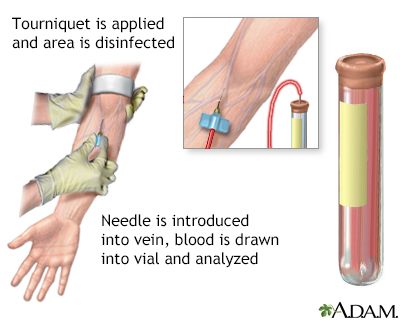
Which of the following needles should a phlebotomist use for a venipuncture using a winged infusion set and a 5 mL syringe?
A. 23-gauge
A 23-gauge needle is commonly used for venipuncture with a winged infusion set and a small volume syringe like a 5 mL syringe. This size provides a balance between patient comfort and the ease of drawing blood without causing hemolysis or excessive damage to blood cells. It is large enough to allow blood to flow easily into the syringe but small enough to minimize discomfort and the risk of bruising.
B. 18-gauge
An 18-gauge needle is quite large and is typically used for situations requiring rapid administration of fluids or for blood donation where larger volumes are collected quickly. It is not ideal for a standard venipuncture, especially with a small syringe, as it can cause more pain and increase the risk of bruising.
C. 25-gauge
A 25-gauge needle is on the smaller side and may be used for patients with very fragile veins or for pediatric patients. However, it may not be the best choice for a 5 mL syringe as it could make the blood draw process slower and more difficult, potentially leading to clotting in the needle or syringe.
D. 27-gauge
A 27-gauge needle is very small and is typically used for subcutaneous injections, such as insulin injections, rather than for venipuncture. It would be too small for an efficient blood draw with a 5 mL syringe, as it would likely cause the blood to hemolyze or clot before the draw is completed.
Full Explanation
Choice A reason:
A 23-gauge needle is commonly used for venipuncture with a winged infusion set and a small volume syringe like a 5 mL syringe. This size provides a balance between patient comfort and the ease of drawing blood without causing hemolysis or excessive damage to blood cells. It is large enough to allow blood to flow easily into the syringe but small enough to minimize discomfort and the risk of bruising.
Choice B reason:
An 18-gauge needle is quite large and is typically used for situations requiring rapid administration of fluids or for blood donation where larger volumes are collected quickly. It is not ideal for a standard venipuncture, especially with a small syringe, as it can cause more pain and increase the risk of bruising.
Choice C reason:
A 25-gauge needle is on the smaller side and may be used for patients with very fragile veins or for pediatric patients. However, it may not be the best choice for a 5 mL syringe as it could make the blood draw process slower and more difficult, potentially leading to clotting in the needle or syringe.
Choice D reason:
A 27-gauge needle is very small and is typically used for subcutaneous injections, such as insulin injections, rather than for venipuncture. It would be too small for an efficient blood draw with a 5 mL syringe, as it would likely cause the blood to hemolyze or clot before the draw is completed.
Utilizing tubes that have expired may result in which of the following?
A. Loss of vacuum
Expired tubes may lose their vacuum, which is necessary to draw the correct volume of blood into the tube. The vacuum in blood collection tubes ensures that the correct amount of blood is drawn. If the vacuum is lost, the blood will not be drawn into the tube properly, which can lead to underfilling and affect the test results.
B. Hemoconcentration
Hemoconcentration refers to an increase in the concentration of cells and solids in the blood, usually because of a loss of plasma. While this can occur due to prolonged tourniquet application or dehydration, it is not directly caused by the use of expired tubes.
C. Hemolysis
Hemolysis is the destruction of red blood cells, which can release hemoglobin and other intracellular components into the plasma. It can be caused by physical damage, such as from a needle during blood draw, but is not a consequence of using expired tubes. However, if an expired tube causes improper blood draw due to loss of vacuum, it could indirectly lead to hemolysis due to multiple attempts to draw blood.
D. Elevation of the red blood cell count
An elevation of the red blood cell count would not be directly caused by using expired tubes. The red blood cell count is determined by the body's production and destruction of red blood cells, not by the collection method or equipment used.
Full Explanation
Choice A reason:
Expired tubes may lose their vacuum, which is necessary to draw the correct volume of blood into the tube. The vacuum in blood collection tubes ensures that the correct amount of blood is drawn. If the vacuum is lost, the blood will not be drawn into the tube properly, which can lead to underfilling and affect the test results.
Choice B reason:
Hemoconcentration refers to an increase in the concentration of cells and solids in the blood, usually because of a loss of plasma. While this can occur due to prolonged tourniquet application or dehydration, it is not directly caused by the use of expired tubes.
Choice C reason:
Hemolysis is the destruction of red blood cells, which can release hemoglobin and other intracellular components into the plasma. It can be caused by physical damage, such as from a needle during blood draw, but is not a consequence of using expired tubes. However, if an expired tube causes improper blood draw due to loss of vacuum, it could indirectly lead to hemolysis due to multiple attempts to draw blood.
Choice D reason:
An elevation of the red blood cell count would not be directly caused by using expired tubes. The red blood cell count is determined by the body's production and destruction of red blood cells, not by the collection method or equipment used.