
Nursing practice questions with comprehensive rationales
NurseDive Free Nursing Practice Question
Exhibit 1. The names of the newborn reflexes are? Select all that apply.
A. rooting.
The newborn reflex called "rooting”. is characterized by turning the head and opening the mouth when the cheek or mouth area is touched. This reflex helps the newborn find the mother's breast for feeding.
B. stepping.
"Stepping”. is a newborn reflex where they make stepping movements when held upright with their feet touching a solid surface. This reflex is present at birth but tends to disappear after a few weeks.
C. moro.
The "Moro”. reflex is also known as the startle reflex. It is elicited by a sudden loss of support or loud noise, causing the newborn to throw their arms and legs out and then bring them back in. This reflex usually disappears around 3 to 4 months of age.
D. Babinski.
The "Babinski”. reflex is characterized by the extension of the big toe and fanning of the other toes when the sole of the foot is stroked. This reflex is present in newborns and should disappear by around 12 months of age.
This question is an excerpt from Nurse Dive's nursing test bank - ATI Custom Maternity Newborncare Proctored Exam. Take the full exam now
Full Explanation
Choice A rationale:
The newborn reflex called "rooting”. is characterized by turning the head and opening the mouth when the cheek or mouth area is touched. This reflex helps the newborn find the mother's breast for feeding.
Choice B rationale:
"Stepping”. is a newborn reflex where they make stepping movements when held upright with their feet touching a solid surface. This reflex is present at birth but tends to disappear after a few weeks.
Choice C rationale:
The "Moro”. reflex is also known as the startle reflex. It is elicited by a sudden loss of support or loud noise, causing the newborn to throw their arms and legs out and then bring them back in. This reflex usually disappears around 3 to 4 months of age.
Choice D rationale:
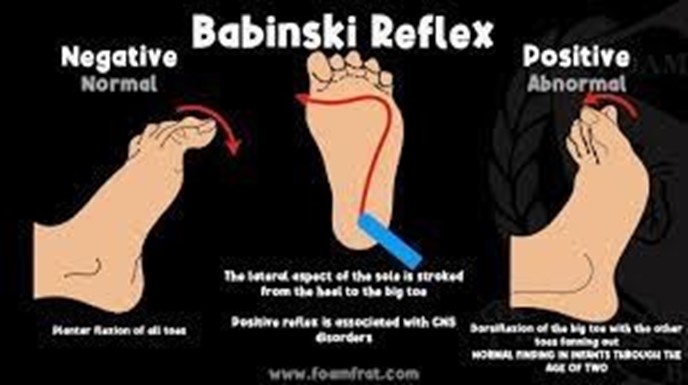
The "Babinski”. reflex is characterized by the extension of the big toe and fanning of the other toes when the sole of the foot is stroked. This reflex is present in newborns and should disappear by around 12 months of age.
Choice E rationale:
"Running”. is not a recognized newborn reflex. There is no reflex with this name related to newborns.
Choice F rationale:
The "gag”. reflex is present in newborns and helps protect the airway by causing a gagging response when the back of the throat is stimulated.
Similar Questions
A newborn is most interested in eating in which wake and sleep state?
A. crying.
Newborns do not show interest in eating while crying. Crying is usually an indication of distress or hunger and not a state where they are interested in eating.
B. alert.
Newborns are most interested in eating when they are in an "alert”. state. During this state, the baby is awake, calm, and attentive, making it an ideal time for feeding.
C. drowsy.
In the "drowsy”. state, newborns may be sleepy and less interested in eating. They might feed less effectively in this state.
D. active alert.
"Active alert”. is a state where the newborn is awake, attentive, and active. While they may be interested in their surroundings, they may also be easily distracted during feeding.
Full Explanation
Choice A rationale:
Newborns do not show interest in eating while crying. Crying is usually an indication of distress or hunger and not a state where they are interested in eating.
Choice B rationale:
Newborns are most interested in eating when they are in an "alert”. state. During this state, the baby is awake, calm, and attentive, making it an ideal time for feeding.
Choice C rationale:
In the "drowsy”. state, newborns may be sleepy and less interested in eating. They might feed less effectively in this state.
Choice D rationale:
"Active alert”. is a state where the newborn is awake, attentive, and active. While they may be interested in their surroundings, they may also be easily distracted during feeding.
A nurse is caring for a newborn who is at 34 weeks of gestation, weighs 1,550 g, and has nasal flaring, intercostal retractions, expiratory grunting, and mild cyanosis. The nurse should place the newborn in an incubator for which of the following reasons?
A. The newborn's temperature control mechanism is immature.
Placing the newborn in an incubator is essential because the newborn's temperature control mechanism is immature. Premature infants have an underdeveloped thermoregulatory system, making them susceptible to heat loss and cold stress. An incubator provides a controlled, warm environment to maintain the newborn's body temperature within the normal range (around 36.5°C to 37.5°C or 97.7°F to 99.5°F).
B. Heat increases the flow of oxygen to the newborn's extremities.
Heat increasing the flow of oxygen to the newborn's extremities is not a valid reason for placing the newborn in an incubator. Oxygenation is primarily influenced by respiratory and circulatory mechanisms, not external heat.
C. The newborn has a small body surface for his weight.
The newborn's small body surface area for his weight is not directly related to the need for an incubator. Premature infants have a higher surface area to weight ratio, making them more prone to heat loss, but this is not the primary reason for using an incubator.
D. Heat facilitates the drainage of mucus for a premature newborn.
Heat facilitating the drainage of mucus is not a reason for placing the newborn in an incubator. Proper positioning and suctioning are used to manage mucus in premature infants, but incubators are primarily for temperature regulation.
Full Explanation
Choice A rationale:
Placing the newborn in an incubator is essential because the newborn's temperature control mechanism is immature. Premature infants have an underdeveloped thermoregulatory system, making them susceptible to heat loss and cold stress. An incubator provides a controlled, warm environment to maintain the newborn's body temperature within the normal range (around 36.5°C to 37.5°C or 97.7°F to 99.5°F).
Choice B rationale:
Heat increasing the flow of oxygen to the newborn's extremities is not a valid reason for placing the newborn in an incubator. Oxygenation is primarily influenced by respiratory and circulatory mechanisms, not external heat.
Choice C rationale:
The newborn's small body surface area for his weight is not directly related to the need for an incubator. Premature infants have a higher surface area to weight ratio, making them more prone to heat loss, but this is not the primary reason for using an incubator.
Choice D rationale:
Heat facilitating the drainage of mucus is not a reason for placing the newborn in an incubator. Proper positioning and suctioning are used to manage mucus in premature infants, but incubators are primarily for temperature regulation.
The nurse notes that a newborn's white blood cell count (WBC) is 15,000. The nurse is aware that:.
A. This indicates a severe infection.
A white blood cell count of 15,000 does not necessarily indicate a severe infection. In newborns, WBC counts are typically higher than in adults, and they gradually decrease over the first few days after birth. A value of 15,000 falls within the normal range for a newborn and is not indicative of a severe infection.
B. This is a normal WBC for a newborn.
A white blood cell count of 15,000 is considered a normal range for a newborn. Newborns have higher WBC counts as a natural response to the stress of birth and exposure to the outside environment. The immune system is still developing, and elevated WBC counts are normal during this period.
C. This is a lab error.
Assuming there are no other indications of lab error, such as abnormal results in other tests, it would be premature to label the WBC count as a lab error. Additionally, healthcare professionals should always consider the overall clinical picture before assuming a lab error based on a single result.
D. You must call the doctor.
There is no immediate need to call the doctor based solely on the WBC count of 15,000. Medical decisions should be made in the context of the newborn's overall clinical condition, and a single lab result does not warrant an immediate call to the doctor.
Full Explanation
Choice A rationale:
A white blood cell count of 15,000 does not necessarily indicate a severe infection. In newborns, WBC counts are typically higher than in adults, and they gradually decrease over the first few days after birth. A value of 15,000 falls within the normal range for a newborn and is not indicative of a severe infection.
Choice B rationale:
A white blood cell count of 15,000 is considered a normal range for a newborn. Newborns have higher WBC counts as a natural response to the stress of birth and exposure to the outside environment. The immune system is still developing, and elevated WBC counts are normal during this period.
Choice C rationale:
Assuming there are no other indications of lab error, such as abnormal results in other tests, it would be premature to label the WBC count as a lab error. Additionally, healthcare professionals should always consider the overall clinical picture before assuming a lab error based on a single result.
Choice D rationale:
There is no immediate need to call the doctor based solely on the WBC count of 15,000. Medical decisions should be made in the context of the newborn's overall clinical condition, and a single lab result does not warrant an immediate call to the doctor.