
Nursing practice questions with comprehensive rationales
NurseDive Free Nursing Practice Question
In addition to assessing peripheral pulses and auscultating the patient’s heart and lung sounds, which action will be implemented by the nurse before a cardiac catheterization? Select all that apply. One, some, or all responses may be correct.
A. Instruct the patient to withhold any medication for diuretic therapy.
Diuretics can lead to dehydration and electrolyte imbalances, which can complicate the cardiac catheterization procedure. Withholding diuretics helps to maintain fluid balance and reduce the risk of complications during the procedure
B. Prepare to administer fluids 2 hours before the procedure for patients with renal dysfunction.
Administering fluids before the procedure helps to prevent contrast-induced nephropathy, especially in patients with renal dysfunction. Hydration helps to flush out the contrast material used during the procedure, reducing the risk of kidney damage.
C. Advise the patient to take all anticoagulants.
This choice is incorrect. Patients are usually advised to withhold anticoagulants before a cardiac catheterization to reduce the risk of bleeding complications. The decision to continue or withhold anticoagulants should be based on a careful assessment of the patient’s risk of thromboembolism versus the risk of bleeding.
D. Administer steroids if the patient has an allergy to iodine-based contrast.
Administering steroids is a common premedication strategy for patients with a known allergy to iodine-based contrast media. Steroids help to reduce the risk of an allergic reaction during the procedure.
E. Ensure that the patient is NPO for a minimum of 2 hours before the procedure.
Ensuring that the patient is NPO (nothing by mouth) helps to reduce the risk of aspiration during the procedure. Typically, patients are advised to be NPO for 6-8 hours before the procedure, but a minimum of 2 hours is essential.
This question is an excerpt from Nurse Dive's nursing test bank - Final Med Surg Comprehensive Proctored Exam (Brooklyn University). Take the full exam now
Full Explanation
Choice A: Instruct the patient to withhold any medication for diuretic therapy.
Reason: Diuretics can lead to dehydration and electrolyte imbalances, which can complicate the cardiac catheterization procedure. Withholding diuretics helps to maintain fluid balance and reduce the risk of complications during the procedure
Choice B: Prepare to administer fluids 2 hours before the procedure for patients with renal dysfunction.
Reason: Administering fluids before the procedure helps to prevent contrast-induced nephropathy, especially in patients with renal dysfunction. Hydration helps to flush out the contrast material used during the procedure, reducing the risk of kidney damage.
Choice C: Advise the patient to take all anticoagulants.
Reason: This choice is incorrect. Patients are usually advised to withhold anticoagulants before a cardiac catheterization to reduce the risk of bleeding complications. The decision to continue or withhold anticoagulants should be based on a careful assessment of the patient’s risk of thromboembolism versus the risk of bleeding.
Choice D: Administer steroids if the patient has an allergy to iodine-based contrast.
Reason: Administering steroids is a common premedication strategy for patients with a known allergy to iodine-based contrast media. Steroids help to reduce the risk of an allergic reaction during the procedure.
Choice E: Ensure that the patient is NPO for a minimum of 2 hours before the procedure.
Reason: Ensuring that the patient is NPO (nothing by mouth) helps to reduce the risk of aspiration during the procedure. Typically, patients are advised to be NPO for 6-8 hours before the procedure, but a minimum of 2 hours is essential.
Similar Questions
Which symptom will the nurse anticipate in a patient diagnosed with supraventricular tachycardia (SVT) with a non-sustained ventricular response?
A. Occasional palpitations
: Occasional palpitations are a common symptom of supraventricular tachycardia (SVT) with a non-sustained ventricular response. Palpitations are sensations of a rapid, fluttering, or pounding heartbeat, which occur due to the irregular and fast heart rate characteristic of SVT. These palpitations can be intermittent and may vary in intensity, often causing discomfort and anxiety in patients.
B. Weakness
: Weakness can be associated with SVT, but it is not as specific or common as palpitations. Weakness may occur due to the reduced cardiac output and decreased perfusion to the muscles during episodes of rapid heart rate. However, it is not the primary symptom that nurses would anticipate in patients with SVT.
C. Shortness of breath
: Shortness of breath is another symptom that can occur with SVT, especially during prolonged episodes. The rapid heart rate can lead to decreased efficiency in blood circulation, causing the patient to feel breathless. While shortness of breath is a significant symptom, palpitations are more directly associated with the diagnosis of SVT.
Full Explanation
Choice A Reason:
Occasional palpitations are a common symptom of supraventricular tachycardia (SVT) with a non-sustained ventricular response. Palpitations are sensations of a rapid, fluttering, or pounding heartbeat, which occur due to the irregular and fast heart rate characteristic of SVT. These palpitations can be intermittent and may vary in intensity, often causing discomfort and anxiety in patients.
Choice B Reason:
Weakness can be associated with SVT, but it is not as specific or common as palpitations. Weakness may occur due to the reduced cardiac output and decreased perfusion to the muscles during episodes of rapid heart rate. However, it is not the primary symptom that nurses would anticipate in patients with SVT.
Choice C Reason:
Shortness of breath is another symptom that can occur with SVT, especially during prolonged episodes. The rapid heart rate can lead to decreased efficiency in blood circulation, causing the patient to feel breathless. While shortness of breath is a significant symptom, palpitations are more directly associated with the diagnosis of SVT.
When teaching a client how to perform pursed lip breathing, which instructions would the nurse include? (Select all that apply)
A. Lean on your back with your knees bent.
This instruction is incorrect. Pursed lip breathing is typically performed in a seated position with the neck and shoulders relaxed. Lying on your back with knees bent is not a recommended position for this breathing technique.
B. Use your abdominal muscles to squeeze air out of your lungs.
This instruction is correct. Using the abdominal muscles helps to expel air more effectively from the lungs, which is a key component of pursed lip breathing. This technique helps to improve ventilation and reduce the work of breathing.
C. Breathe out slowly without puffing your cheeks.
This instruction is correct. Breathing out slowly through pursed lips without puffing the cheeks helps to keep the airways open longer, allowing more air to be expelled from the lungs. This technique is particularly beneficial for individuals with chronic obstructive pulmonary disease (COPD) or other respiratory conditions.
D. Focus on inhaling and holding your breath as long as you can.
This instruction is incorrect. The focus of pursed lip breathing is on controlled exhalation rather than holding the breath. Inhaling should be done slowly through the nose, and exhaling should be prolonged through pursed lips.
E. Exhale at least twice the amount of time it took to breathe in.
This instruction is correct. The exhalation phase should be longer than the inhalation phase, typically taking at least twice as long. This helps to improve the efficiency of breathing and reduce shortness of breath.
F. Open your mouth and breathe deeply.
This instruction is incorrect. Pursed lip breathing involves breathing in through the nose and exhaling through pursed lips. Opening the mouth and breathing deeply is not part of this technique.
Full Explanation
Choice A: Lean on your back with your knees bent.
Reason: This instruction is incorrect. Pursed lip breathing is typically performed in a seated position with the neck and shoulders relaxed. Lying on your back with knees bent is not a recommended position for this breathing technique.
Choice B: Use your abdominal muscles to squeeze air out of your lungs.
Reason: This instruction is correct. Using the abdominal muscles helps to expel air more effectively from the lungs, which is a key component of pursed lip breathing. This technique helps to improve ventilation and reduce the work of breathing.
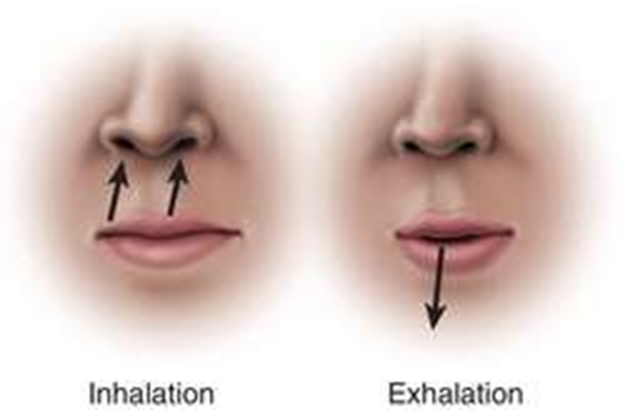
Choice C: Breathe out slowly without puffing your cheeks.
Reason: This instruction is correct. Breathing out slowly through pursed lips without puffing the cheeks helps to keep the airways open longer, allowing more air to be expelled from the lungs. This technique is particularly beneficial for individuals with chronic obstructive pulmonary disease (COPD) or other respiratory conditions.
Choice D: Focus on inhaling and holding your breath as long as you can.
Reason: This instruction is incorrect. The focus of pursed lip breathing is on controlled exhalation rather than holding the breath. Inhaling should be done slowly through the nose, and exhaling should be prolonged through pursed lips.
Choice E: Exhale at least twice the amount of time it took to breathe in.
Reason: This instruction is correct. The exhalation phase should be longer than the inhalation phase, typically taking at least twice as long. This helps to improve the efficiency of breathing and reduce shortness of breath.
Choice F: Open your mouth and breathe deeply.
Reason: This instruction is incorrect. Pursed lip breathing involves breathing in through the nose and exhaling through pursed lips. Opening the mouth and breathing deeply is not part of this technique.
A nurse assesses clients on the medical-surgical unit. Which client is at greatest risk for development of obstructive sleep apnea?
A. A 42-year-old man with gastroesophageal reflux disease
: A 42-year-old man with gastroesophageal reflux disease (GERD) is not at the highest risk for obstructive sleep apnea (OSA). While GERD can be associated with OSA, it is not a primary risk factor. The main risk factors for OSA include obesity, age, and anatomical features that can obstruct the airway. Therefore, this individual is not at the greatest risk compared to others.
B. A 55-year-old woman who is 50 lb (23 kg) overweight
: A 55-year-old woman who is 50 lb (23 kg) overweight is at significant risk for developing OSA. Obesity is one of the most critical risk factors for OSA because excess weight can lead to fat deposits around the upper airway, which can obstruct breathing during sleep. Additionally, being overweight increases the likelihood of other conditions that can exacerbate OSA, such as hypertension and metabolic syndrome.
C. A 20-year-old woman who is 8 months pregnant
: A 20-year-old woman who is 8 months pregnant may experience temporary sleep disturbances, including snoring and mild sleep apnea, due to hormonal changes and increased abdominal pressure. However, pregnancy-related sleep apnea is usually transient and resolves after childbirth. Therefore, while she may have an increased risk during pregnancy, it is not as significant as the risk posed by obesity.
D. A 73-year-old man with type 2 diabetes mellitus
: A 73-year-old man with type 2 diabetes mellitus has an increased risk of OSA, as diabetes is associated with obesity and metabolic syndrome, which are risk factors for OSA. However, the presence of diabetes alone does not pose as high a risk as obesity. Therefore, while this individual is at risk, it is not as high as the risk associated with being significantly overweight.
Full Explanation
Choice A Reason:
A 42-year-old man with gastroesophageal reflux disease (GERD) is not at the highest risk for obstructive sleep apnea (OSA). While GERD can be associated with OSA, it is not a primary risk factor. The main risk factors for OSA include obesity, age, and anatomical features that can obstruct the airway. Therefore, this individual is not at the greatest risk compared to others.
Choice B Reason:
A 55-year-old woman who is 50 lb (23 kg) overweight is at significant risk for developing OSA. Obesity is one of the most critical risk factors for OSA because excess weight can lead to fat deposits around the upper airway, which can obstruct breathing during sleep. Additionally, being overweight increases the likelihood of other conditions that can exacerbate OSA, such as hypertension and metabolic syndrome.
Choice C Reason:
A 20-year-old woman who is 8 months pregnant may experience temporary sleep disturbances, including snoring and mild sleep apnea, due to hormonal changes and increased abdominal pressure. However, pregnancy-related sleep apnea is usually transient and resolves after childbirth. Therefore, while she may have an increased risk during pregnancy, it is not as significant as the risk posed by obesity.
Choice D Reason:
A 73-year-old man with type 2 diabetes mellitus has an increased risk of OSA, as diabetes is associated with obesity and metabolic syndrome, which are risk factors for OSA. However, the presence of diabetes alone does not pose as high a risk as obesity. Therefore, while this individual is at risk, it is not as high as the risk associated with being significantly overweight.