
Nursing practice questions with comprehensive rationales
NurseDive Free Nursing Practice Question
Parents of a school-age child with hemophilia ask the nurse, “Which sports are recommended for children with hemophilia?” Which sport should the nurse recommend?
A. Soccer
This is wrong because soccer is a contact sport that can cause injuries and bleeding episodes in people with hemophilia. Soccer is not recommended by most sports physicians or hematologists for patients with hemophilia.
B. Swimming
Swimming is one of the best sports for people with hemophilia because it strengthens the muscles without putting stress on the joints. Swimming is also recommended by most sports physicians and hematologists for patients with hemophilia.
C. Basketball
This is wrong because basketball is also a contact sport that can lead to injuries and bleeding episodes in people with hemophilia. Basketball may be safe for young children, but the risk increases with the intensity of the game.
D. Football
This is wrong because football is a collision sport that can cause severe injuries and bleeding episodes in people with hemophilia. Football is not recommended by most sports physicians or hematologists for patients with hemophilia. Normal ranges for hemophilia are: Mild hemophilia: 5% to 40% of normal clotting factor Moderate hemophilia: 1% to 5% of normal clotting factor Severe hemophilia: less than 1% of normal clotting factor
This question is an excerpt from Nurse Dive's nursing test bank - OB Pediatric Cumulative Exam Test 4 V 1 2023 Proctored Exam. Take the full exam now
Full Explanation

Swimming is one of the best sports for people with hemophilia because it strengthens the muscles without putting stress on the joints. Swimming is also recommended by most sports physicians and hematologists for patients with hemophilia.
Choice A is wrong because soccer is a contact sport that can cause injuries and bleeding episodes in people with hemophilia. Soccer is not recommended by most sports physicians or hematologists for patients with hemophilia.
Choice C is wrong because basketball is also a contact sport that can lead to injuries and bleeding episodes in people with hemophilia. Basketball may be safe for young children, but the risk increases with the intensity of the game.
Choice D is wrong because football is a collision sport that can cause severe injuries and bleeding episodes in people with hemophilia. Football is not recommended by most sports physicians or hematologists for patients with hemophilia.
Normal ranges for hemophilia are:
- Mild hemophilia: 5% to 40% of normal clotting factor
- Moderate hemophilia: 1% to 5% of normal clotting factor
Severe hemophilia: less than 1% of normal clotting factor
Similar Questions
What should a nurse advise the parents of a child with type 1 diabetes mellitus who is not eating as a result of a minor illness?
A. Give the child half his regular morning dose of insulin
This is wrong because giving the child half his regular morning dose of insulin can lead to hyperglycemia and ketoacidosis.
B. Substitute simple carbohydrates or calorie-containing liquids for solid foods
The child should receive his regular dose of insulin even if he does not have an appetite. If the child is not eating as usual, he needs calories to prevent hypoglycemia. During periods of minor illness, the child with type 1 diabetes mellitus can be managed safely at home.
C. Give the child plenty of unsweetened, clear liquids to prevent dehydration
This is wrong because giving the child plenty of unsweetened, clear liquids to prevent dehydration can also cause hypoglycemia.
D. Take the child directly to the emergency department
This is wrong because taking the child directly to the emergency department is not necessary unless the child has signs of severe dehydration, vomiting, abdominal
Full Explanation
The child should receive his regular dose of insulin even if he does not have an appetite. If the child is not eating as usual, he needs calories to prevent hypoglycemia. During periods of minor illness, the child with type 1 diabetes mellitus can be managed safely at home.
Choice A is wrong because giving the child half his regular morning dose of insulin can lead to hyperglycemia and ketoacidosis.
Choice C is wrong because giving the child plenty of unsweetened, clear liquids to prevent dehydration can also cause hypoglycemia.
Choice D is wrong because taking the child directly to the emergency department is not necessary unless the child has signs of severe dehydration, vomiting, abdominal
During a funduscopic examination of a school-age child, the nurse notes a brilliant, uniform red reflex in both eyes.
The nurse should recognize that this is:.
A. A normal finding
A brilliant, uniform red reflex in both eyes is a sign of a healthy retina and optic nerve. The red reflex is the reflection of light from the retina that varies in color depending on the patient’s skin tone. It can be seen by holding the ophthalmoscope directly in front of your eye and asking the patient to focus on a point in the distance.
B. An abnormal finding: the child needs referral to an ophthalmologist
Thisis wrong because an abnormal finding would be an absent or asymmetric red reflex, which could indicate cataracts, retinal detachment, or other eye diseases.
C. A sign of a possible visual defect; the child needs vision screening
Thisis wrong because a possible visual defect would not affect the red reflex, but rather the visual acuity or field of vision of the patient. A vision screening would involve testing the patient’s ability to read letters or numbers at different distances.
D. A sign of small hemorrhages, which usually resolve spontaneously
This is wrong because small hemorrhages would not cause a brilliant, uniform red reflex, but rather dark spots or blotches on the retina that can be seen with the ophthalmoscope. Hemorrhages can be caused by diabetes, hypertension, or trauma.
Full Explanation
A brilliant, uniform red reflex in both eyes is a sign of a healthy retina and optic nerve. The red reflex is the reflection of light from the retina that varies in color depending on the patient’s skin tone. It can be seen by holding the ophthalmoscope directly in front of your eye and asking the patient to focus on a point in the distance.
Choice B is wrong because an abnormal finding would be an absent or asymmetric red reflex, which could indicate cataracts, retinal detachment, or other eye diseases.
Choice C is wrong because a possible visual defect would not affect the red reflex, but rather the visual acuity or field of vision of the patient.
A vision screening would involve testing the patient’s ability to read letters or numbers at different distances.
Choice D is wrong because small hemorrhages would not cause a brilliant, uniform red reflex, but rather dark spots or blotches on the retina that can be seen with the ophthalmoscope.
Hemorrhages can be caused by diabetes, hypertension, or trauma.
Which factor is most important in predisposing toddlers to frequent infections such as otitis media, tonsillitis, and upper respiratory tract infections?
A. Respirations are abdominal
This does not affect the susceptibility to infection.
B. Pulse and respiratory rates are slower than those in infancy
This is wrong because pulse and respiratory rates are slower than those in infancy. This also does not affect the susceptibility to infection.
C. Defense mechanisms are less efficient than those during infancy
This is wrong because defense mechanisms are less efficient than those during infancy. This is not true, as the defense mechanisms are more efficient compared with those of infancy.
D. The presence of short, straight internal ear/throat structures and large tonsil/adenoid lymph tissue
This is because toddlers continue to have the short, straight internal ear canal of infants. The lymphoid tissue of the tonsils and adenoids continues to be relatively large. These two anatomic conditions combine to predispose the toddler to frequent infections.
Full Explanation
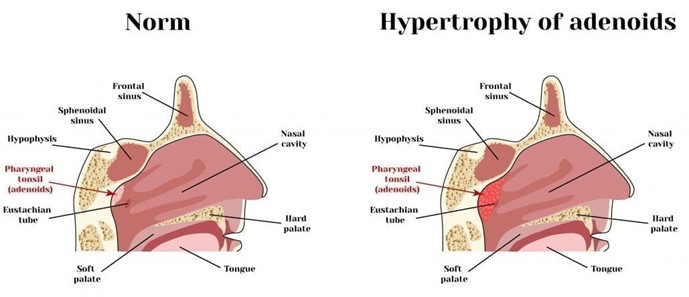
This is because toddlers continue to have the short, straight internal ear canal of infants.
The lymphoid tissue of the tonsils and adenoids continues to be relatively large. These two anatomic conditions combine to predispose the toddler to frequent infections.
Choice A is wrong because respirations are abdominal. This does not affect the susceptibility to infection.
Choice B is wrong because pulse and respiratory rates are slower than those in infancy. This also does not affect the susceptibility to infection.
Choice C is wrong because defense mechanisms are less efficient than those during
infancy. This is not true, as the defense mechanisms are more efficient compared with those of infancy.