
Nursing practice questions with comprehensive rationales
NurseDive Free Nursing Practice Question
Regarding the environment, it is important for the nurse to be aware of lighting for some clients. Clients with a diagnosis of schizophrenia may be bothered by lights that are flickering because this may trigger.
A. Increased sensitivity to light
Increased sensitivity to light is a possible side effect of some antipsychotic medications, but it is not necessarily caused by flickering lights.
B. Aggression
aggression is a symptom of schizophrenia but is not directly triggered by flickering lights.
C. Overstimulation
over-stimulation is not caused by flickering lights but can instead be caused by excessive sensory input.
D. Hallucinations
Flickering lights may trigger or worsen these hallucinations by creating sensory illusions or distortions, for instance, a client may see shadows, shapes, or colors that are not there.
This question is an excerpt from Nurse Dive's nursing test bank - ATI ns 130 Exam Psychosocial Proctored Exam. Take the full exam now
Full Explanation
Choice A rationale: Increased sensitivity to light is a possible side effect of some antipsychotic medications, but it is not necessarily caused by flickering lights.
Choice B rationale: aggression is a symptom of schizophrenia but is not directly triggered by flickering lights.
Choice C rationale: over-stimulation is not caused by flickering lights but can instead be caused by excessive sensory input.
Choice D rationale: Flickering lights may trigger or worsen these hallucinations by creating sensory illusions or distortions, for instance, a client may see shadows, shapes, or colors that are not there.
Similar Questions
The assessment phase of the nursing process refers to the phase when data collection occurs. Which methods does the nurse use to collect data? (Select all that apply.)
A. Observing client behavior
Observation is a method of data collection involving the use of one’s senses to notice the aspects of a client such as their appearance, expressions, and actions.
B. Reviewing diagnostic testing results
Reviewing diagnostic testing results is a method of collecting data that involves the examination of the findings of laboratory tests, imaging studies, and other procedures. These findings provide objective information about the client's physiological functioning.
C. Interviewing the client and significant others
client interview is a method of data collection involving asking them questions and listening to their responses. This method helps the nurse to obtain subjective data about the client's health history, current problems, expectations, values, and beliefs.
D. Performing physical assessment
Performing physical assessment is a method of collecting data that involves using inspection, palpation, percussion, and auscultation to examine the different body systems of the client. This provides objective information about the patient’s condition.
E. Interpreting client behaviors
this is incorrect since Interpreting client behaviors is not a method of collecting data but is instead a data analysis method.
Full Explanation
Choice A rationale: Observation is a method of data collection involving the use of one’s senses to notice the aspects of a client such as their appearance, expressions, and actions.
Choice B rationale: Reviewing diagnostic testing results is a method of collecting data that involves the examination of the findings of laboratory tests, imaging studies, and other procedures. These findings provide objective information about the client's physiological functioning.
Choice C rationale: client interview is a method of data collection involving asking them questions and listening to their responses. This method helps the nurse to obtain subjective data about the client's health history, current problems, expectations, values, and beliefs.
Choice D rationale: Performing physical assessment is a method of collecting data that involves using inspection, palpation, percussion, and auscultation to examine the different body systems of the client. This provides objective information about the patient’s condition.
Choice E rationale: this is incorrect since Interpreting client behaviors is not a method of collecting data but is instead a data analysis method.
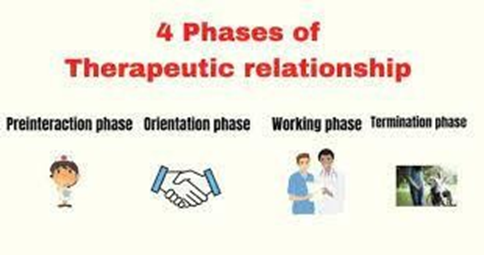
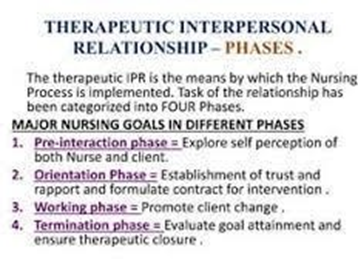
During which phase of the therapeutic relationship do the caregiver and the client identify themselves by introducing themselves to one another?
A. Preparation phase
this is the phase where the caregiver and client establish a rapport by introducing themselves while clarifying their roles and expectations. The caregiver also explains the purpose, scope, and limits of the services they provide.
B. Orientation phase
the preparation phase occurs before the client and the caregiver meet and involves the care provider reviewing the client’s information, identifying their needs, and planning for their first contact.
C. Termination phase
This is the phase where the caregiver and the client end the therapeutic relationship, evaluate the outcomes, and plan for follow-up or referral.
D. Working phase
this phase involves the caregiver and the client implementing interventions, monitoring their progress, and modifying their goals as needed to achieve their set objectives.
Full Explanation
Choice A rationale: this is the phase where the caregiver and client establish a rapport by introducing themselves while clarifying their roles and expectations. The caregiver also explains the purpose, scope, and limits of the services they provide.
Choice B rationale: the preparation phase occurs before the client and the caregiver meet and involves the care provider reviewing the client’s information, identifying their needs, and planning for their first contact.
Choice C rationale: This is the phase where the caregiver and the client end the therapeutic relationship, evaluate the outcomes, and plan for follow-up or referral.
Choice D rationale: this phase involves the caregiver and the client implementing interventions, monitoring their progress, and modifying their goals as needed to achieve their set objectives.
The nurse is administering medications to a client with a diagnosis of a mental illness with a mood disorder. The nurse would expect to see which medications were ordered for this client. (Select all that apply)
A. Risperdal (Risperidone)
Risperdal is an antipsychotic that can help reduce psychotic symptoms such as delusions and hallucinations, as well as stabilize mood swings.
B. Lithium (Eskalith)
Lithium is a mood stabilizer that can prevent manic episodes and reduce the risk of suicide.
C. Ativan (Lorazepam)
Ativan is a benzodiazepine that can relieve anxiety and panic attacks.
D. Benadryl (Diphenhydramine)
Benadryl is an antihistamine that can cause drowsiness and sedation, but has no effect on mood.
E. Depakote (Valproic Acid)
Depakote is a mood stabilizer that can also treat seizures and migraines.
Full Explanation
Choice A rationale: Risperdal is an antipsychotic that can help reduce psychotic symptoms such as delusions and hallucinations, as well as stabilize mood swings.
Choice B rationale: Lithium is a mood stabilizer that can prevent manic episodes and reduce the risk of suicide.
Choice C rationale: Ativan is a benzodiazepine that can relieve anxiety and panic attacks.
Choice D rationale: Benadryl is an antihistamine that can cause drowsiness and sedation, but has no effect on mood.
Choice E rationale: Depakote is a mood stabilizer that can also treat seizures and migraines.