Nursing practice questions with comprehensive rationales
NurseDive Free Nursing Practice Question
The home health nurse visits a client with chronic diabetes insipidus:
Which three (4) client statements would indicate a correct understanding of the teaching?
A. "If I develop confusion with this medication, I should call 911."
Correct. The statement is accurate because developing confusion could be a sign of a serious condition like severe electrolyte imbalance or dehydration, requiring immediate medical attention.
B. "I should limit the amount of fluids that I drink after 5:00 PM."
Incorrect. Fluid intake should not be arbitrarily limited without medical advice, especially for a client with diabetes insipidus. Maintaining a consistent fluid intake is crucial, and any changes should be guided by a healthcare provider.
C. "I will need to weigh myself at the same time every day."
Correct. Weighing oneself at the same time every day is a good practice for monitoring fluid balance and identifying sudden changes that may indicate a problem.
D. "I should put both doses of the desmopressin in one nostril."
Incorrect. Desmopressin doses should be administered as prescribed. The medication's administration should be consistent with the healthcare provider's instructions or the medication guide, not arbitrarily altered.
E. "I need to keep a log of my fluid intake and urine output."
Correct. Keeping a log of fluid intake and urine output is important for managing diabetes insipidus effectively and allows for informed adjustments in fluid intake or medication dosage.
F. "I may need an additional dose if I keep urinating a lot."
Incorrect. Adjusting medication dosage without consulting a healthcare provider is not safe. While increased urination is a symptom of diabetes insipidus, the client should consult their healthcare provider if their symptoms persist or worsen, rather than self-adjusting the medication dose.
This question is an excerpt from Nurse Dive's nursing test bank - Interprofessional Care of the Client and Family Across the Lifespan II Proctored Exam. Take the full exam now
Full Explanation
Choice A rationale: Correct. The statement is accurate because developing confusion could be a sign of a serious condition like severe electrolyte imbalance or dehydration, requiring immediate medical attention.
Choice B rationale: Incorrect. Fluid intake should not be arbitrarily limited without medical advice, especially for a client with diabetes insipidus. Maintaining a consistent fluid intake is crucial, and any changes should be guided by a healthcare provider.
Choice C rationale: Correct. Weighing oneself at the same time every day is a good practice for monitoring fluid balance and identifying sudden changes that may indicate a problem.
Choice D rationale: Incorrect. Desmopressin doses should be administered as prescribed. The medication's administration should be consistent with the healthcare provider's instructions or the medication guide, not arbitrarily altered.
Choice E rationale: Correct. Keeping a log of fluid intake and urine output is important for managing diabetes insipidus effectively and allows for informed adjustments in fluid intake or medication dosage.
Choice F rationale: Incorrect. Adjusting medication dosage without consulting a healthcare provider is not safe. While increased urination is a symptom of diabetes insipidus, the client should consult their healthcare provider if their symptoms persist or worsen, rather than self-adjusting the medication dose.
Similar Questions
The nurse determines the total intake for a client diagnosed with acute kidney injury. The client received 650 mL of intravenous fluid, 6 ounces of water, and 8 ounces of chicken broth during the shift.
The client's urinary output for the shift is 820 mL. What is the total intake the nurse will record for this client?
A. 1060 mL
This is not the accurate amount of fluid intake by the patient.
B. 1055 mL
This is less than the total fluid intake by the patient.
C. 1050 mL
This is less than the total fluid intake by the patient.
D. 1070 mL
This is correct.( This is the sum of the intravenous fluid, the water, and the chicken broth, converted to milliliters: 650 + (6 x 30) + (8 x 30) = 1070.)
Full Explanation
Choice A rationale: This is not the accurate amount of fluid intake by the patient.
Choice B rationale: This is less than the total fluid intake by the patient.
Choice C rationale: This is less than the total fluid intake by the patient.
Choice D rationale: This is correct.( This is the sum of the intravenous fluid, the water, and the chicken broth, converted to milliliters: 650 + (6 x 30) + (8 x 30) = 1070.)
Which client should receive the pictured examination first?
A. a client with nausea, vomiting, and abdominal pain
A client with nausea, vomiting, and abdominal pain may have gastroenteritis, food poisoning, or appendicitis, which are not directly related to the eyes.
B. a client with chest tightness and heartburn
A client with chest tightness and heartburn may have gastroesophageal reflux disease (GERD), angina, or myocardial infarction (MI), which are also not associated with the eyes.
C. a client with facial drooping and left-sided weakness
A client with facial drooping and left-sided weakness may have a stroke, which is a medical emergency that requires immediate attention. An eye examination can help detect signs of stroke, such as pupil asymmetry, visual field defects, or eye movement abnormalities. A stroke can cause permanent brain damage or death if not treated promptly.
D. a client with fatigue, fever, and productive cough
A client with fatigue, fever, and productive cough may have a respiratory infection, such as pneumonia or tuberculosis, which are unlikely to affect the eyes unless there is a systemic complication.
Full Explanation
Choice A rationale: A client with nausea, vomiting, and abdominal pain may have gastroenteritis, food poisoning, or appendicitis, which are not directly related to the eyes.
Choice B rationale: A client with chest tightness and heartburn may have gastroesophageal reflux disease (GERD), angina, or myocardial infarction (MI), which are also not associated with the eyes.
Choice C rationale: A client with facial drooping and left-sided weakness may have a stroke, which is a medical emergency that requires immediate attention. An eye examination can help detect signs of stroke, such as pupil asymmetry, visual field defects, or eye movement abnormalities. A stroke can cause permanent brain damage or death if not treated promptly.
Choice D rationale: A client with fatigue, fever, and productive cough may have a respiratory infection, such as pneumonia or tuberculosis, which are unlikely to affect the eyes unless there is a systemic complication.
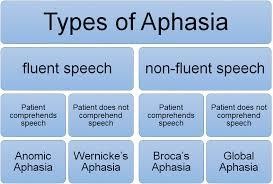
The nurse is assessing a patient with suspected neurological issues. The patient's speech is delivered with normal rhythm but filled with words that do not form any meaningful statements.
The patient is also unable to write or repeat back words and does not appear to understand the nurse's instructions or questions. The nurse would recognize these symptoms as:
A. Expressive aphasia
Expressive aphasia is a type of non-fluent aphasia that affects the ability to produce language. It is caused by damage to the anterior part of the left frontal lobe, which is responsible for motor planning and execution of speech. Patients with expressive aphasia can understand language but have difficulty speaking, writing, or naming objects. They often produce short, halting, and grammatically incorrect sentences with word-finding difficulties.
B. Broca's aphasia
this is another term for expressive aphasia. The patient can understand language but have difficulty speaking, writing, or naming objects. They often produce short, halting, and grammatically incorrect sentences with word-finding difficulties.
C. Global aphasia
Global aphasia is a severe form of aphasia that affects both comprehension and production of language. It is caused by extensive damage to the left hemisphere of the brain, which is dominant for language functions in most people. Patients with global aphasia have little or no ability to speak, write, read, or understand language.
D. Wernicke's aphasia
Wernicke's aphasia is a type of receptive aphasia that affects the comprehension and production of language. It is caused by damage to the posterior part of the left temporal lobe, which is responsible for processing auditory and visual information. Patients with Wernicke's aphasia can speak fluently but nonsensically, using words that are irrelevant, invented, or distorted. They also have difficulty understanding spoken or written language and following commands.
Full Explanation
Choice A rationale: Expressive aphasia is a type of non-fluent aphasia that affects the
ability to produce language. It is caused by damage to the anterior part of the left frontal lobe, which is responsible for motor planning and execution of speech. Patients with expressive aphasia can understand language but have difficulty speaking, writing, or naming objects. They often produce short, halting, and grammatically incorrect sentences with word-finding difficulties.
Choice B rationale: this is another term for expressive aphasia. The patient can
understand language but have difficulty speaking, writing, or naming objects. They often produce short, halting, and grammatically incorrect sentences with word-finding difficulties.
Choice C rationale: Global aphasia is a severe form of aphasia that affects both
comprehension and production of language. It is caused by extensive damage to the left hemisphere of the brain, which is dominant for language functions in most people.
Patients with global aphasia have little or no ability to speak, write, read, or understand language.
Choice D rationale: Wernicke's aphasia is a type of receptive aphasia that affects the
comprehension and production of language. It is caused by damage to the posterior part of the left temporal lobe, which is responsible for processing auditory and visual
information. Patients with Wernicke's aphasia can speak fluently but nonsensically, using words that are irrelevant, invented, or distorted. They also have difficulty understanding spoken or written language and following commands.