
Nursing practice questions with comprehensive rationales
NurseDive Free Nursing Practice Question
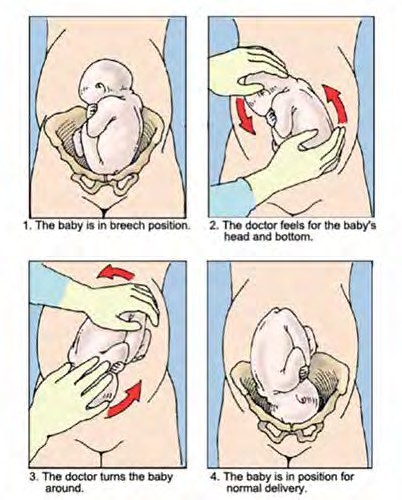
The nurse is caring for a term gestation pregnant patient who came into the office for an external cephalic version. Which of the following interventions would not be appropriate for this patient?
A. Verify the patient's blood type and prepare RhoGAM † necessary.
B. Have the patient ambulate before the procedure to see if the baby will turn.
The patient should not be ambulating before the procedure as this may cause fetal descent and prevent the success of the version. The other interventions listed are appropriate and important for the safety and well-being of the patient and the fetus during the procedure.
C. Have the patient empty her bladder before the procedure.
D. Assess for contractions and fetal heart rate pattern before the procedure.
This question is an excerpt from Nurse Dive's nursing test bank - Final Exam OB + Community Proctored Exam. Take the full exam now
Full Explanation
The patient should not be ambulating before the procedure as this may cause fetal descent and prevent the success of the version. The other interventions listed are appropriate and important for the safety and well-being of the patient and the fetus during the procedure.
Similar Questions
You are counseling a client who was just diagnosed at 29 weeks gestational age of having gestational diabetes (GDM) after completing her 3 hour glucose tolerance test. Which statement regarding GDM by the client is false and indicates additional Counseling is required?
A. I need to start an American Diabetic Association (ADA) diet“
B. l am at higher risk for a cesarean section delivery
C. I am worried about getting diabetes later in life!
D. "My baby is more at risk for cardiac defects”
While gestational diabetes (GDM) can increase the risk of certain complications for the baby, such as macrosomia (large baby) and hypoglycemia after birth, there is no known increased risk for cardiac defects specifically. The other statements are accurate and appropriate for a client newly diagnosed with GDM.
Full Explanation
While gestational diabetes (GDM) can increase the risk of certain complications for the baby, such as macrosomia (large baby) and hypoglycemia after birth, there is no known increased risk for cardiac defects specifically. The other statements are accurate and appropriate for a client newly diagnosed with GDM.
A 25-year-old woman with Type II Diabetes Mellitus should be educated on all the following regarding preconception care, except:
A. It includes close monitoring of the patient's blood sugar for one month prior to pregnancy
B. It involves a multidisciplinary care team approach.
C. It can help the patient plan the optimal time to become pregnant.
D. It is recommended for all diabetic women of childbearing age.
It is recommended for all diabetic women of childbearing age. (This statement is not entirely accurate as preconception care is recommended specifically for women with diabetes who are considering pregnancy, not all women of childbearing age.)
Full Explanation
It is recommended for all diabetic women of childbearing age. (This statement is not entirely accurate as preconception care is recommended specifically for women with diabetes who are considering pregnancy, not all women of childbearing age.)
Which major neonatal complication is carefully monitored after the birth of the infant of a diabetic mother?
A. Hypoinsulinemia
B. Hyperbilirubinemia
C. Hypoglycemia
Infants of diabetic mothers (IDM) are at risk of hypoglycemia because they have been exposed to high levels of glucose in utero. The fetus responds to this high glucose level by producing high levels of insulin to regulate the glucose level. After delivery, the glucose supply from the mother is cut off and the infant's insulin levels remain high, leading to hypoglycemia. Additionally, the infant's ability to produce glucose is immature and may not be sufficient to maintain normal blood glucose levels, especially if the infant is premature or small for gestational age. Therefore, IDM requires close monitoring of their blood glucose levels to prevent and treat hypoglycemia.
D. Hypercalcemia
Full Explanation
Infants of diabetic mothers (IDM) are at risk of hypoglycemia because they have been exposed to high levels of glucose in utero. The fetus responds to this high glucose level by producing high levels of insulin to regulate the glucose level. After delivery, the glucose supply from the mother is cut off and the infant's insulin levels remain high, leading to hypoglycemia.
Additionally, the infant's ability to produce glucose is immature and may not be sufficient to maintain normal blood glucose levels, especially if the infant is premature or small for gestational age. Therefore, IDM requires close monitoring of their blood glucose levels to prevent and treat hypoglycemia.