
Nursing practice questions with comprehensive rationales
NurseDive Free Nursing Practice Question
The nurse is collecting data from a client with obsessive-compulsive disorder (OCD). Which of the following findings should the nurse expect? (Select all that apply.)
A. Irrational fear of certain objects
This is incorrect because irrational fear of certain objects is more indicative of a phobia than OCD.
B. Difficulty relaxing
The client with OCD may experience difficulty relaxing and often feels tense, anxious, and irritable. They may engage in rule-conscious behavior and exhibit perfectionist tendencies, as well as experience compulsive behaviors. These behaviors may be time-consuming and interfere with daily activities.
C. Unaware of compulsions
This is incorrect because clients with OCD are usually aware of their compulsions and may even try to resist them.
D. Rule-conscious behavior
The client with OCD may experience difficulty relaxing and often feels tense, anxious, and irritable. They may engage in rule-conscious behavior and exhibit perfectionist tendencies, as well as experience compulsive behaviors. These behaviors may be time-consuming and interfere with daily activities.
E. Perfectionist behavior
The client with OCD may experience difficulty relaxing and often feels tense, anxious, and irritable. They may engage in rule-conscious behavior and exhibit perfectionist tendencies, as well as experience compulsive behaviors. These behaviors may be time-consuming and interfere with daily activities.
This question is an excerpt from Nurse Dive's nursing test bank - PNU Adult Health II Spring 2023 Proctored Exam 2. Take the full exam now
Full Explanation
The client with OCD may experience difficulty relaxing and often feels tense, anxious, and irritable. They may engage in rule-conscious behavior and exhibit perfectionist tendencies, as well as experience compulsive behaviors. These behaviors may be time-consuming and interfere with daily activities.
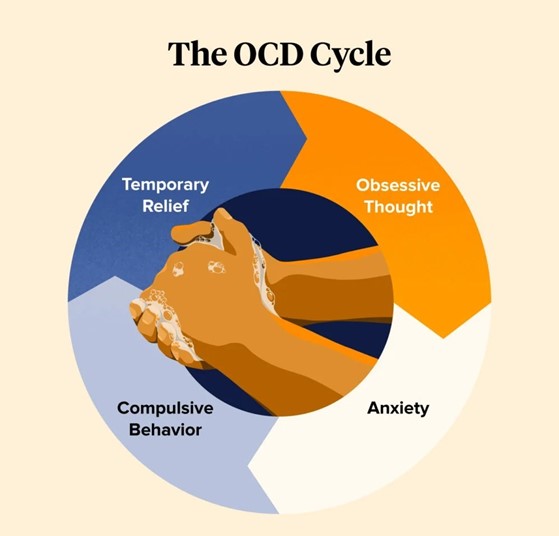
Option A is incorrect because irrational fear of certain objects is more indicative of a phobia than OCD.
Option C is incorrect because clients with OCD are usually aware of their compulsions and may even try to resist them.
Reasons why the other options are not correct answers:
Option A: Irrational fear of certain objects is more indicative of a phobia than OCD.
Option C: Clients with OCD are usually aware of their compulsions and may even try to resist them.
Similar Questions
A nurse in a community clinic is caring for a 20-month-old toddler who has spiral fractures of the right ulna and radius. Which of the following findings should the nurse recognize as a potential indication of abuse?
A. The child was brought to the facility 30 min after the injury occurred.
This is not correct because bringing the child to the facility soon after the injury does not rule out abuse. The abuser may have done so to avoid suspicion or to prevent further complications.
B. The child begins to cry when her arm is examined by the provider.
This is not correct because crying when the arm is examined is a normal reaction for a child who is in pain and scared. It does not indicate abuse or neglect.
C. The parents report that the child injured herself by falling off the couch.
This is correct because it is unlikely that a fall from a couch would cause a spiral fracture of the ulna and radius. These bones are strong and require a lot of force to break. A fall from a couch would more likely cause a greenstick fracture, which is a partial break of the bone that occurs in children with flexible bones. A spiral fracture is a type of broken bone that occurs when a twisting force is applied to the bone. It is often seen in cases of child abuse, where the abuser grabs and twists the child's arm or leg.
D. The child's examination shows a single injury.
This is not correct because a single injury does not exclude abuse. The child may have been abused before and healed without medical attention, or the abuser may have targeted only one part of the body. A single injury should still raise suspicion and prompt further investigation.
Full Explanation
The parents report that the child injured herself by falling off the couch.
A spiral fracture is a type of broken bone that occurs when a twisting force is applied to the bone. It is often seen in cases of child abuse, where the abuser grabs and twists the child's arm or leg.
Choice A is not correct because bringing the child to the facility soon after the injury does not rule out abuse. The abuser may have done so to avoid suspicion or to prevent further complications.
Choice B is not correct because crying when the arm is examined is a normal reaction for a child who is in pain and scared. It does not indicate abuse or neglect.
Choice C is correct because it is unlikely that a fall from a couch would cause a spiral fracture of the ulna and radius. These bones are strong and require a lot of force to break. A fall from a couch would more likely cause a greenstick fracture, which is a partial break of the bone that occurs in children with flexible bones.
Choice D is not correct because a single injury does not exclude abuse. The child may have been abused before and healed without medical attention, or the abuser may have targeted only one part of the body. A single injury should still raise suspicion and prompt further investigation.
A nurse is discussing the reporting of child abuse with a newly licensed nurse. Which of the following statements by the newly licensed nurse indicates an understanding of the teaching?
A. "Civil liability can result if the abuse can't be proven."
This is incorrect because civil liability does not depend on whether the abuse can be proven or not, but on whether the report was made in good faith or not.
B. "Evidence of abuse must be collected prior to reporting."
This is incorrect because evidence of abuse does not need to be collected prior to reporting, but only reasonable suspicion of abuse.
C. "Reporting is voluntary for healthcare workers."
This is incorrect because reporting is not voluntary for healthcare workers, but mandatory by law.
D. "If suspicion of abuse exists then reporting is mandatory."
This is correct because if suspicion of abuse exists then reporting is mandatory for any person, agency, organization, or entity with direct knowledge of child abuse or neglect.
Full Explanation
If suspicion of abuse exists then reporting is mandatory.

Choice A is incorrect because civil liability does not depend on whether the abuse can be proven or not, but on whether the report was made in good faith or not.
Choice B is incorrect because evidence of abuse does not need to be collected prior to reporting, but only reasonable suspicion of abuse.
Choice C is incorrect because reporting is not voluntary for healthcare workers, but mandatory by law.
Choice D is correct because if suspicion of abuse exists then reporting is mandatory for any person, agency, organization, or entity with direct knowledge of child abuse or neglect.
A nurse is caring for an older adult client who has dementia and is agitated. The client says, "I have to go home and see my mother." The nurse replies, "You miss your mother." Which of the following therapeutic techniques is the nurse using?
A. Remotivation
Remotivation is a technique that aims to stimulate the person's interest in the present and future, by providing factual information and encouraging participation in activities. Remotivation may not be appropriate for someone who is agitated and living in the past.
B. Orientation to reality
Orientation to reality is a technique that involves correcting the person's misperceptions and confusions, by providing factual information about time, place, and identity. Orientation to reality may increase agitation and frustration and may damage the person's self-esteem.
C. Guided imagery
Guided imagery is a technique that involves using mental images to promote relaxation and well-being. Guided imagery may not be effective for someone who has difficulty with attention, concentration and memory.
D. Validation
Validation is a therapeutic technique that involves acknowledging and accepting the feelings and emotions of the person with dementia, even if they are not based on reality. Validation helps to reduce agitation and anxiety and promotes dignity and respect.
Full Explanation
Validation. Validation is a therapeutic technique that involves acknowledging and accepting the feelings and emotions of the person with dementia, even if they are not based on reality. Validation helps to reduce agitation and anxiety and promotes dignity and respect.
The other choices are not correct for the following reasons:
Remotivation is a technique that aims to stimulate the person's interest in the present and future, by providing factual information and encouraging participation in activities. Remotivation may not be appropriate for someone who is agitated and living in the past.
Orientation to reality is a technique that involves correcting the person's misperceptions and confusions, by providing factual information about time, place, and identity. Orientation to reality may increase agitation and frustration and may damage the person's self-esteem.
Guided imagery is a technique that involves using mental images to promote relaxation and well-being. Guided imagery may not be effective for someone who has difficulty with attention, concentration and memory.