
Nursing practice questions with comprehensive rationales
NurseDive Free Nursing Practice Question
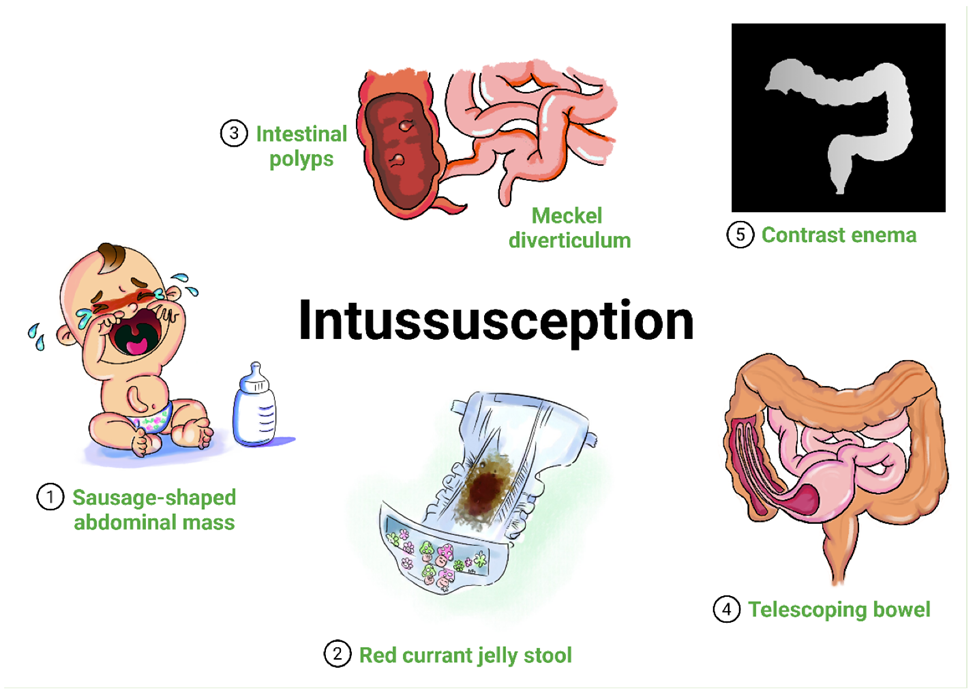
The nurse is preparing to care for a child with a diagnosis of intussusception. The nurse reviews the child's record and expects to note which sign of this disorder documented?
A. Ribbon-like stools
Ribbon-like stoolsExplanation: Ribbon-like or pencil-thin stools are associated with conditions affecting the rectum, such as colorectal cancer, but they are not a typical sign of intussusception.
B. Profuse projectile vomiting
Profuse projectile vomitingExplanation: Profuse projectile vomiting is not a typical sign of intussusception. Vomiting may occur, but it is not the primary characteristic feature.
C. Bright red blood and mucus in the stools
Bright red blood and mucus in the stools Explanation:Intussusception is a condition in which one part of the intestine slides into another, causing a blockage. One of the classic signs of intussusception is the presence of "currant jelly" stools, which are characterized by a mixture of bright red blood and mucus in the stools. This occurs due to the compression of the blood vessels in the intestine, leading to bleeding and mucosal discharge.
D. Watery diarrhea
Watery diarrhea Explanation: Watery diarrhea is not a typical sign of intussusception. The condition is more commonly associated with abdominal pain, vomiting, and the characteristic "currant jelly" stools.
This question is an excerpt from Nurse Dive's nursing test bank - ATI RN Paediatric Assessment Proctored Exam 2022. Take the full exam now
Full Explanation
A. Ribbon-like stools
Explanation: Ribbon-like or pencil-thin stools are associated with conditions affecting the rectum, such as colorectal cancer, but they are not a typical sign of intussusception.
B. Profuse projectile vomiting
Explanation: Profuse projectile vomiting is not a typical sign of intussusception. Vomiting may occur, but it is not the primary characteristic feature.
C. Bright red blood and mucus in the stools
Explanation:
Intussusception is a condition in which one part of the intestine slides into another, causing a blockage. One of the classic signs of intussusception is the presence of "currant jelly" stools, which are characterized by a mixture of bright red blood and mucus in the stools. This occurs due to the compression of the blood vessels in the intestine, leading to bleeding and mucosal discharge.
D. Watery diarrhea
Explanation: Watery diarrhea is not a typical sign of intussusception. The condition is more commonly associated with abdominal pain, vomiting, and the characteristic "currant jelly" stools.
Similar Questions
A nurse is providing nutritional teaching to the mother of a preschooler and is recommending food options to provide 1 oz of grains. Which of the following foods should the nurse recommend?
A. 1 cup cooked rice
1 cup cooked rice: This exceeds the 1 oz serving size and is more than what the nurse is recommending.
B. flour tortilla
Flour tortilla: The size of a flour tortilla can vary, but it often exceeds the 1 oz serving size, so it may provide more than the recommended amount.
C. 1 cup ready-to-eat cereal flakes
1 cup ready-to-eat cereal flakes: The volume of cereal can vary, and 1 cup of cereal may provide more than 1 oz of grains, depending on the type and density of the cereal.
D. 1 slice whole wheat bread
1 slice whole wheat bread: A standard slice of whole wheat bread typically provides around 1 oz of grains, making it an appropriate choice for the recommended serving size.
Full Explanation
A. 1 cup cooked rice: This exceeds the 1 oz serving size and is more than what the nurse is recommending.
B. Flour tortilla: The size of a flour tortilla can vary, but it often exceeds the 1 oz serving size, so it may provide more than the recommended amount.
C. 1 cup ready-to-eat cereal flakes: The volume of cereal can vary, and 1 cup of cereal may provide more than 1 oz of grains, depending on the type and density of the cereal.
D. 1 slice whole wheat bread: A standard slice of whole wheat bread typically provides around 1 oz of grains, making it an appropriate choice for the recommended serving size.
The nurse is creating a plan of care for a child who is at risk for seizures. Which interventions apply if the child has a seizure? Select all that apply.
A. Move furniture away from the child.
Move furniture away from the child.Explanation: Creating a safe environment is important during a seizure. Moving furniture away from the child helps prevent injury.
B. Place the child in a prone position.
Place the child in a prone position.Explanation: Placing the child in a prone position (face down) is not recommended. The child should be placed on their side to allow for drainage of oral secretions and to prevent aspiration.
C. Restrain the child.
Restrain the child.Explanation: Restraint is generally not recommended during a seizure, as it may cause injury to the child or the person providing care. Allow the seizure to run its course, and focus on keeping the environment safe.
D. Time the seizure
Time the seizure.Explanation: Timing the duration of the seizure is important for medical evaluation and management. Note the start and end times of the seizure.
E. Insert a padded tongue blade in the child's mouth.
Explanation: Inserting any object, including a padded tongue blade, into the child's mouth during a seizure is not recommended. This can lead to oral and dental injuries. Maintaining a clear airway and protecting the child from injury are priorities.
F. Stay with the child
Explanation: Staying with the child provides support and ensures the child's safety during the seizure. It also allows the caregiver to observe and provide information to healthcare professionals.
Full Explanation
A.Move furniture away from the child.
Explanation: Creating a safe environment is important during a seizure. Moving furniture away from the child helps prevent injury.
B.Place the child in a prone position.
Explanation: Placing the child in a prone position (face down) is not recommended. The child should be placed on their side to allow for drainage of oral secretions and to prevent aspiration.
C. Restrain the child.
Explanation: Restraint is generally not recommended during a seizure, as it may cause injury to the child or the person providing care. Allow the seizure to run its course, and focus on keeping the environment safe.
D.Time the seizure.
Explanation: Timing the duration of the seizure is important for medical evaluation and management. Note the start and end times of the seizure.
E. Insert a padded tongue blade in the child's mouth.
Explanation: Inserting any object, including a padded tongue blade, into the child's mouth during a seizure is not recommended. This can lead to oral and dental injuries. Maintaining a clear airway and protecting the child from injury are priorities.
F. Stay with the child.
Explanation: Staying with the child provides support and ensures the child's safety during the seizure. It also allows the caregiver to observe and provide information to healthcare professionals.
A nurse is providing nutritional teaching to the mother of a preschooler and is recommending food options to provide 1 oz of grains. Which of the following foods should the nurse recommend?
A. 1 cup cooked rice
1 cup cooked rice: This exceeds the 1 oz serving size and is more than what the nurse is recommending.
B. flour tortilla
Flour tortilla: The size of a flour tortilla can vary, but it often exceeds the 1 oz serving size, so it may provide more than the recommended amount.
C. 1 cup ready-to-eat cereal flakes
1 cup ready-to-eat cereal flakes: The volume of cereal can vary, and 1 cup of cereal may provide more than 1 oz of grains, depending on the type and density of the cereal.
D. 1 slice whole wheat bread
1 slice whole wheat bread: A standard slice of whole wheat bread typically provides around 1 oz of grains, making it an appropriate choice for the recommended serving size.
Full Explanation
A. 1 cup cooked rice: This exceeds the 1 oz serving size and is more than what the nurse is recommending.
B. Flour tortilla: The size of a flour tortilla can vary, but it often exceeds the 1 oz serving size, so it may provide more than the recommended amount.
C. 1 cup ready-to-eat cereal flakes: The volume of cereal can vary, and 1 cup of cereal may provide more than 1 oz of grains, depending on the type and density of the cereal.
D. 1 slice whole wheat bread: A standard slice of whole wheat bread typically provides around 1 oz of grains, making it an appropriate choice for the recommended serving size.