
Nursing practice questions with comprehensive rationales
NurseDive Free Nursing Practice Question
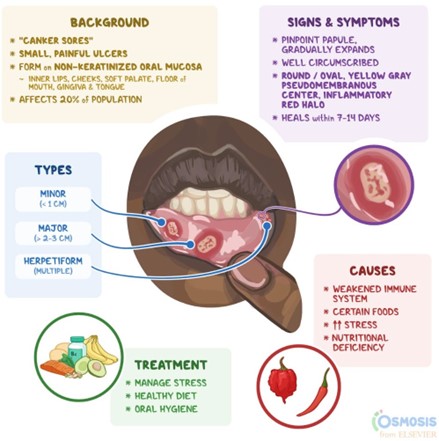
The practical nurse (PN) learns that a client who is receiving chemotherapy has developed stomatitis.
Which information should the PN obtain from the client during a focused assessment?
A. Urinary output.
Urinary output is not directly related to stomatitis. Stomatitis primarily affects the oral cavity, and its impact on urinary output is minimal or nonexistent. While monitoring urinary output is important for assessing hydration status, it is not the priority in this situation.
B. Ability to swallow.
Stomatitis refers to the inflammation of the mouth and oral mucosa, which can cause pain and difficulty swallowing. In the context of a client receiving chemotherapy, stomatitis is a common side effect that can occur due to the effects of chemotherapy on rapidly dividing cells, including those in the oral cavity. When a client develops stomatitis, it is important for the practical nurse (PN) to obtain information about the client's ability to swallow during a focused assessment. This is because stomatitis can significantly impact a client's ability to eat and drink comfortably, which can lead to dehydration and malnutrition. Assessing the client's ability to swallow helps determine the extent of the issue and guides appropriate interventions and support.
C. Frequency of bowel movements.
The frequency of bowel movements is unrelated to stomatitis. Stomatitis primarily affects the mouth, and its presence does not directly influence bowel movements. Assessing bowel movements may be relevant for other concerns, but it is not specifically related to stomatitis.
D. Blood pressure while standing.
Blood pressure while standing, also known as orthostatic blood pressure, is not directly relevant to stomatitis. Stomatitis primarily affects the oral cavity and does not typically have a direct impact on blood pressure. Assessing blood pressure while standing may be appropriate for other health concerns, such as orthostatic hypotension, but it is not the priority in this situation.
This question is an excerpt from Nurse Dive's nursing test bank - HESI PN Exit 2023 Proctored Exam. Take the full exam now
Full Explanation
Stomatitis refers to the inflammation of the mouth and oral mucosa, which can cause pain and difficulty swallowing. In the context of a client receiving chemotherapy, stomatitis is a common side effect that can occur due to the effects of chemotherapy on rapidly dividing cells, including those in the oral cavity. When a client develops stomatitis, it is important for the practical nurse (PN) to obtain information about the client's ability to swallow during a focused assessment. This is because stomatitis can significantly impact a client's ability to eat and drink comfortably, which can lead to dehydration and malnutrition. Assessing the client's ability to swallow helps determine the extent of the issue and guides appropriate interventions and support.
Let's briefly evaluate the other options:
a) Urinary output.
Urinary output is not directly related to stomatitis. Stomatitis primarily affects the oral cavity, and its impact on urinary output is minimal or nonexistent. While monitoring urinary output is important for assessing hydration status, it is not the priority in this situation.
c) Frequency of bowel movements.
The frequency of bowel movements is unrelated to stomatitis. Stomatitis primarily affects the mouth, and its presence does not directly influence bowel movements. Assessing bowel movements may be relevant for other concerns, but it is not specifically related to stomatitis.
d) Blood pressure while standing.
Blood pressure while standing, also known as orthostatic blood pressure, is not directly relevant to stomatitis. Stomatitis primarily affects the oral cavity and does not typically have a direct impact on blood pressure. Assessing blood pressure while standing may be appropriate for other health concerns, such as orthostatic hypotension, but it is not the priority in this situation.
In summary, when a client receiving chemotherapy develops stomatitis, the practical nurse should focus on assessing the client's ability to swallow as it directly relates to the impact of stomatitis on the client's nutrition and hydration.
Similar Questions
In assessing a client with an indwelling urinary catheter following the provision of care by an unlicensed assistive personnel (UAP), the practical nurse (PN) observes that the catheter drainage bag, which is half- full, is attached to the side rail and the tubing is looped on the bed.
Which action should the PN implement?
A. Apply gloves and empty the drainage bag
Applying gloves and emptying the drainage bag is not the immediate priority. The drainage bag should not be allowed to overfill, but in this scenario, it is only half-full.
B. Remove the looped tubing from the bed
Removing the looped tubing from the bed is important to ensure proper drainage and prevent backflow, but it does not address the incorrect placement of the drainage bag.
C. Measure the urinary output in the bag
Measuring the urinary output in the bag is a routine task but does not correct the improper placement of the drainage bag.
D. Attach the drainage bag to the bed frame
Attaching the drainage bag to the bed frame is the correct action. The drainage bag should be kept below the level of the bladder and attached to a non-movable part of the bed to prevent backflow and reduce the risk of infection.
Full Explanation
The correct answer is choice d. Attach the drainage bag to the bed frame.
Choice A rationale:
Applying gloves and emptying the drainage bag is not the immediate priority. The drainage bag should not be allowed to overfill, but in this scenario, it is only half-full.
Choice B rationale:
Removing the looped tubing from the bed is important to ensure proper drainage and prevent backflow, but it does not address the incorrect placement of the drainage bag.
Choice C rationale:
Measuring the urinary output in the bag is a routine task but does not correct the improper placement of the drainage bag.
Choice D rationale:
Attaching the drainage bag to the bed frame is the correct action. The drainage bag should be kept below the level of the bladder and attached to a non-movable part of the bed to prevent backflow and reduce the risk of infection.
The unlicensed assistive personnel (UAP) tells the practical nurse (PN) that a male client is angry because the night shift took over 2 hours to bring him the pain medication, he had to request three times.
Which action should the PN implement first?
A. Ask the client to describe what happened
This is the first action that the PN should implement when the UAP tells them that a male client is angry because the night shift took over 2 hours to bring him the pain medication, he had to request three times. Asking the client to describe what happened shows empathy, respect, and active listening, and allows the PN to gather more information and validate the client's feelings and concerns. The PN should also apologize for the delay, assess the client's pain level and needs, and provide appropriate interventions and support.
B. Inform the charge nurse of the situation
This is not the first action that the PN should implement when the UAP tells them that a male client is angry because the night shift took over 2 hours to bring him the pain medication, he had to request three times. Informing the charge nurse of the situation may be necessary, but it should be done after addressing the client's immediate needs and concerns. The PN should not ignore or avoid the client, but should communicate with him and try to resolve the issue.
C. Complete a client adverse incident report
This is not the first action that the PN should implement when the UAP tells them that a male client is angry because the night shift took over 2 hours to bring him the pain medication, he had to request three times. Completing a client adverse incident report may be required, but it should be done after addressing the client's immediate needs and concerns. The PN should not prioritize documentation over care, but should provide timely and effective pain management and support to the client.
D. Call the agency-based client advocate
This is not the first action that the PN should implement when the UAP tells them that a male client is angry because the night shift took over 2 hours to bring him the pain medication, he had to request three times. Calling the agency-based client advocate may be helpful, but it should be done after addressing the client's immediate needs and concerns. The PN should not delegate or defer responsibility for care, but should communicate with the client and try to resolve the issue. The PN should also respect the client's right to choose whether or not to involve an advocate in his care.
Full Explanation
The correct answer and explanation are:
A - Ask the client to describe what happened. Correct
This is the first action that the PN should implement when the UAP tells them that a male client is angry because the night shift took over 2 hours to bring him the pain medication, he had to request three times.
Asking the client to describe what happened shows empathy, respect, and active listening, and allows the PN to gather more information and validate the client's feelings and concerns. The PN should also apologize for the delay, assess the client's pain level and needs, and provide appropriate interventions and support.
B - Inform the charge nurse of the situation.
This is not the first action that the PN should implement when the UAP tells them that a male client is angry because the night shift took over 2 hours to bring him the pain medication, he had to request three times.
Informing the charge nurse of the situation may be necessary, but it should be done after addressing the client's immediate needs and concerns. The PN should not ignore or avoid the client, but should communicate with him and try to resolve the issue.
C - Complete a client adverse incident report.
This is not the first action that the PN should implement when the UAP tells them that a male client is angry because the night shift took over 2 hours to bring him the pain medication, he had to request three times.
Completing a client adverse incident report may be required, but it should be done after addressing the client's immediate needs and concerns. The PN should not prioritize documentation over care, but should provide timely and effective pain management and support to the client.
D - Call the agency-based client advocate.
This is not the first action that the PN should implement when the UAP tells them that a male client is angry because the night shift took over 2 hours to bring him the pain medication, he had to request three times. Calling the agency-based client advocate may be helpful, but it should be done after addressing the client's immediate needs and concerns.
The PN should not delegate or defer responsibility for care, but should communicate with the client and try to resolve the issue. The PN should also respect the client's right to choose whether or not to involve an advocate in his care.
The mother of a school-aged boy tells the practical nurse (PN) that he fell out of a tree and hurt his arm and shoulder. The mother says the boy is in pain and needs medical help.
The nurse should assess the injury and decide the appropriate action to take.
Help the nurse reason out the best assessment.
A. The injury may require medical attention, as the mother mentioned that the boy is in pain
This is the correct answer, as it reflects the nurse's assessment of the injury and the appropriate action to take. The nurse should consider the mother's report of pain as a valid indicator of the severity of the injury, and should not dismiss or minimize it. The nurse should also observe the boy's arm and shoulder for any signs of fracture, dislocation, swelling, bruising, or deformity, and ask him to rate his pain on a scale of 0 to 10. The nurse should then decide whether to refer the boy to a physician or an emergency department for further evaluation and treatment.
B. The abrasions on the boy's leg and hand have healed
This is not the correct answer, as it does not reflect the nurse's assessment of the injury or the appropriate action to take. The abrasions on the boy's leg and hand are not relevant to his current complaint of arm and shoulder pain, and do not indicate whether he needs medical attention or not. The nurse should focus on the boy's primary concern and not distract him with unrelated questions or comments.
C. The mother describes what she did after her child got injured
This is not the correct answer, as it does not reflect the nurse's assessment of the injury or the appropriate action to take. The mother's description of what she did after her child got injured may provide some useful information, such as how long ago the injury occurred, what first aid measures were applied, and whether there was any improvement or worsening of symptoms. However, it does not directly answer the question of whether the injury requires medical attention or not. The nurse should listen to the mother's account, but also perform a physical examination and ask relevant questions to assess the injury.
D. The boy lacks coordination when answering the nurse's questions
This is not the correct answer, as it does not reflect the nurse's assessment of the injury or the appropriate action to take. The boy's lack of coordination when answering the nurse's questions may indicate a possible head injury, concussion, or shock, which are serious complications that require immediate medical attention. However, it does not directly relate to his arm and shoulder pain, which is his main complaint. The nurse should assess the boy's mental status and neurological function, but also evaluate his arm and shoulder for any signs of damage or inflammation.
Full Explanation
A - The injury may require medical attention, as the mother mentioned that the boy is in pain. Correct
This is the correct answer, as it reflects the nurse's assessment of the injury and the appropriate action to take. The nurse should consider the mother's report of pain as a valid indicator of the severity of the injury, and should not dismiss or minimize it.
The nurse should also observe the boy's arm and shoulder for any signs of fracture, dislocation, swelling, bruising, or deformity, and ask him to rate his pain on a scale of 0 to 10. The nurse should then decide whether to refer the boy to a physician or an emergency department for further evaluation and treatment.
B - The abrasions on the boy's leg and hand have healed.
This is not the correct answer, as it does not reflect the nurse's assessment of the injury or the appropriate action to take. The abrasions on the boy's leg and hand are not relevant to his current complaint of arm and shoulder pain, and do not indicate whether he needs medical attention or not. The nurse should focus on the boy's primary concern and not distract him with unrelated questions or comments.
C - The mother describes what she did after her child got injured.
This is not the correct answer, as it does not reflect the nurse's assessment of the injury or the appropriate action to take. The mother's description of what she did after her child got injured may provide some useful information, such as how long ago the injury occurred, what first aid measures were applied, and whether there was any improvement or worsening of symptoms. However, it does not directly answer the question of whether the injury requires medical attention or not. The nurse should listen to the mother's account, but also perform a physical examination and ask relevant questions to assess the injury.
D - The boy lacks coordination when answering the nurse's questions.
This is not the correct answer, as it does not reflect the nurse's assessment of the injury or the appropriate action to take. The boy's lack of coordination when answering the nurse's questions may indicate a possible head injury, concussion, or shock, which are serious complications that require immediate medical attention. However, it does not directly relate to his arm and shoulder pain, which is his main complaint.
The nurse should assess the boy's mental status and neurological function, but also evaluate his arm and shoulder for any signs of damage or inflammation.