
Nursing practice questions with comprehensive rationales
NurseDive Free Nursing Practice Question
The purpose of surfactant is to?
A. Provide a heat source for the newborn.
Providing a heat source for the newborn is not the purpose of surfactant. Surfactant is a substance produced in the lungs to reduce surface tension and prevent alveolar collapse during expiration. It helps with the exchange of gases, but it does not generate heat.
B. Assist the alveoli to remain open.
This is the correct answer. Surfactant plays a crucial role in assisting the alveoli to remain open by reducing surface tension. This, in turn, allows for proper gas exchange, especially of oxygen and carbon dioxide.
C. Assist the ductus arteriosus to remain open.
Assisting the ductus arteriosus to remain open is not the purpose of surfactant. The ductus arteriosus is a fetal blood vessel that connects the pulmonary artery to the aorta, bypassing the lungs. After birth, it should close on its own, and surfactant does not influence this process.
D. Provide energy to the newborn.
Providing energy to the newborn is not the purpose of surfactant. Energy for the newborn comes from nutrition, particularly breast milk or formula, and not from surfactant.
This question is an excerpt from Nurse Dive's nursing test bank - ATI Custom Maternity Newborncare Proctored Exam. Take the full exam now
Full Explanation
Choice A rationale:
Providing a heat source for the newborn is not the purpose of surfactant. Surfactant is a substance produced in the lungs to reduce surface tension and prevent alveolar collapse during expiration. It helps with the exchange of gases, but it does not generate heat.
Choice B rationale:
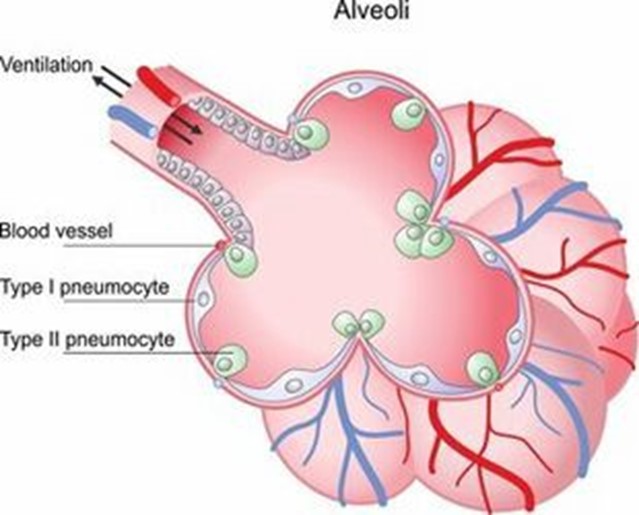
This is the correct answer. Surfactant plays a crucial role in assisting the alveoli to remain open by reducing surface tension. This, in turn, allows for proper gas exchange, especially of oxygen and carbon dioxide.
Choice C rationale:
Assisting the ductus arteriosus to remain open is not the purpose of surfactant. The ductus arteriosus is a fetal blood vessel that connects the pulmonary artery to the aorta, bypassing the lungs. After birth, it should close on its own, and surfactant does not influence this process.
Choice D rationale:
Providing energy to the newborn is not the purpose of surfactant. Energy for the newborn comes from nutrition, particularly breast milk or formula, and not from surfactant
Similar Questions
A nurse is reinforcing teaching with a client who is postpartum about bathing her newborn. Which of the following statements by the client indicates a need for further teaching?
A. "I will use mild soap.".
"I will use mild soap”. indicates an appropriate understanding of newborn bathing. Mild soap is suitable for newborn skin to avoid irritation.
B. "Baby powder will help prevent a diaper rash.".
This is the correct answer. Baby powder is not recommended for newborns as it can cause respiratory issues when inhaled and may lead to skin irritation. Therefore, the client needs further teaching about the use of baby powder.
C. "I will test the water on my wrist for temperature before bathing.".
"I will test the water on my wrist for temperature before bathing”. demonstrates proper safety measures, ensuring the water is not too hot for the baby.
D. "I will use a basin during bathing.".
"I will use a basin during bathing”. is a reasonable approach to bathing the newborn and does not indicate a need for further teaching.
Full Explanation
"Baby powder will help prevent a diaper rash.”.
Choice A rationale:
"I will use mild soap”. indicates an appropriate understanding of newborn bathing. Mild soap is suitable for newborn skin to avoid irritation.
Choice B rationale:
This is the correct answer. Baby powder is not recommended for newborns as it can cause respiratory issues when inhaled and may lead to skin irritation. Therefore, the client needs further teaching about the use of baby powder.
Choice C rationale:
"I will test the water on my wrist for temperature before bathing”. demonstrates proper safety measures, ensuring the water is not too hot for the baby.
Choice D rationale:
"I will use a basin during bathing”. is a reasonable approach to bathing the newborn and does not indicate a need for further teaching.
A nurse is caring for a newborn immediately after birth. Which of the following actions by the nurse reduces evaporative heat loss by the newborn?
A. Maintaining ambient room temperature at 24° C (75° F).
Maintaining ambient room temperature at 24° C (75° F) can help prevent heat loss by keeping the environment warm, but it does not specifically address evaporative heat loss. Evaporative heat loss occurs when moisture on the skin evaporates, which is not directly controlled by ambient temperature.
B. Drying the newborn's skin thoroughly.
Drying the newborn's skin thoroughly reduces evaporative heat loss by removing moisture that can evaporate and cool the skin. This action is critical immediately after birth when the newborn is wet with amniotic fluid.
C. Preventing air drafts.
Preventing air drafts helps reduce convective heat loss, not evaporative heat loss. Convective heat loss occurs when air moves across the skin and carries heat away.
D. Placing the newborn on a warm surface.
Placing the newborn on a warm surface helps reduce conductive heat loss by preventing heat transfer from the baby to a cooler surface. However, this does not address evaporative heat loss, which is specifically related to moisture evaporation from the skin.
Full Explanation
A. Maintaining ambient room temperature at 24° C (75° F) can help prevent heat loss by keeping the environment warm, but it does not specifically address evaporative heat loss. Evaporative heat loss occurs when moisture on the skin evaporates, which is not directly controlled by ambient temperature.
B. Drying the newborn's skin thoroughly reduces evaporative heat loss by removing moisture that can evaporate and cool the skin. This action is critical immediately after birth when the newborn is wet with amniotic fluid.
C. Preventing air drafts helps reduce convective heat loss, not evaporative heat loss. Convective heat loss occurs when air moves across the skin and carries heat away.
D. Placing the newborn on a warm surface helps reduce conductive heat loss by preventing heat transfer from the baby to a cooler surface. However, this does not address evaporative heat loss, which is specifically related to moisture evaporation from the skin.
A nurse is reinforcing teaching with a parent about using an iron-fortified formula to feed her newborn. Which of the following information should the nurse include in the teaching?
A. Iron will facilitate bone growth.
Iron is crucial for the development of hemoglobin, which carries oxygen to all parts of the body, including the bones, but it does not directly facilitate bone growth,
B. Newborns do not metabolize iron adequately.
While newborns do metabolize iron, their iron stores are limited, and breast milk alone may not meet their iron needs.
C. The newborn's iron source will start to deplete.
When educating a parent about the use of iron-fortified formula for their newborn, it is essential to convey that newborns have a limited store of iron, which begins to deplete around the age of 6 months.
D. Iron will facilitate eyesight development.
Iron facilitating eyesight development is not a relevant aspect to consider when discussing the use of iron-fortified formula for a newborn. While iron is essential for various physiological functions, it is not specifically linked to eyesight development.
Full Explanation
Choice A rationale:
Iron is crucial for the development of hemoglobin, which carries oxygen to all parts of the body, including the bones, but it does not directly facilitate bone growth.
Choice B rationale:
While newborns do metabolize iron, their iron stores are limited, and breast milk alone may not meet their iron needs.
Choice C rationale:
When educating a parent about the use of iron-fortified formula for their newborn, it is essential to convey that newborns have a limited store of iron, which begins to deplete around the age of 6 months.
Choice D rationale:
Iron facilitating eyesight development is not a relevant aspect to consider when discussing the use of iron-fortified formula for a newborn. While iron is essential for various physiological functions, it is not specifically linked to eyesight development.