
Nursing practice questions with comprehensive rationales
NurseDive Free Nursing Practice Question
The set of rules designed to protect patients who are described as vulnerable are known as?
A. Doctrine of privileged information.
The Doctrine of privileged information refers to the legal concept that certain information shared between a patient and healthcare provider is confidential and cannot be disclosed without the patient’s consent.
B. Collaborative practice.
Collaborative practice refers to the coordinated efforts of healthcare professionals from different disciplines working together to provide comprehensive and high-quality patient care.
C. Patients’ bill of rights.
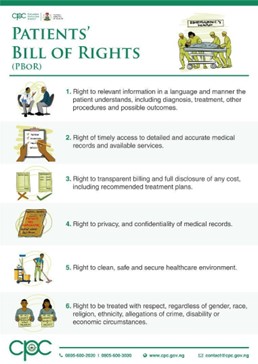
The Patients’ bill of rights is a set of rules that protect patients and ensure that they are treated with dignity, respect, and autonomy. It describes the rights that patients have when they receive medical care and treatment. The Patients’ bill of rights was created to protect patients who are vulnerable and may not have the ability or resources to advocate for themselves.
D. Nurse practice act.
The Nurse practice act is a set of laws that govern the practice of nursing in a specific state or jurisdiction. It outlines the scope of nursing practice and the responsibilities and obligations of nurses.
This question is an excerpt from Nurse Dive's nursing test bank - Mental Health Chapter 1 - Proctored Exam 2. Take the full exam now
Full Explanation
The Patients’ bill of rights is a set of rules that protect patients and ensure that they are treated with dignity, respect, and autonomy. It describes the rights that patients have when they receive medical care and treatment. The Patients’ bill of rights was created to protect patients who are vulnerable and may not have the ability or resources to advocate for themselves.
The Doctrine of privileged information refers to the legal concept that certain information shared between a patient and healthcare provider is confidential and cannot be disclosed without the patient’s consent.
Collaborative practice refers to the coordinated efforts of healthcare professionals from different disciplines working together to provide comprehensive and high-quality patient care.
The Nurse practice act is a set of laws that govern the practice of nursing in a specific state or jurisdiction. It outlines the scope of nursing practice and the responsibilities and obligations of nurses.
Similar Questions
A nurse just realized that a medication error just occurred. What should the nurse do first?
A. Report it immediately to the nurse manager or supervisor.
The first and most important step that the nurse should take is to report the medication error immediately to the nurse manager or supervisor. Medication errors can have serious consequences for patients and it is important to take immediate action to address the situation. Reporting the error to the supervisor will allow for a timely assessment of the patient's condition and any necessary interventions. Telling the patient or a co-worker about the error is not the first step the nurse should take. It is important to first ensure that the error is reported to the appropriate person who can take action to address the situation. If there is no adverse effect on the patient, it is still important to report the error to prevent any potential harm in the future. Ignoring the error or not reporting it is not an appropriate response and can have serious consequences for the patient's safety.
B. Tell the patient.
C. Tell a co-worker.
D. If there is no adverse effect on the patient, say nothing.
Full Explanation
The first and most important step that the nurse should take is to report the medication error immediately to the nurse manager or supervisor. Medication errors can have serious consequences for patients and it is important to take immediate action to address the situation. Reporting the error to the supervisor will allow for a timely assessment of the patient's condition and any necessary interventions.
Telling the patient or a co-worker about the error is not the first step the nurse should take. It is important to first ensure that the error is reported to the appropriate person who can take action to address the situation. If there is no adverse effect on the patient, it is still important to report the error to prevent any potential harm in the future. Ignoring the error or not reporting it is not an appropriate response and can have serious consequences for the patient's safety.
The mentally ill were once housed in mental institutions known as:
A. Hospitals
While some mentally ill individuals may be treated in psychiatric hospitals today, historically, they were often housed in asylums, which were institutions specifically designated for the long-term care of those with mental illnesses.
B. Free-standing care centers.
Free-standing care centers are a more modern concept for community-based care or outpatient services, not a term used historically for institutions that housed the mentally ill.
C. Long-term care facilities.
Long-term care facilities typically refer to places that provide care for elderly individuals or those with chronic illnesses, but not specifically for mental illness in the historical context.
D. Asylums
Historically, individuals with mental illness were housed in asylums, which were often large institutions where they received care but were sometimes subject to poor conditions and inadequate treatment. Over time, the concept of mental health care shifted toward more humane and community-based approaches.
Full Explanation
A. Hospitals: While some mentally ill individuals may be treated in psychiatric hospitals today, historically, they were often housed in asylums, which were institutions specifically designated for the long-term care of those with mental illnesses.
B. Free-standing care centers: Free-standing care centers are a more modern concept for community-based care or outpatient services, not a term used historically for institutions that housed the mentally ill.
C. Long-term care facilities: Long-term care facilities typically refer to places that provide care for elderly individuals or those with chronic illnesses, but not specifically for mental illness in the historical context.
D. Asylums: Historically, individuals with mental illness were housed in asylums, which were often large institutions where they received care but were sometimes subject to poor conditions and inadequate treatment. Over time, the concept of mental health care shifted toward more humane and community-based approaches.
A nurse is caring for a young adult client who has ulcerative colitis and is scheduled for surgery to create an ileostomy. After speaking with the provider, the client says, “how will I ever be able to have a normal life after this?”
Which of the following responses should the nurse make?
A. This will cure your disease, so you don’t have to spend so much time in hospital.
B. Tell me how you think having an ileostomy will affect your life.
This response is an open-ended question that encourages the client to express their concerns and feelings. It also allows the nurse to assess the client’s understanding of the procedure and provide appropriate education and support. The other The other options are either closed-ended statements or questions that do not address the client’s concerns directly.
C. Everybody worries about how they will manage their ileostomy at first.
D. Are you worried that it would affect your relationship with your partner?
Full Explanation
This response is an open-ended question that encourages the client to express their concerns and feelings. It also allows the nurse to assess the client’s understanding of the procedure and provide appropriate education and support. The other
The other options are either closed-ended statements or questions that do not address the client’s concerns directly.
