
Nursing practice questions with comprehensive rationales
NurseDive Free Nursing Practice Question
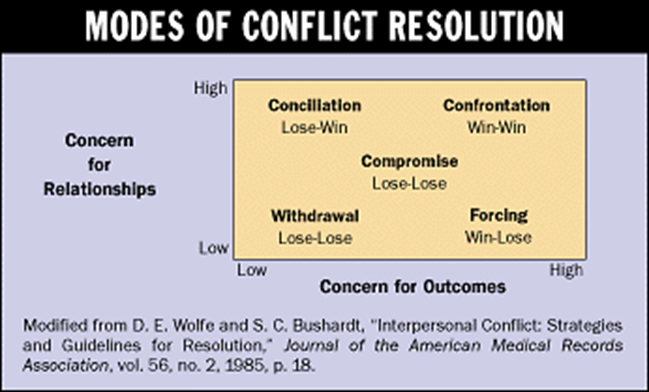
To resolve a conflict between staff members regarding potential changes in policy, a nurse manager decides to implement the changes she prefers regardless of the feelings of those who oppose those changes. Which of the following conflict resolution strategies is the nurse manager using?
A. Cooperating
Cooperating involves finding a middle ground and working together, which isn't reflected in the manager's unilateral decision-making.
B. Collaborating
Collaborating involves working together toward a solution that accommodates various perspectives, which isn't the case here.
C. Competing
Competing involves asserting one's own concerns at the expense of others' viewpoints, which aligns with the manager's decision to implement changes regardless of opposition.
D. Compromising
Compromising entails finding a middle ground that satisfies all parties involved, which isn't evident in the manager's decision-making process.
This question is an excerpt from Nurse Dive's nursing test bank - Ati Rn Leadership 2019 Proctored Exam. Take the full exam now
Full Explanation
A. Cooperating involves finding a middle ground and working together, which isn't reflected in the manager's unilateral decision-making.
B. Collaborating involves working together toward a solution that accommodates various perspectives, which isn't the case here.
C. Competing involves asserting one's own concerns at the expense of others' viewpoints, which aligns with the manager's decision to implement changes regardless of opposition.
D. Compromising entails finding a middle ground that satisfies all parties involved, which isn't evident in the manager's decision-making process.
Similar Questions
A nurse is preparing a client for an elective mastectomy. The client is wearing a plain gold wedding band. Which of the following is an appropriate procedure for taking care of this client's ring?
A. Place the client's ring in the facility safe.
Placing the client's ring in the facility safe ensures that it is securely stored and prevents loss or misplacement, which is standard procedure for valuable personal items before surgery.
B. Place the ring in the bag with the client's clothing
Placing the ring in the bag with the client’s clothing is not secure, as it increases the risk of loss or theft.
C. Tape the ring securely to the client's finger
Taping the ring to the client’s finger is not ideal because jewelry should generally be removed before surgery to prevent complications such as swelling, circulation issues, or electrical burns from cautery equipment.
D. Agree to keep the ring for the client until after surgery.
Keeping the ring for the client is inappropriate because staff should not personally hold onto a client’s valuables. Instead, valuables should be properly documented and stored per facility policy.
Full Explanation
A. Placing the client's ring in the facility safe ensures that it is securely stored and prevents loss or misplacement, which is standard procedure for valuable personal items before surgery.
B. Placing the ring in the bag with the client’s clothing is not secure, as it increases the risk of loss or theft.
C. Taping the ring to the client’s finger is not ideal because jewelry should generally be removed before surgery to prevent complications such as swelling, circulation issues, or electrical burns from cautery equipment.
D. Keeping the ring for the client is inappropriate because staff should not personally hold onto a client’s valuables. Instead, valuables should be properly documented and stored per facility policy.
A nurse is preparing to complete an incident report regarding a medication error. Which of the following actions should the nurse plan to take? (Select all that apply.)
A. Identify the medication name and dosage administered to the client in the report.
Identify the medication name and dosage administered to the client in the report: Providing specific details about the medication involved is crucial for accurately documenting the incident.
B. Make a copy of the incident report for personal record keeping.
Making a copy of the incident report for personal record keeping: While keeping a personal copy might seem practical, the official incident report should be filed according to institutional policies. Personal record keeping might not align with these policies.
C. Include the time the medication error occurred in the report.
Include the time the medication error occurred in the report: Documenting the time helps in understanding the sequence of events and aids in investigating the error.
D. Obtain an order from the client's provider to complete the report.
Obtaining an order from the client's provider to complete the report: Typically, healthcare providers do not need to issue an order for a nurse to complete an incident report; it's part of the facility's standard reporting process.
E. Place a copy of the completed report in the client's medical record.
It is not necessary to place a copy of the report in the client's medical record.
Full Explanation
A. Identify the medication name and dosage administered to the client in the report: Providing specific details about the medication involved is crucial for accurately documenting the incident.
B. Making a copy of the incident report for personal record keeping: While keeping a personal copy might seem practical, the official incident report should be filed according to institutional policies. Personal record keeping might not align with these policies.
C. Include the time the medication error occurred in the report: Documenting the time helps in understanding the sequence of events and aids in investigating the error.
D. Obtaining an order from the client's provider to complete the report: Typically, healthcare providers do not need to issue an order for a nurse to complete an incident report; it's part of the facility's standard reporting process.
E. It is not necessary to place a copy of the report in the client's medical record.
A nurse is conducting a disaster preparedness drill with a group of nurses who are orienting to the facility. Which of the following triage tag colors should the nurse instruct the group to apply to a client who has full-thickness burns on 72% of his body?
A. Black
Black tags are typically used for individuals who are deceased or expected to die imminently. The chances of survival for this patient are very minimal since the burn surface area is more than 50% with full thickness burns
B. Yellow
Yellow tags are used for those who require observation but are not in immediate danger.
C. Red
Red tags are for those with severe injuries who require immediate treatment but have a chance of survival.
D. Green
Green tags are used for individuals with minor injuries or those who require minimal medical assistance.
Full Explanation
A. Black tags are typically used for individuals who are deceased or expected to die imminently. The chances of survival for this patient are very minimal since the burn surface area is more than 50% with full thickness burns
B. Yellow tags are used for those who require observation but are not in immediate danger.
C. Red tags are for those with severe injuries who require immediate treatment but have a chance of survival.
D. Green tags are used for individuals with minor injuries or those who require minimal medical assistance.