
Nursing practice questions with comprehensive rationales
NurseDive Free Nursing Practice Question
What is the therapeutic range of Lithium (Eskalith)?
A. 0.6-1.5
The therapeutic range of lithium is generally considered to be 0.6-1.5 mEq/L. However, some patients may require higher or lower levels depending on their individual response to the medication and their clinical condition. Lithium has a narrow therapeutic range hence the blood level of the drug should be closely monitored to minimize the risk of toxicity and sub-therapeutic effects.
B. 0.1-0.5
0.1-0.5 is too low hence the drug will provide sub-optimal effects thus providing inadequate mood stabilization.
C. 0.2-0.5
0.2-0.5 is too low hence the drug will provide sub-optimal effects thus providing inadequate mood stabilization.
D. 0.4-1.6
0.4-1.6 the lower limit is too low and may result in sub-therapeutic effects while the upper limit is too high and increases the risk of lithium toxicity which can manifest as nausea, vomiting, tremors, seizures, and death in severe cases.
This question is an excerpt from Nurse Dive's nursing test bank - ATI ns 130 Exam Psychosocial Proctored Exam. Take the full exam now
Full Explanation
Choice A rationale: The therapeutic range of lithium is generally considered to be 0.6-1.5 mEq/L. However, some patients may require higher or lower levels depending on their individual response to the medication and their clinical condition. Lithium has a narrow therapeutic range hence the blood level of the drug should be closely monitored to minimize the risk of toxicity and sub-therapeutic effects.
Choice B rationale: 0.1-0.5 is too low hence the drug will provide sub-optimal effects thus providing inadequate mood stabilization.
Choice C rationale: 0.2-0.5 is too low hence the drug will provide sub-optimal effects thus providing inadequate mood stabilization.
Choice D rationale: 0.4-1.6 the lower limit is too low and may result in sub-therapeutic effects while the upper limit is too high and increases the risk of lithium toxicity which can manifest as nausea, vomiting, tremors, seizures, and death in severe cases.
Similar Questions
Which medication side effect is irreversible if not caught early:
A. Akathisia
Choice A rationale: Akathisia refers to restlessness and agitation and is a common side effect of antipsychotic medications. This condition can be reversed by reducing the dose of antipsychotic medication taken by the client.
B. Tardive Dyskinesia
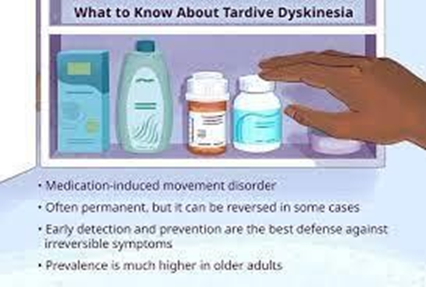
Choice B rationale: Tardive dyskinesia refers to the involuntary movement of body parts such as the limbs, face, jaw, and tongue and is a common side effect of long-term use of first-generation antipsychotic medications which work by blocking dopamine receptors. This condition is irreversible, especially when not detected early.
C. Dystonia
Choice C rationale: Dystonia which refers to muscle spasms affecting the jaw, eyes, and limbs can be reversed by the use of anticholinergic medications or botulin toxin.
D. Akinesia
Choice D: Akinesia refers to the absence of movement and can be managed by adjusting the dosage of the antipsychotic medications being taken by the patient.
Full Explanation
Choice A rationale: Akathisia refers to restlessness and agitation and is a common side effect of antipsychotic medications. This condition can be reversed by reducing the dose of antipsychotic medication taken by the client.
Choice B rationale: Tardive dyskinesia refers to the involuntary movement of body parts such as the limbs, face, jaw, and tongue and is a common side effect of long-term use of first-generation antipsychotic medications which work by blocking dopamine receptors. This condition is irreversible, especially when not detected early.
Choice C rationale: Dystonia which refers to muscle spasms affecting the jaw, eyes, and limbs can be reversed by the use of anticholinergic medications or botulin toxin.
Choice D: Akinesia refers to the absence of movement and can be managed by adjusting the dosage of the antipsychotic medications being taken by the patient.
Which assessment tool is used to monitor clients for Tardive Dyskinesia?
A. AIMS Scale
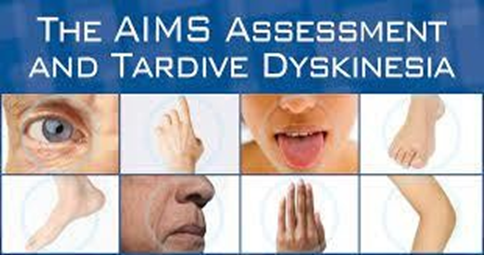
The AIMS Scale refers to the Abnormal Involuntary Movement Scale and is used in the assessment of patients for the presence of involuntary movements across body regions. The score ranges from zero which denotes the absence of dyskinesia and four which stands for severe, maximal amplitude and persistence of the abnormal movements during the examination period. It is also used to monitor clients with tardive dyskinesia.
B. Hamilton Scale
the Hamilton scale is a multiple-item questionnaire used in the assessment of clients for depression and provides a guide for patient recovery evaluation.
C. Braden Scale
the Braden Scale is used in the assessment of clients for the risk of pressure ulcers.
D. Morse Scale
the Morse Scale is a Fall Risk Assessment tool used in assessing the probability of a client sustaining a fall.
Full Explanation
Choice A rationale: The AIMS Scale refers to the Abnormal Involuntary Movement Scale and is used in the assessment of patients for the presence of involuntary movements across body regions. The score ranges from zero which denotes the absence of dyskinesia and four which stands for severe, maximal amplitude and persistence of the abnormal movements during the examination period. It is also used to monitor clients with tardive dyskinesia.
Choice B rationale: the Hamilton scale is a multiple-item questionnaire used in the assessment of clients for depression and provides a guide for patient recovery evaluation.
Choice C rationale: the Braden Scale is used in the assessment of clients for the risk of pressure ulcers.
Choice D rationale: the Morse Scale is a Fall Risk Assessment tool used in assessing the probability of a client sustaining a fall.
Haldol 2mg IM stat has been ordered for the agitated client. Haldol is available in 5mg/ml. How many mls will you administer?
Full Explanation
To answer the above question we will use the formula:
Dose (ml)= ordered dose (mg)/ Concentration (mg/ml)
= 2mg/5mg/ml
= 0.4 ml